Chaos on the Tarmac: 169 Panicked Passengers Escape LATAM Plane After Massive Airport Fire Sends Smoke Pouring Into the Cabin
For the 169 passengers aboard a LATAM Airlines flight preparing for what should have been a routine departure in Brazil, the night unfolded into a scene of confusion, fear, and frantic escape. What began as a standard boarding process transformed into a terrifying emergency when a sudden fire on the airport tarmac sent thick smoke surging toward the aircraft, filling the cabin and throwing passengers into panic. Within moments, the quiet hum of pre-flight preparations turned into chaos as travelers rushed to evacuate, unsure of where the danger originated or how quickly it might escalate.
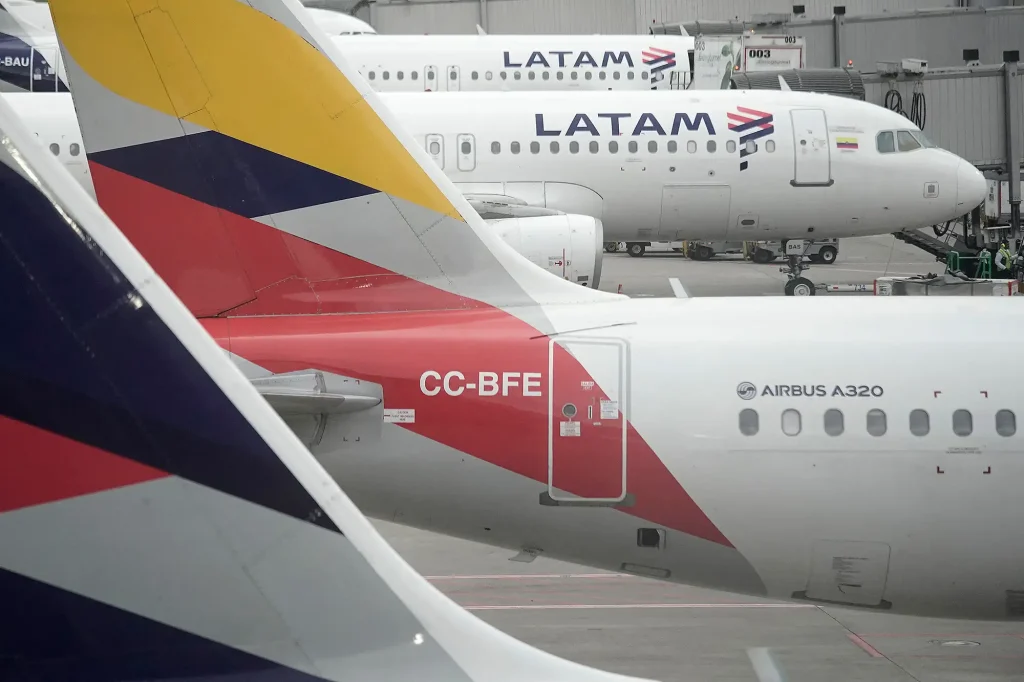
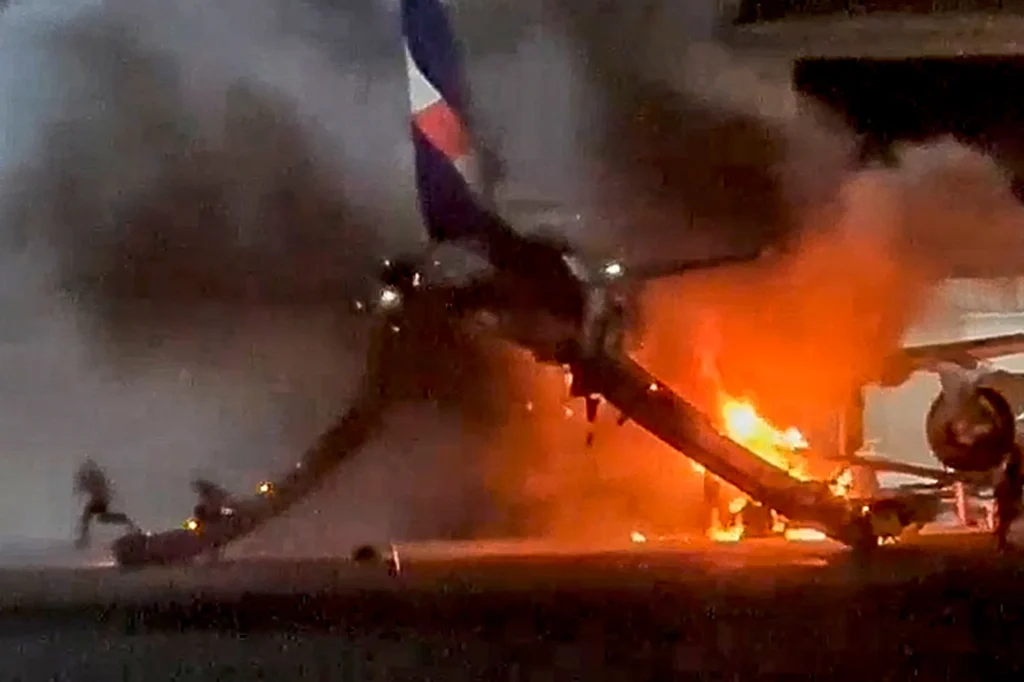
The frightening incident took place at Salgado Filho International Airport in Porto Alegre, where a fire broke out near the aircraft just as passengers were settling into their seats. At first, many onboard did not immediately grasp the severity of what was happening outside. Through the windows, the glow of flames appeared faint, contained to an area several yards from the plane. But the situation escalated rapidly as airport crews and first responders moved urgently across the tarmac. Before long, the smoke began drifting toward the aircraft, pulled in by air pressure and circulating through the cabin of the parked plane.
Passengers later described a sudden shift in atmosphere — the kind that triggers an instinctive understanding that something is very wrong. Some travelers began coughing as the haze thickened around them. Others called out for assistance, confused over the lack of immediate instructions. Smoke has a way of inducing panic not only because of the physical danger it represents, but because it disrupts the sense of safety that aircraft cabins are designed to create. In an enclosed space with minimal ventilation and no clear visibility, seconds feel like minutes, and minutes can feel endless.
According to eyewitness accounts and confirmed reports, the fire originated outside the aircraft and was not linked to the plane’s mechanics or fuel systems, a critical distinction that officials made clear in early updates. The blaze was connected to external airport equipment, although the exact cause is still under investigation. Regardless of its origin, the fire’s proximity to the aircraft left passengers feeling cornered in a place where mobility is limited and decisions must be made quickly.
Videos that emerged online — some captured by passengers themselves and others by bystanders on the ground — show how quickly the smoke spread. Dark plumes drift through the aircraft windows as flashes of orange light illuminate the night sky. Passengers can be seen covering their mouths and standing to leave even before the official evacuation order was given. In moments like this, instinct can overpower protocol, and the urge to reach fresh air becomes overwhelming.
The crew eventually initiated a full evacuation, instructing travelers to move quickly but remain as orderly as possible. Anyone who has ever flown knows how narrow an aircraft aisle can feel under normal circumstances. During an evacuation, with cabin lights dimmed by drifting smoke, urgency in the air, and 169 passengers trying to move at once, the space becomes even tighter. But despite the anxiety, witnesses report that most people followed instructions with surprising discipline. Parents held their children close, elderly passengers were assisted by those around them, and strangers formed momentary alliances to ensure no one was left behind.
On the tarmac, the scene was equally chaotic. Emergency lights reflected off the haze, and firefighters worked rapidly to contain the blaze while guiding passengers away from danger. The plane itself never caught fire, but the smoke visibility — combined with the uncertainty of how far the flames might spread — made the evacuation imperative. Authorities later confirmed that the fire did not reach the aircraft’s fuel systems or structural components, preventing what could have been a far more devastating outcome.
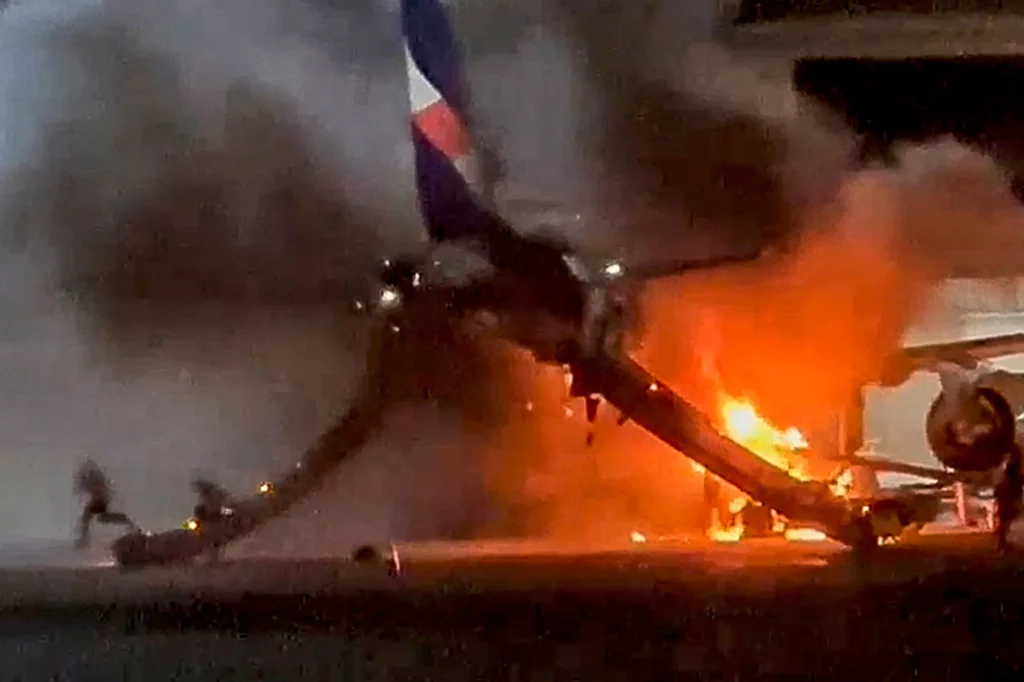
Even so, the emotional toll on passengers was unmistakable. Many described the unsettling experience of stepping onto the tarmac with the smell of smoke lingering in their hair and clothing, the adrenaline still pulsing through their bodies. Travelers who had boarded expecting a smooth journey suddenly found themselves standing in the open night air, hugging family members, shaking hands with strangers they had helped moments earlier, and trying to process the near-disaster they had just escaped.
International aviation standards require airports to maintain swift-response fire teams trained to handle a range of emergencies. In this case, Brazilian authorities emphasized that their crews acted quickly and professionally, keeping the situation under control and preventing casualties. LATAM Airlines also issued a statement confirming that all passengers were safely evacuated and attended to. While shaken, no serious injuries were reported, a remarkably fortunate outcome considering the circumstances.
In interviews after the incident, several passengers described the sensory details that will likely stay with them for a long time: the sharp burn of smoke in their throats, the dim orange flicker seeping through aircraft windows, the escalating heat outside, and the muffled sounds of alarm spreading through the cabin. Experiences like these leave a mark — the kind that lingers in memory even when physical danger has passed.
Some travelers admitted that the experience rattled their confidence in flying, even though the incident was not caused by a malfunction of the aircraft itself. Others said the ordeal strengthened their respect for aviation safety protocols, pointing out that efficient response from the crew and first responders likely prevented further injury. In moments of crisis, fear can easily dominate, but many passengers found reassurance in the swift professionalism they witnessed.
Emergency evacuations on planes are particularly complicated not only due to space constraints but because passengers must act without triggering additional hazards. People must leave bags behind — a direction some instinctively resist — and must exit as rapidly as possible without pushing or causing unnecessary injuries. The fact that this extraction happened smoothly, even with the added layer of smoke, underscores how crucial quick decision-making is for flight crews. Those trained instincts make all the difference when time becomes a critical factor.
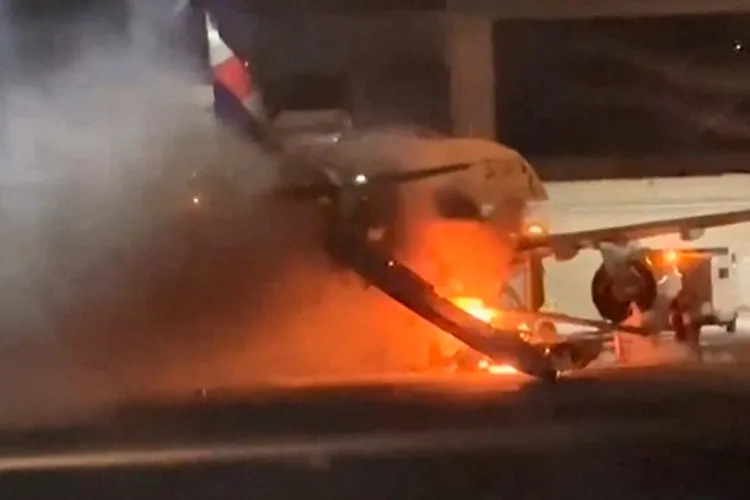
Airports, by design, operate like finely tuned systems where thousands of moving parts must align perfectly every day. Fires, even when contained, disrupt that balance and reveal vulnerabilities that require thorough investigation. Officials in Porto Alegre have already begun reviewing the cause of the blaze, the spread of smoke, and any circumstances that contributed to passengers being exposed to danger. This includes evaluating ground equipment, verifying maintenance logs, reviewing crew response timelines, and assessing how airflow allowed smoke to enter the aircraft cabin.
LATAM Airlines has confirmed that passengers affected by the incident were offered assistance at the airport, including rebooking accommodations and support services. For many, though, the aftermath was as emotional as the escape itself. Once the adrenaline faded, some passengers described an almost surreal sense of disbelief, realizing how close they came to a situation that could have escalated into something far worse. Others expressed gratitude — gratitude for the crew, for emergency responders, and for small moments of kindness shared among frightened strangers.
Events like this ripple far beyond the immediate moment. They remind the aviation industry of the constant need for vigilance, maintenance, and robust emergency planning. They remind passengers that even amid moments of chaos, people often rise to the occasion, supporting one another without hesitation. And they remind the world that safety is not just a system — it is a human effort, carried out in real time by people trained to protect others.
In the end, all 169 passengers made it off the LATAM aircraft safely, a fact that should not be overshadowed by the frightening nature of the incident itself. The fire was controlled, the plane was secured, and families reunited on the ground, shaken but unharmed. While questions will continue to be investigated, the outcome stands as a testament to quick action and coordinated emergency response — a moment where fear could have turned into tragedy, but did not.
For the passengers who walked away from that smoke-filled cabin, the night will likely remain etched in memory. And for the broader public following the story, it becomes another reminder of how fragile and unpredictable even the most ordinary moments can be. A routine boarding, a sudden fire, and the urgent scramble to safety — all blending into a story of relief, humanity, and the instinctual will to survive.