Doctors Stunned After Discovering a Full-Term Baby Boy Hidden Behind a 22-Pound Uterine Tumor in a Story That Redefines Impossible
Suze Lopez never expected her life to change in the span of a single appointment. At 41, the California mother of one had grown used to hearing discouraging news about the enormous uterine tumor that had taken over her abdomen, a mass so large and complex that even seasoned specialists considered it a medical challenge. She had resigned herself to the belief that expanding her family simply wasn’t possible. The tumor dominated every conversation, every exam, every future plan. It was the obstacle no one—not even Suze—believed she could overcome.
But what unfolded next would leave her doctors stunned, her family overwhelmed, and anyone who hears her story reminded that sometimes life finds a way even in the most unlikely places.
By the time Suze reached Cedars-Sinai for a routine pre-operative evaluation, the tumor had grown to an extraordinary size, roughly 22 pounds according to the care team overseeing her case. The plan was simple: confirm her labs, check baseline health, and move her toward the major surgery she’d been preparing for. No one expected anything out of the ordinary. The medical team certainly didn’t anticipate a positive pregnancy test. Yet that is exactly what appeared on her results—a faint line at first, then verified by repeat testing and follow-up imaging that baffled every expert in the room.
Hidden behind the enormous tumor, shielded from nearly all standard detection methods, was a nearly full-term baby boy.
For Suze, the news came with a rush of disbelief so profound she later admitted her first instinct was to assume something had gone terribly wrong with the lab work. She knew the tumor was large enough to distort her abdomen, large enough to cause symptoms that mimicked pregnancy in odd, unpredictable ways. But the idea that a fetus had managed to grow safely alongside—and behind—such a mass was something no one had considered even remotely possible.
Doctors quickly confirmed that the baby had somehow been developing quietly in the small remaining space within her uterus, an area that had been compressed and pushed aside by the tumor’s aggressive growth. It was an extraordinary scenario, one that seasoned physicians described as almost unheard-of. Despite the tumor’s size and complexity, the baby’s heartbeat was strong, his development was normal, and he appeared ready to meet the world far sooner than anyone expected.
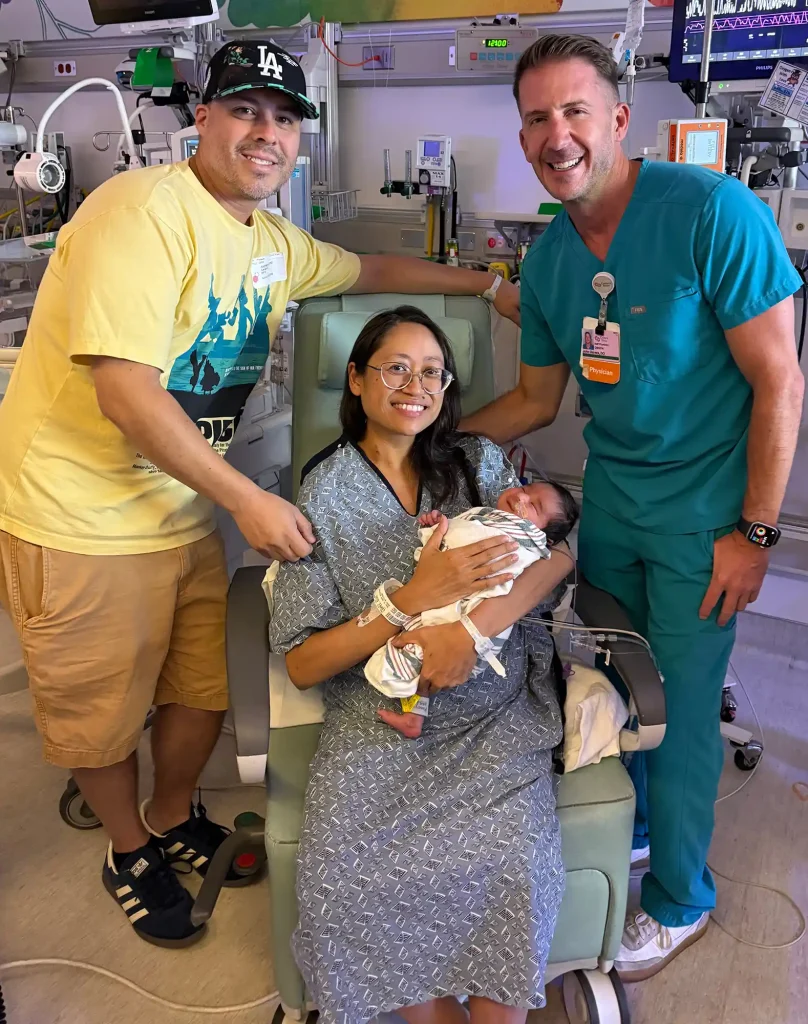
The discovery triggered an immediate shift in medical priorities. Instead of planning for tumor removal, the care team prepared for an emergency delivery that required precise coordination and skill. Every decision carried weight. Surgeons, maternal-fetal medicine specialists, neonatologists, and anesthesiologists came together to navigate a case most practitioners would never encounter in their entire careers. The tumor’s size created unique complications, particularly with access, positioning, and maintaining Suze’s stability during the procedure.
But when the moment finally arrived, it unfolded with the kind of tense calm that defines the best medical teams. Suze remained brave and focused, gripping the reassurance offered by those around her. The room held a mix of fear, hope, and determination—but when the cry of her newborn son finally filled the air, that sound cut through every layer of uncertainty.
She had a healthy baby boy.
The delivery became a moment of pure gratitude not only for Suze and her family but for the medical professionals who had witnessed something they still struggle to fully explain. They described it as a miracle—not in a casual sense, but in the sober recognition of everything that should have gone wrong, everything that medical textbooks would have predicted, yet somehow didn’t.
Suze’s story quickly became an emotional anchor for staff members who often face the harshest realities of medicine. Many spoke openly about how this case reminded them why they entered their profession in the first place. Birth is usually predictable. Tumor cases follow known patterns. But this—this defied expectations in the best possible way.
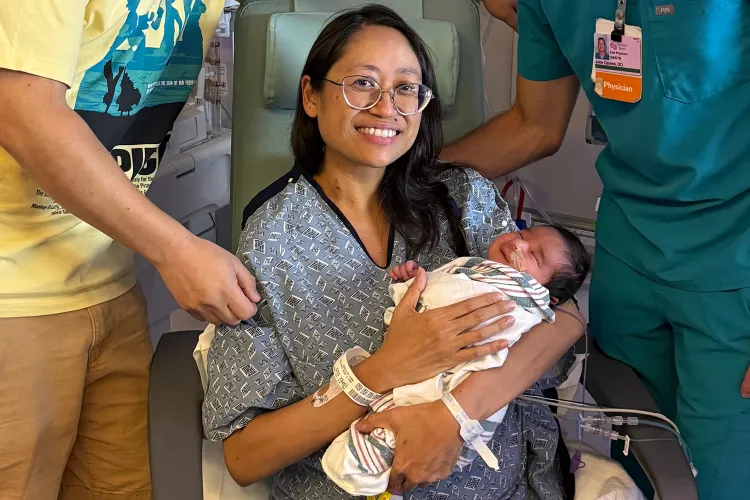
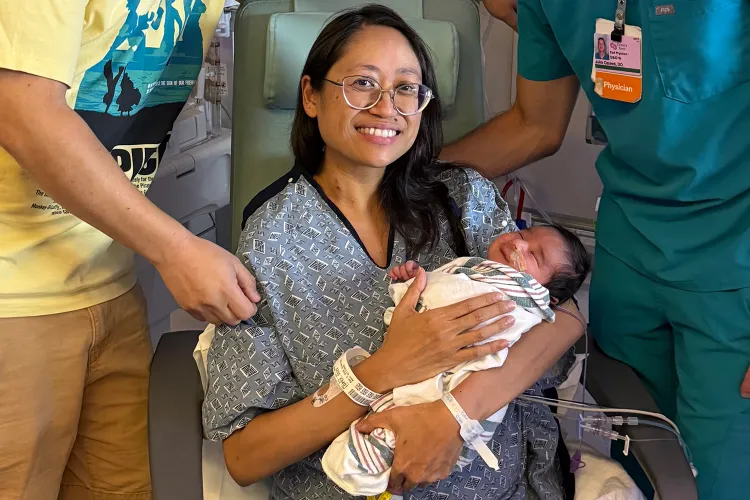
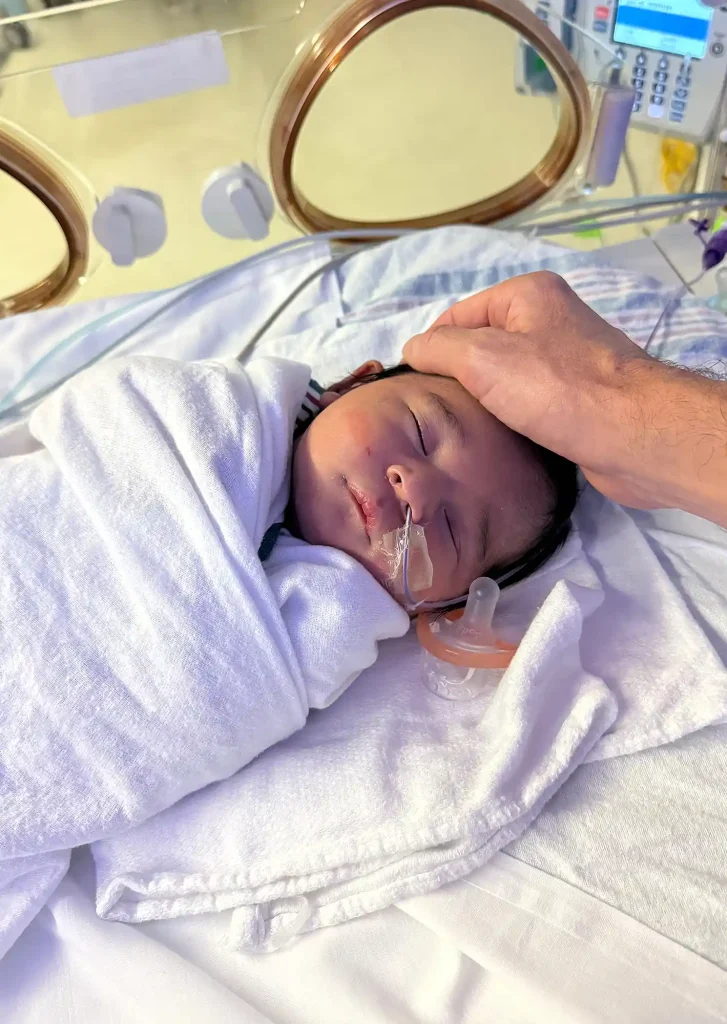
In the days after her son’s birth, Suze took her first quiet moments to truly absorb what had happened. The shock slowly softened into a tender sense of wonder as she held her newborn against her chest, feeling his tiny breaths, studying the features she had never expected to see. Her family gathered around her hospital bedside, stunned and joyful, knowing they had nearly walked through this chapter believing another child was impossible.
For Suze, the emotional weight of the experience settled in waves. She admitted she had mourned the future she thought she couldn’t have. Her grief had been private, tucked behind everyday routines and responsibilities. The tumor had felt like a door permanently closed. But now, holding her son, that old grief seemed almost unreal, replaced by a gratitude so deep it was difficult to put into words.
The medical journey didn’t end with the delivery. The tumor still required removal, and Suze faced a complex recovery ahead. But emotionally, she carried a renewed strength fueled by what she had just lived through. The presence of her baby—safe, healthy, and thriving—made every challenge ahead feel more bearable.
Doctors explained that while uterine fibroids and tumors can complicate pregnancy, the sheer size of Suze’s mass made this outcome astonishing. The tumor had disguised any typical pregnancy signs, masking growth, movement, and anatomical changes that would normally alert both patient and physician. Even standard imaging can be difficult when a large mass disrupts typical uterine structure, and in Suze’s case, the tumor had consumed so much space that identifying a fetus had become nearly impossible.
Her pregnancy went unrecognized until the very end, a detail that made the successful delivery even more remarkable. Medical teams emphasized that this was an extremely rare case, not something most people should ever expect or assume is possible, but Suze’s experience stands as a reminder that human biology sometimes refuses to follow rules.
As word of the case spread within Cedars-Sinai, it became a story that uplifted staff during long shifts and emotionally heavy weeks. A healthy baby boy, found at the last possible moment behind a 22-pound tumor, was the kind of hopeful narrative that touched everyone who heard it. They spoke openly about how grateful they were to be part of her care, how the case reminded them that medicine—despite all its science—still leaves room for moments that feel larger than explanation.
Suze and her family later expressed their appreciation to the entire hospital team, acknowledging the level of coordination and expertise required to navigate something so medically complex. Her story is now shared as both a testament to high-level medical care and the unpredictable resilience of the human body. For many, it has become a symbol of hope—proof that even in situations where the odds look overwhelming, life may still be quietly finding a way.
Holding her newborn close, Suze reflected on the years she spent wondering if another child was out of reach. Now, as she gazes down at her son, she speaks with a gentle certainty about the miracle she never expected but now can’t imagine her world without. The journey was unexpected, frightening, and medically extraordinary, but for Suze, it ended with the sweetest truth of all: she is a mother once again, thanks to a miracle hiding just beyond what anyone could see.
Her story continues to resonate far beyond the walls of the hospital, reminding readers everywhere that life’s most astonishing moments often appear when least expected. And for Suze Lopez, the child she once believed she could never have has become living proof that impossible doesn’t always mean impossible. Sometimes it simply means the miracle is still making its way to you.