Tyler Robinson’s Court Exchange Reveals Daily Torment Over Charlie Kirk Shooting, Mentions Widow Erika in Uneasy Moment
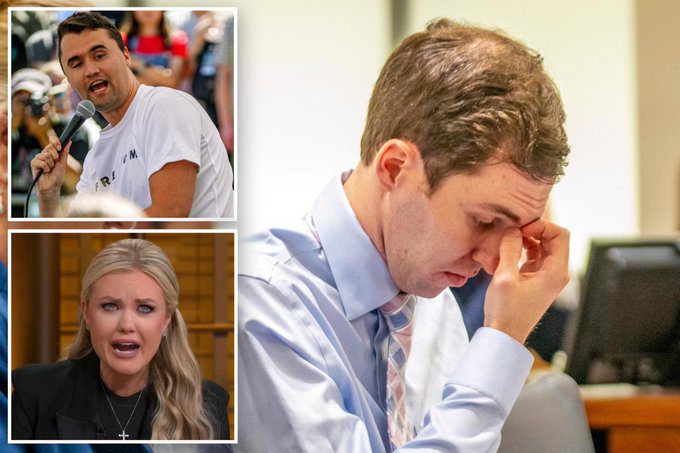
In the hushed tension of a Provo courtroom, where the weight of a nation’s divided gaze hung heavy, 22-year-old Tyler Robinson leaned toward his attorney, his words captured not by microphones but by the silent scrutiny of a lipreader. “I think about the shooting daily,” he appeared to say, his face a mask of quiet strain. “Every morning… all the time.” Then, in a moment that pierced the legal formalities like a stray bullet, he uttered something more personal: “So, he had a wife…” The “he” was Charlie Kirk, the vibrant conservative voice silenced three months earlier by a single shot from a rooftop. The wife was Erika, now a widow navigating unimaginable loss while steering the organization her husband built. It was December 11, 2025, Robinson’s first in-person court appearance since his arrest, and in that fleeting exchange, the human fractures beneath the headlines came into stark relief—a young man wrestling with his actions, a family forever altered, and a community still reeling from the echoes of violence.
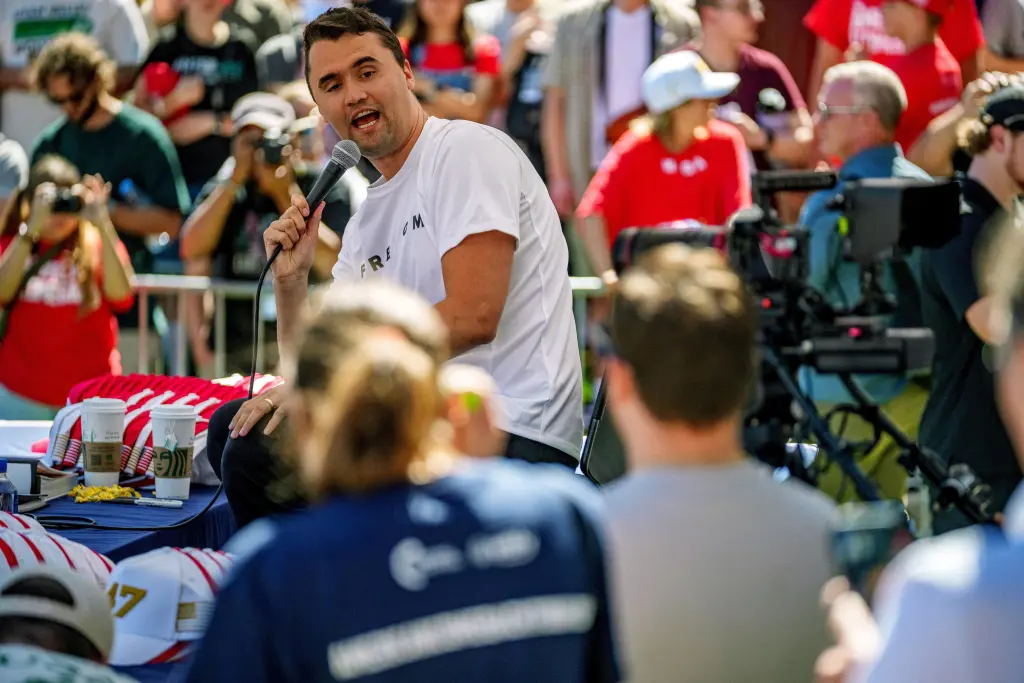
The events that led to this courtroom tableau began on a crisp September evening in Orem, Utah, a suburban enclave where the Rocky Mountains cast long shadows over everyday lives. Charlie Kirk, just 31, stood before thousands at Utah Valley University, his voice rising in the rhythmic cadence that had made him a force in conservative circles. As founder of Turning Point USA, Kirk had dedicated his life to igniting passion among young people, challenging what he saw as the drift of campuses toward progressive ideals. His talks were electric, blending sharp wit with unyielding conviction on issues like free speech, national borders, and traditional values. That night, under floodlights and amid a sea of enthusiastic supporters, Kirk paused mid-sentence. A sharp crack shattered the air—a bolt-action rifle shot from a nearby rooftop. He collapsed, the crowd’s cheers turning to screams. Paramedics rushed him away, but by morning, the news broke: Charlie Kirk was gone, felled in an instant that left his organization, his followers, and his young family grasping for meaning.
Investigators moved swiftly. Within hours, security footage and witness accounts pointed to a figure scrambling across the rooftop, abandoning the weapon in a wooded thicket. Bullets recovered bore cryptic engravings—phrases like “Hey fascist! Catch!” laced with gaming references and ironic emoticons, hints of a mind steeped in online subcultures where politics blur with memes and manifestos. By the next day, September 11, Tyler Robinson walked into the Washington County Sheriff’s Office with his parents, his face pale but resolute. He had confessed to them after they spotted his image in news reports, a family torn between love and horror. Born on April 16, 2003, in the quiet town of Washington, Utah, Robinson grew up in a close-knit Mormon household that embodied the conservative heartland. His parents, Matthew and Amber, were registered Republicans who backed Donald Trump; young Tyler once dressed as the former president for Halloween, reciting campaign slogans with boyish enthusiasm. He excelled in school, boasting a 4.0 GPA and a merit scholarship to Utah State University, where he filmed a proud video announcing his acceptance.
But the path veered. After one semester, Robinson withdrew, citing personal reasons. Friends and family later described a shift—a young man immersing himself in digital worlds, where Discord chats and anonymous forums amplified his evolving views. His mother told investigators he had grown “more political” in recent years, leaning leftward, embracing pro-gay and trans-rights stances that clashed with his upbringing. He began dating a roommate described in court documents as a biological male transitioning genders, their texts painting a picture of intimate support amid personal turmoil. Prosecutors zeroed in on motive: Robinson’s alleged disdain for Kirk’s rhetoric, particularly his outspoken opposition to transgender policies, which Kirk framed as threats to women’s sports and parental rights. In messages to his roommate, Robinson reportedly wrote that he had “had enough of his hatred,” planning the act in just over a week. “There is too much evil,” he told his parents upon confession, “and the guy spreads too much hate.” On September 16, formal charges followed: aggravated murder, with prosecutors vowing to seek the death penalty, citing the politically charged nature of the killing. Additional counts included witness tampering and a violent offense near children, as the event unfolded before a crowd that included families.
For Erika Kirk, the world narrowed to a blur of grief and resolve in those first shattering hours. Married to Charlie since 2020, she had been his quiet anchor, raising their two young children—a three-year-old daughter and a son—while supporting his whirlwind schedule. The couple’s home in Arizona buzzed with the energy of a shared mission, Erika often sharing glimpses of family life on social media: Charlie tossing a toddler in the air, holiday gatherings laced with laughter. When the call came that night, Erika was miles away, her life upended in a heartbeat. In her first public words days later, she spoke of covenantal love, of a husband who “laid down his life for me, for our nation, for our children.” Faith became her lifeline; in interviews, she recounted wrestling with waves of sorrow but refusing bitterness toward God. “It’s so easy to feel regret when you lose someone you love,” she told Fox News in November, her voice steady yet laced with ache. “But I’m not angry with Him.”
As weeks turned to months, Erika stepped into the void left by Charlie’s absence, assuming leadership of Turning Point USA, the nonprofit he co-founded in 2012 to counter liberal dominance on campuses. The organization, with chapters at over 2,500 schools, had ballooned under Kirk’s charisma, raising millions to bus students to rallies and fund conservative speakers. Erika’s transition drew both admiration and scrutiny—supporters hailed her poise, while online whispers questioned her readiness. Yet she pressed on, releasing Charlie’s posthumous book, “Stop, in the Name of God: Why Honoring the Sabbath Will Transform Your Life,” and advocating for transparency in the legal proceedings. In a Fox News appearance just weeks before the court hearing, she pushed for cameras in the courtroom, her words raw: “There were cameras all over my husband when he was murdered. There have been cameras all over my friends and family mourning. We deserve to have cameras in there.” It was a call not just for justice, but for the public to witness “what true evil is,” as she put it, underscoring the stakes in a case that had ignited national debate.
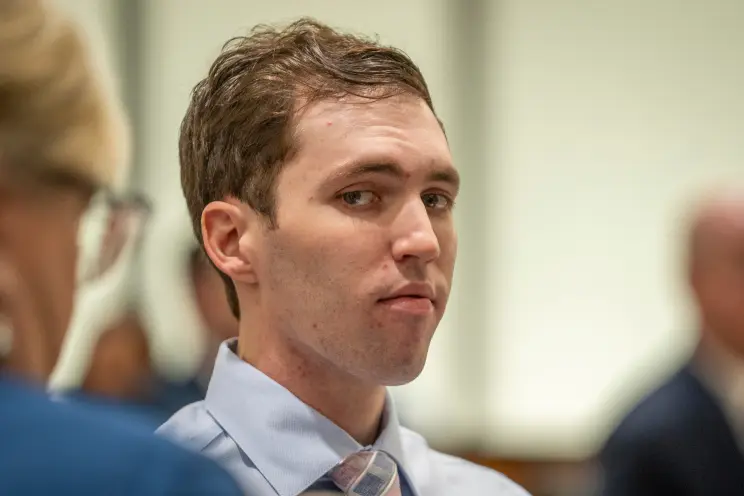
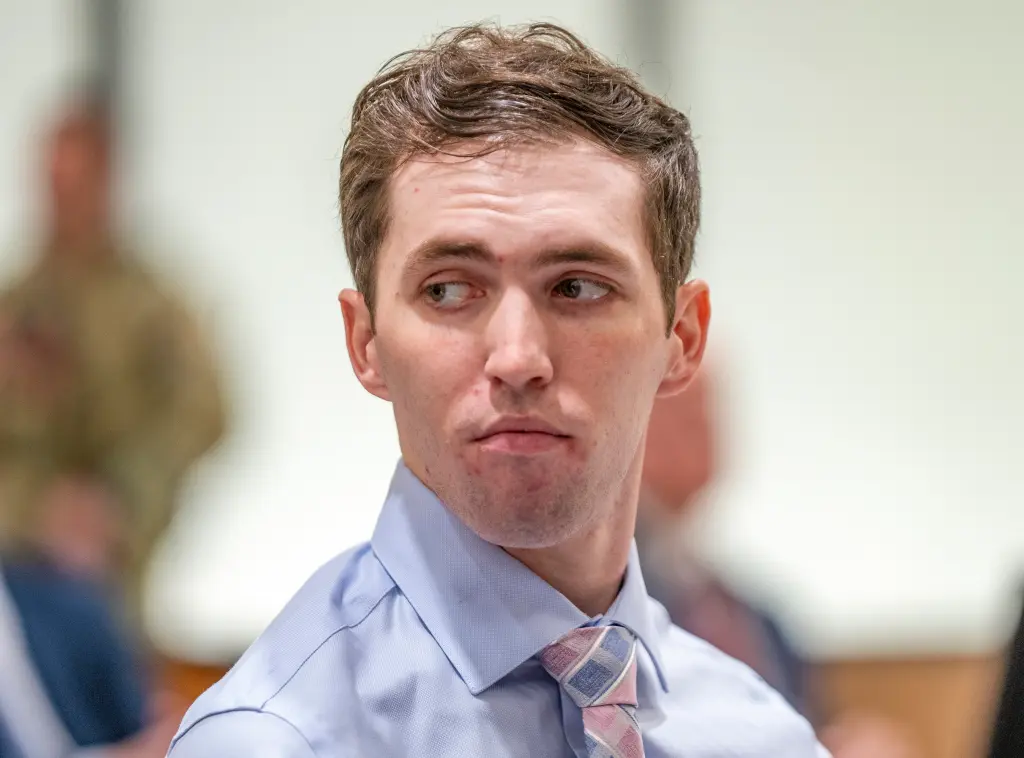
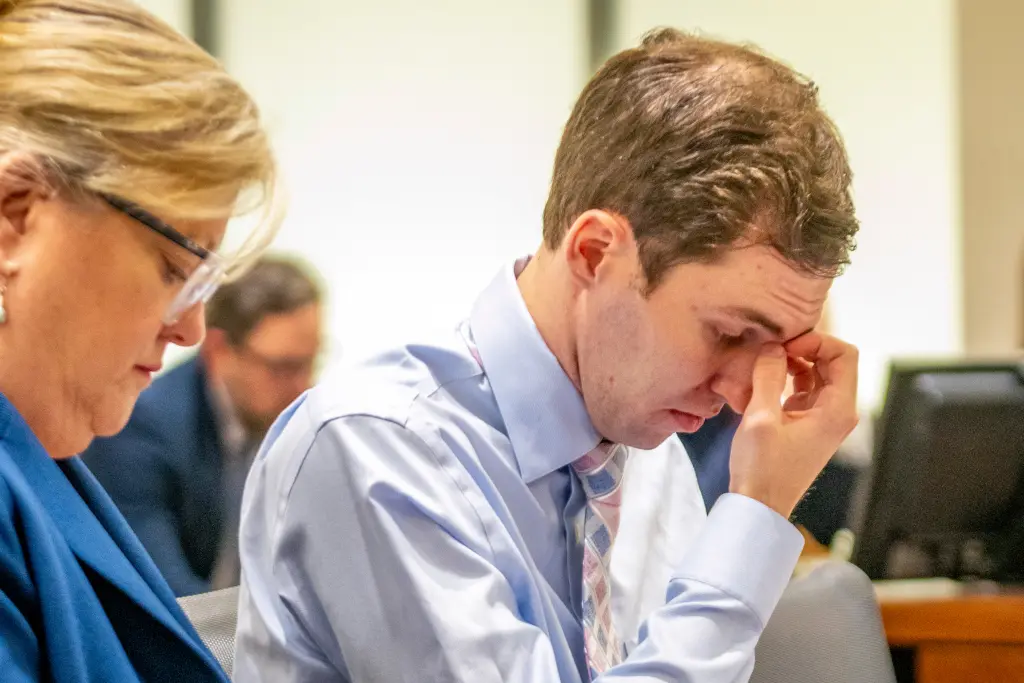
Robinson’s court appearance unfolded in the Fourth District Court, a modest brick building in Provo, where autumn chill seeped through the walls. Dressed in a simple blue button-down and argyle tie—street clothes approved in an earlier hearing—he entered flanked by attorneys, his posture calm, even sharing a brief laugh with counsel before proceedings began. Judge Tony Graf, presiding with measured authority, turned the session to a contentious issue: media access. Robinson’s defense team argued for restrictions, citing the “swarm” of coverage that could taint a fair trial, from viral clips of the shooting to endless speculation online. Prosecutors countered that openness served the public interest, especially in a case prosecutors framed as politically motivated violence. Graf designated Erika as the victim representative, a nod to her stake in the process, before closing the courtroom for over two hours of sealed arguments. When doors reopened, he deferred rulings on broadcasting the trial and releasing transcripts from an October phone hearing, setting a follow-up for December 29. Through it all, Robinson sat expressionless, his eyes occasionally drifting—a far cry from the smirking figure some outlets described in early reports, but a reminder of the youth entangled in this tragedy.
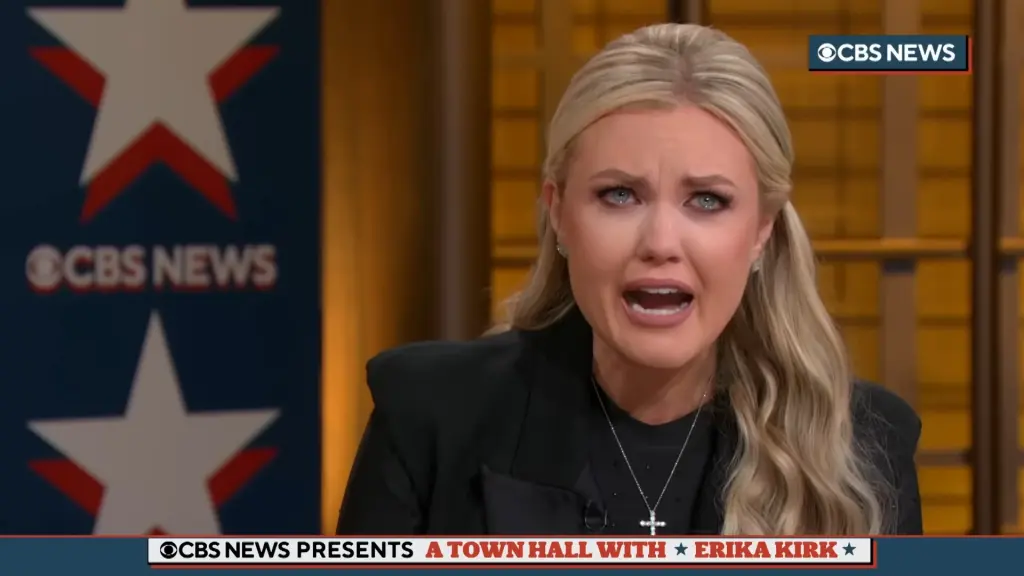
The lipreader’s report, analyzed by experts at Lip Reader Limited, added layers to the portrait. Beyond the daily hauntings of the shooting, Robinson seemed to grapple with its ripple effects: “Smoking a lot… Not sleeping at night… it’s driving me mental.” “Unfortunately, it’s doing my head in. I’m not good for anything,” he continued, words that humanized the accused without excusing the act. For Erika, learning of this—through leaks and reports—must have stirred a complex brew of emotions. Just days earlier, she had tearfully confronted those online who celebrated Charlie’s death, her voice breaking on CBS: “You’re sick. He’s a human being. You think he deserved that? Tell that to my 3-year-old daughter.” She blamed a “dehumanized” internet culture, where algorithms amplify rage over empathy, turning ideological foes into targets. And in a Wednesday Fox News sit-down, she lashed out at conspiracy theorists peddling “mind virus” claims—that Turning Point insiders orchestrated the hit, or that her grief was performative. “Come after me. Call me names. I don’t care,” she said, her “righteous anger” flaring. “But when you go after my family… the people that I love… that’s my breaking point.”
The case has laid bare deeper fault lines in America’s body politic. Charlie Kirk’s death—his 31 years cut short—prompted vigils from Phoenix to Washington, D.C., where allies like President Trump eulogized him as a “warrior for freedom.” Turning Point chapters swelled with new members, channeling sorrow into action, while critics revisited Kirk’s polarizing stances, from immigration hardlines to critiques of gender ideology. Robinson’s background, once a wholesome narrative of suburban promise, now fuels discussions on radicalization: How does a Trump-costumed teen become a rooftop shooter? Experts point to the echo chambers of social media, where left-leaning forums clashed with Kirk’s unapologetic conservatism, fostering isolation. His unaffiliated voter status and sparse political footprint underscore the unpredictability—no manifesto, just a week’s fevered plan born of personal conviction.
For the families at the center, normalcy feels like a distant memory. Erika, cradling her children through holidays shadowed by absence, finds solace in Charlie’s legacy: the students he inspired, the debates he sparked. Robinson, confined since his surrender, faces a path toward accountability, his whispered regrets a footnote in a story of profound loss. As the December 29 hearing looms, Utah’s quiet valleys hold their breath. In Provo’s corridors of justice, the pursuit isn’t just of verdicts, but of understanding—why one life ended another’s so abruptly, and how a grieving widow, two fatherless children, and a fractured nation might yet find a measure of healing. The gavel’s echo lingers, a reminder that even in division, the human heart demands witness.