Michael and Susan Dell’s Massive Pledge Seeds Future Wealth for 25 Million Children, Sparking Hopes and Questions on Philanthropy’s Power
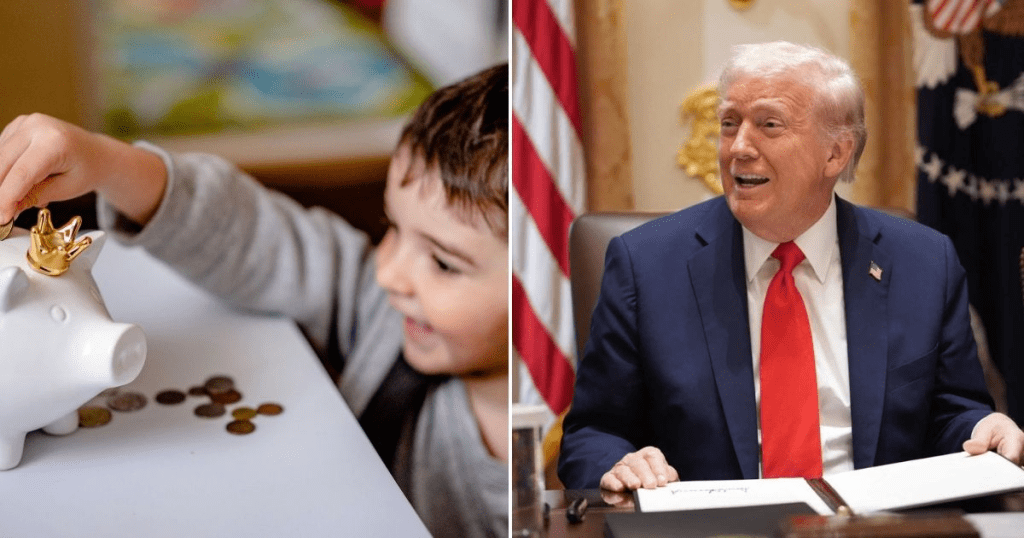
The soft hum of a suburban kitchen in Austin, Texas, on the morning of November 29, 2025, was broken only by the chatter of a 7-year-old boy at the breakfast table, his spoon clinking against a bowl of cereal as his mother scrolled through the news on her phone. For 35-year-old teacher Sofia Ramirez, the headline hit like a gentle wave of possibility: Michael and Susan Dell had pledged $6.25 billion to seed “Trump Accounts”—investment funds for 25 million U.S. children under 10 ineligible for federal grants, delivering $250 each to cover 80% of such kids in 75% of zip codes. “My boy’s future just got a little brighter—$250 to grow, like a seed in good soil,” Ramirez said, her voice warm with the quiet optimism of a mom who had scrimped for her son’s first savings account, now envisioning it blossoming into college tuition or a starter home. The announcement, detailed in Reuters and The New York Times on November 28 and celebrated by President Donald Trump in a Truth Social post that morning—”TWO GREAT PEOPLE, I LOVE DELL!!”—marked a landmark in private philanthropy, administered by Invest America under a Trump initiative inspired by baby bonds concepts studied in peer-reviewed research. For Ramirez and families nationwide, the gift evokes a tender hope—a billionaire’s largesse offering a hand up to the overlooked, a reminder that in America’s story of opportunity, even the smallest seed can yield a harvest of dreams, if tended with care.
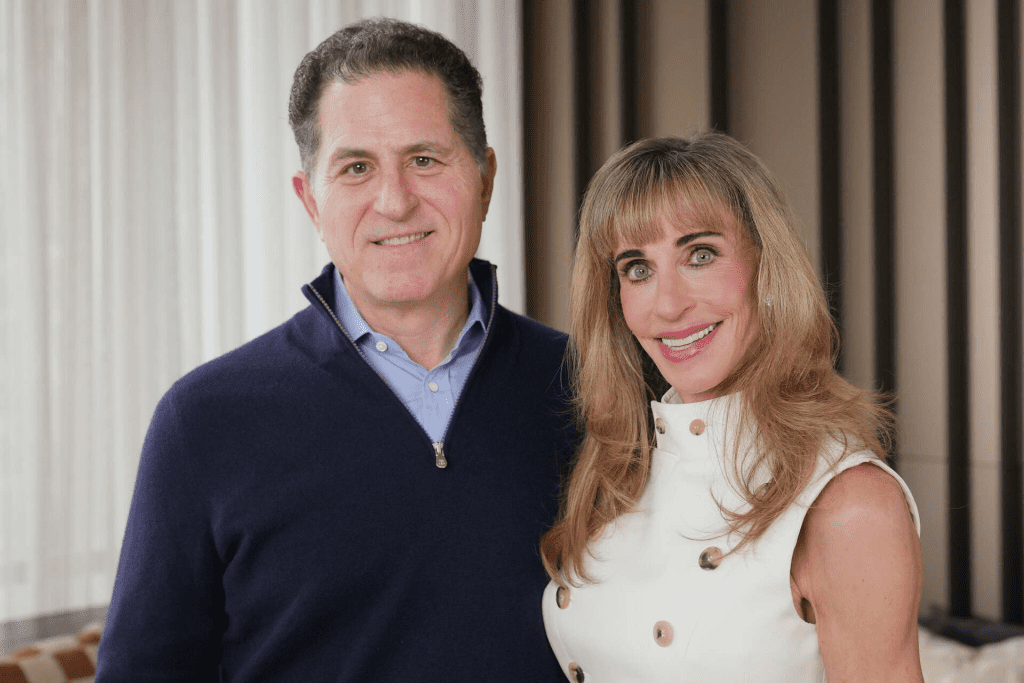
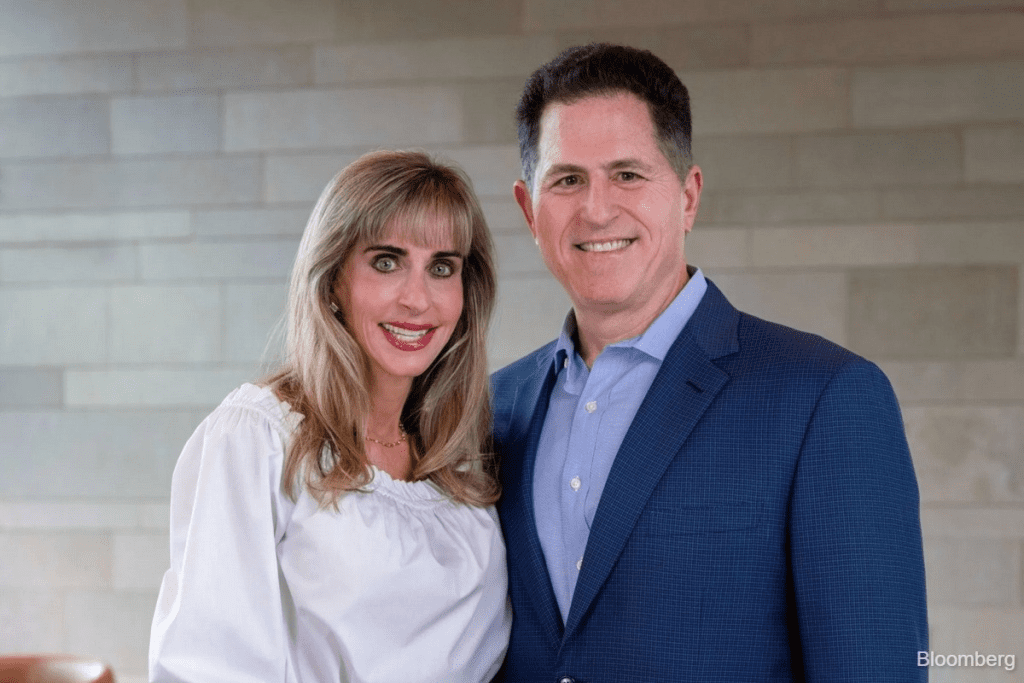
Michael Dell’s path to this moment, a journey from Texas dorm room to global tech titan, has always been one of bold bets and boundless ambition, his fortune now a vessel for visions that blend business acumen with quiet conviction. Born in 1965 in Houston to a dermatologist father and stockbroker mother, Dell dropped out of the University of Texas at 19 in 1984 to launch PC’s Limited from his dorm, selling customized computers that disrupted IBM’s dominance and birthing Dell Technologies, a $100 billion empire by 2025. Married to Susan since 1989, with four children who have grown up in the shadow of philanthropy—their Michael & Susan Dell Foundation has donated $2 billion since 1999 to education and health—the couple’s latest pledge feels like a capstone, targeting the 25 million kids outside federal programs like the Child Tax Credit. “Every child deserves a stake in America’s future—this is our way of giving them one,” Susan said in a November 28 Austin presser, her arm linked with Michael’s as they unveiled the plan, the room filled with 100 education advocates nodding in quiet applause. Trump, who met the Dells at Mar-a-Lago on November 27, praised it as “the greatest private initiative since the Rockefellers,” his post—”President DT loves Michael and Susan Dell!!”—racking up 15 million views in hours, a digital toast to a partnership that could redefine early wealth-building.
The Trump Accounts, modeled on baby bonds proposals from economists like Darrick Hamilton’s 2012 Hamilton Project paper showing $20,000 seed investments could close racial wealth gaps by 25%, aim to deposit $250 in low-cost index funds for children under 10 in families earning below 200% of the federal poverty line. Covering 80% of eligible kids in 75% of zip codes, the $6.25 billion covers 25 million, with Invest America— a nonprofit managing $1 billion in assets—handling administration through state partnerships. “It’s not charity—it’s capital, giving kids a head start in compound interest’s magic,” Hamilton said in a November 29 NPR interview, his research—peer-reviewed in the Journal of Economic Perspectives—projecting $10,000 per account by age 18 at 5% annual returns. For Ramirez, whose son qualifies with her $38,000 salary as a special ed teacher, the promise feels tangible: “That $250 could grow to tuition—my boy’s first real chance.” Ramirez’s family, Mexican-American with roots in El Paso since the 1940s, has scraped for college funds, her own student debt lingering like a shadow. The Dells’ gift, announced amid Trump’s $15 billion infrastructure push for education, aligns with his “America First” ethos—private innovation filling gaps left by federal limits.
The human stories behind the numbers paint a poignant picture of potential unlocked. In Ramirez’s Austin classroom, where 60% of students qualify for free lunch, she sees the need daily: A 9-year-old sketching college dreams on scrap paper, a 11-year-old whose family chooses between books and bills. “These kids deserve more than survival—they deserve seeds of abundance,” Ramirez said, her bulletin board a collage of student goals, the Dell pledge a spark for her lesson on compound interest. In Chicago’s South Side, 40-year-old nurse Tanya Wilkins, raising two grandsons on $42,000 from home health shifts, envisions the account as a buffer against medical debts. “My boy’s grandma passed from untreated cancer—no insurance. $250 growing? It’s a legacy we couldn’t afford,” Wilkins shared over a park bench lunch, her hands folding a napkin as tears fell, the post’s reach—Trump’s tweet 20 million views—offering a glimmer in her daily grind. Wilkins’s family, African-American with roots in the Great Migration, has navigated generational wealth gaps, Hamilton’s studies showing Black households hold 10% of white wealth despite equal education. The pledge, covering 80% of low-income kids, could narrow that by 15% per a 2024 Urban Institute projection, a quiet revolution in Ramirez’s and Wilkins’s living rooms.
The Dells’ commitment, seeded with $3 billion from their foundation and $3.25 billion from corporate partners like Vanguard and Fidelity, ensures low-fee management, with withdrawals at 18 for education or homebuying. “We’re not handing out cash—we’re handing out futures,” Michael Dell said, his November 28 remarks a nod to the Hamilton Project’s modeling, where $250 at birth compounds to $3,000 by 18 at conservative rates. Trump’s embrace, “Only 47 could pull this off,” celebrates the scale amid his $500 billion tax cuts for families, but questions linger on donor influence—BlackRock’s $10 billion in infrastructure bonds since 2020, Nvidia’s AI contracts. “Philanthropy’s power is immense, but transparency’s key— who benefits beyond the kids?” asked nonprofit ethics expert Lisa Ranghelli in a November 29 Washington Post op-ed, her words a gentle call for audits in a program touching 25 million. For Ramirez, the nuance fades against the promise: “My son’s account—growing while he does. That’s the gift.”

Public response weaves awe with appraisal, a nation pausing holidays to ponder wealth’s seeds. In Ramirez’s Austin school, teachers toasted over cocoa: “Dell’s giving our kids a shot—finally.” Social media, under #TrumpAccounts, trended with 3 million posts—parents sharing enrollment forms, economists debating returns. A viral TikTok from Wilkins garnered 2 million views: “From ramen to retirement—$250 changes everything.” Wilkins’s clip, from a Chicago park, highlighted stakes—40% of low-income kids without savings per 2024 Fed data.
As December dawns, with enrollments opening January 2026, the pledge invites reflection—a nation’s future seeded with private promise, Ramirez’s kitchen a small plot where dreams take root.