A Mom Thought Her Dog Just Had Bad Breath — What Vets Found Instead Changed Everything for This Family
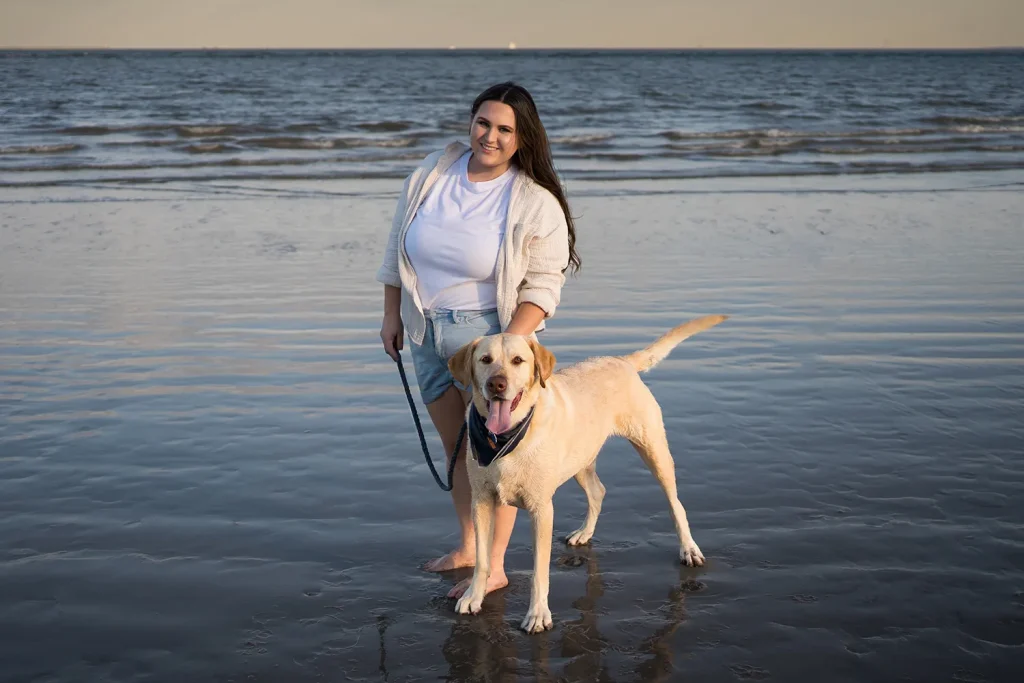
When Hayley Glatfelter looks back on the fall of 2025, she can pinpoint the exact moment her world shifted. It wasn’t inside a hospital room or during one of the endless anxious drives between home and the ICU, where her 1-year-old child had been staying. Instead, it happened in the quiet moments after they returned home — exhausted, overwhelmed, and trying to reclaim a sense of normalcy. Their 6-year-old Labrador retriever, Gideon, who had been part of the family since he was a tiny 7-week-old puppy, greeted them at the door like he always did. But something was different.
Gideon’s breath smelled wrong. Not the usual doggy odor or the kind that appears after rummaging in the trash. This was sharp, sour, and deeply unsettling, a smell that made Hayley pause. At the time, she brushed it aside, thinking maybe he needed a dental cleaning or had chewed something odd while they were away. After all, the family was already juggling a medical crisis with their youngest child — the idea that something might be wrong with their dog felt too heavy to consider.
But the smell didn’t go away. It grew stronger. Gideon’s energy dipped, his behavior shifted, and Hayley began to feel that tug of instinct every longtime pet owner knows too well. Something wasn’t right.
Bad breath is often dismissed as a minor pet issue, but veterinarians warn it can be one of the earliest subtle signs of illness — especially when it appears suddenly or worsens quickly. And for Gideon, it turned out to be the first signal of a devastating diagnosis that would change his life forever.
By the time Hayley brought him to the vet, the odor had become impossible to ignore. During the exam, the veterinarian noticed swelling inside Gideon’s mouth and signs of discomfort when they touched his upper jaw. Further scans revealed what the family feared: a mass growing deep inside his nasal cavity and extending into the bone. At first, there was hope it might be an infection or a treatable inflammation. But follow-up tests confirmed a heartbreaking truth — Gideon had cancer.
The type of cancer Gideon faced — a malignant tumor affecting the nose and upper jaw — is aggressive and, if left untreated, fatal. For Hayley and her family, the news hit like a tidal wave. They were already carrying the emotional weight of having a child in the ICU; now their beloved dog, the constant source of comfort through some of the hardest months of their lives, was suddenly in a fight for his own survival.
The recommendation from specialists was immediate and blunt: to save Gideon, surgeons would need to remove his nose and part of his upper jaw. It was the only way to stop the cancer from spreading. The idea was terrifying. The images were difficult to imagine. And the decision, Hayley admits, didn’t come instantly. Most families, when confronted with such a drastic surgery, struggle with the emotional conflict of wanting their pet to survive but fearing the toll the procedure will take.
But then came the moment that made the choice clear. Despite the pain, despite the swelling and the strong medication, Gideon still walked over to Hayley’s bedside every night and laid his head next to her, asking for the same affection he always had. Even sick, he was gentle, patient, and full of the same sweetness that made them fall in love with him at seven weeks old. Hayley realized that as long as Gideon still wanted to fight, they would fight with him.
The surgery was long, complex, and unlike anything most pet owners ever imagine having to consider. Removing a dog’s nose and part of the upper jaw — a procedure known as a rhinotomy and maxillectomy — is rare and requires precise reconstruction to allow the dog to breathe, eat, and live comfortably afterward. The surgeons told the family that recovery would be difficult. Gideon would look different. He would need months of rehabilitation. But they also said something else that gave Hayley strength: dogs adapt far better than humans expect.
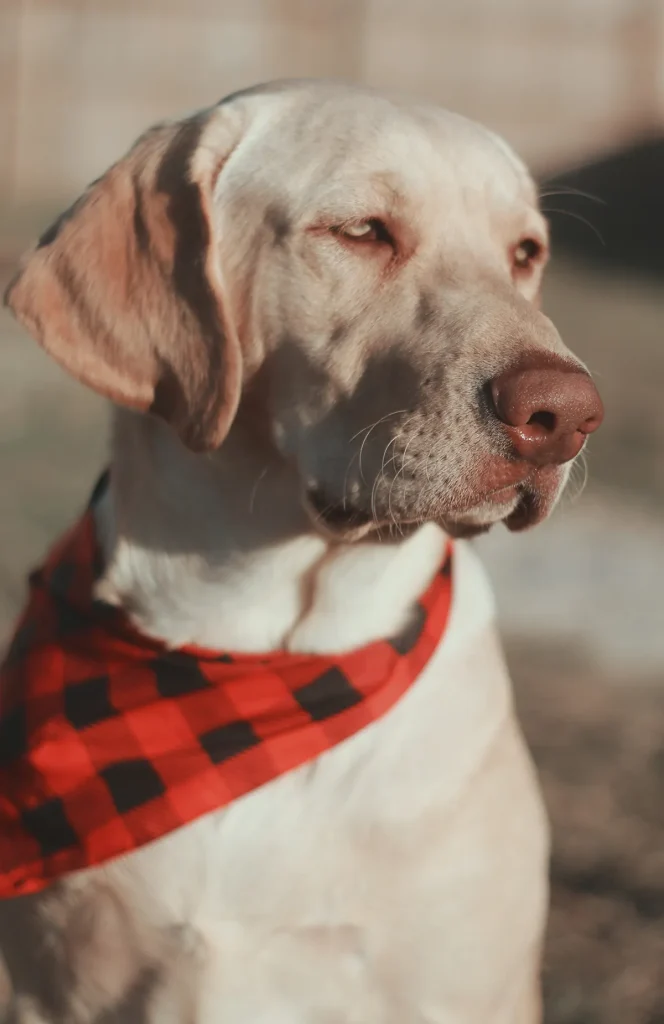
And Gideon proved them right.
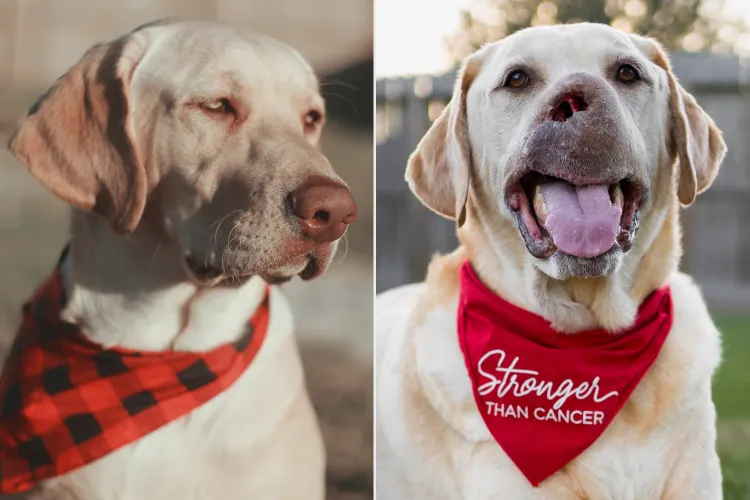
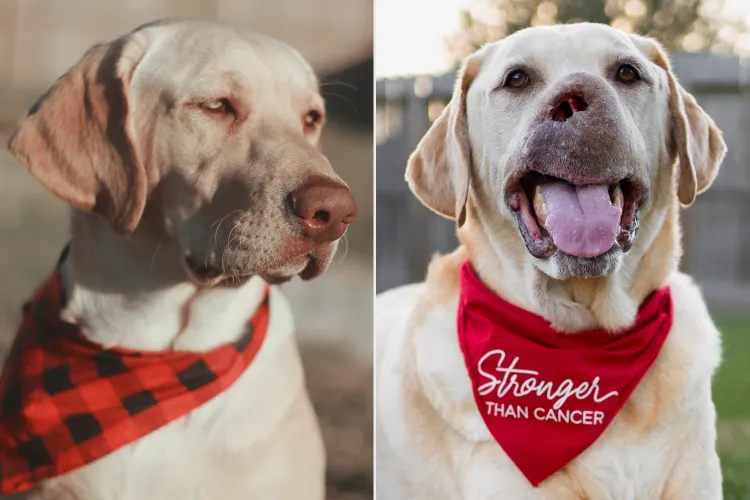
Photos taken after the surgery show a dog who has undeniably changed in appearance — a dog missing the soft brown nose he once used to nudge his family’s hands, missing the upper portion of his jaw that used to wrap around his toys. But the expression in his eyes, the gentleness in his body language, the bright wag of his tail — none of that changed, not even a little.
What shocked Hayley the most was how quickly he adapted. While humans often struggle emotionally with visible changes or scars, dogs move forward with remarkable resilience. Gideon learned to breathe through the reconstructed cavity. He figured out a new way to drink water without difficulty. He returned to eating soft foods within a short time and rediscovered his favorite toys. The family even jokes that he plays just as joyfully as he did before, chewing these toys with the same enthusiasm — just from a different angle.
Gideon’s recovery also brought the family together in a new way. After months spent in and out of hospitals for their child, and then weeks caring for Gideon through a difficult postoperative phase, they found healing in caring for him. The routines — cleaning his surgical area, preparing his meals, monitoring his breathing — became moments of bonding and reassurance. Hayley says that in many ways, helping Gideon helped her cope with everything else happening in their lives.
The surgery removed the cancer, but Gideon still requires monitoring, regular checkups, and occasional scans to ensure the disease doesn’t return. For now, though, he is stable. He is happy. And he is pain-free. According to Hayley, he’s back to sunbathing in the backyard, watching the children play, and greeting everyone with the same loving energy that made him a member of the family the moment they brought him home.
The family also hopes their story raises awareness about how crucial it is not to ignore unusual symptoms — especially bad breath. Veterinarians often note that persistent or foul odor can indicate dental disease, metabolic issues, or, in rare cases like Gideon’s, cancer. Because early symptoms can be subtle, especially with nasal tumors, many families miss the window for early treatment. Hayley wants people to understand that even small changes in a pet’s behavior or health deserve attention. In their case, trusting that instinct didn’t just save Gideon’s life — it gave them more time with a dog who means the world to them.
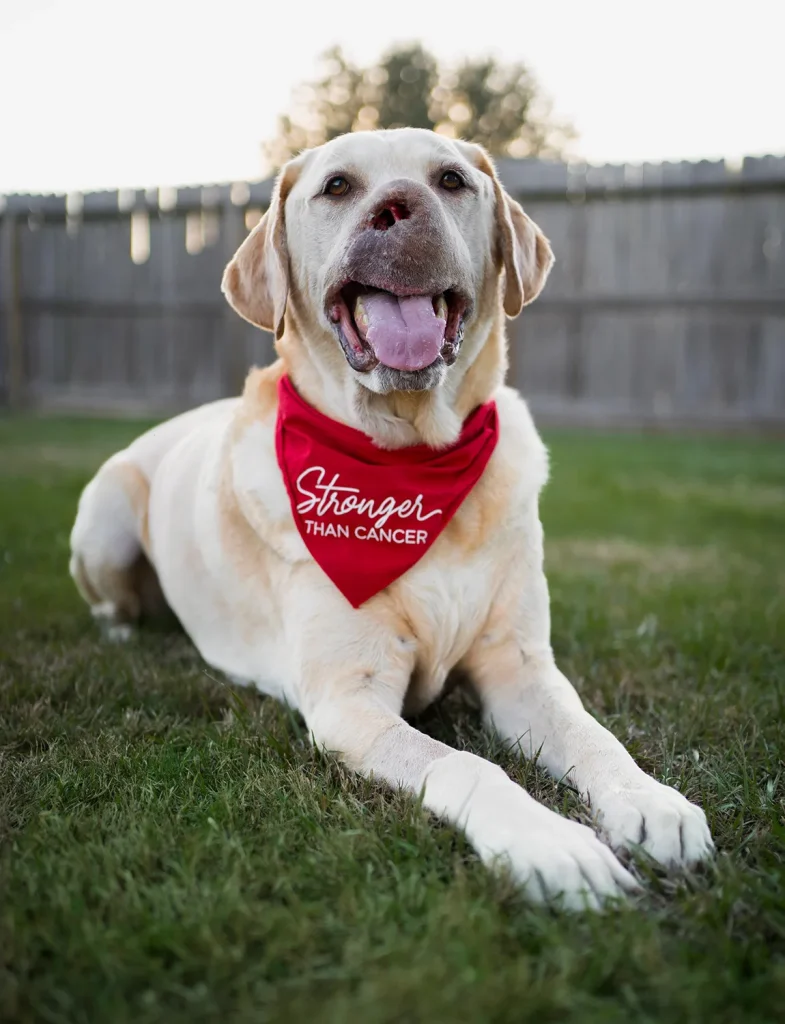
What stands out the most in Gideon’s story isn’t the medical challenge or the dramatic surgery. It’s what comes after — the resilience, the healing, and the way a dog with such a dramatic physical transformation continues to bring joy to everyone around him. Hayley often says that Gideon is “stronger than cancer,” a phrase printed proudly on the red bandana he wears today. It’s not just a slogan; it’s a reflection of who he truly is.
Through everything, Gideon never lost the qualities that made him special from the very beginning. He remained loyal, loving, and endlessly patient. His presence soothed the family during one of their darkest seasons, and now, as he continues his recovery, he reminds them every day how powerful resilience can be. His story is a reminder that heroism doesn’t always roar. Sometimes it simply wags its tail, takes a deep breath, and keeps going.
Today, Gideon is living a full and joyful life, surrounded by the family that fought so fiercely to keep him here. And for Hayley, the lesson is clear: when you love someone — even a four-legged someone — you do whatever it takes to give them the chance to keep shining.