Eric Dane Opens Up About His ALS Diagnosis, Admitting His Life “Isn’t About Me Anymore” in an Emotional Conversation That Shook Hollywood
Eric Dane has always carried a certain steadiness with him — the kind that made viewers connect instantly, whether he was saving lives on Grey’s Anatomy or navigating the chaotic emotional world of Euphoria. But in recent days, the actor has revealed a different side of himself, one shaped by vulnerability and acceptance, as he continues to confront the reality of living with ALS. His honesty has struck a deep chord with fans, especially after he shared a powerful reflection on how drastically the diagnosis has shifted his understanding of life and identity.
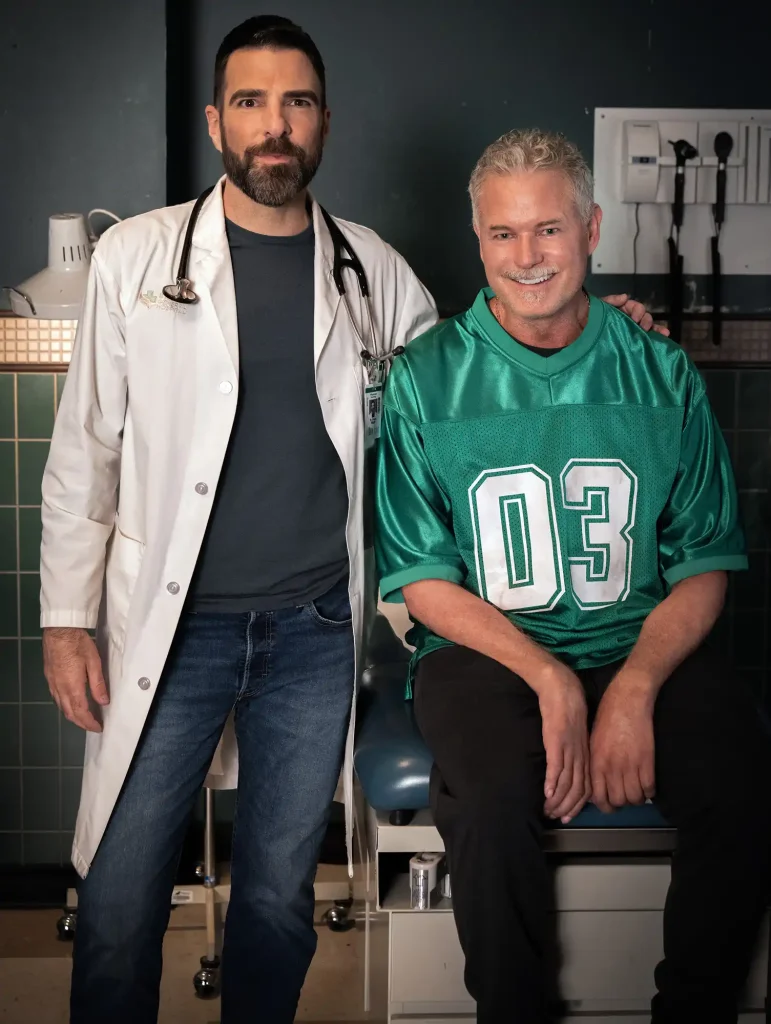
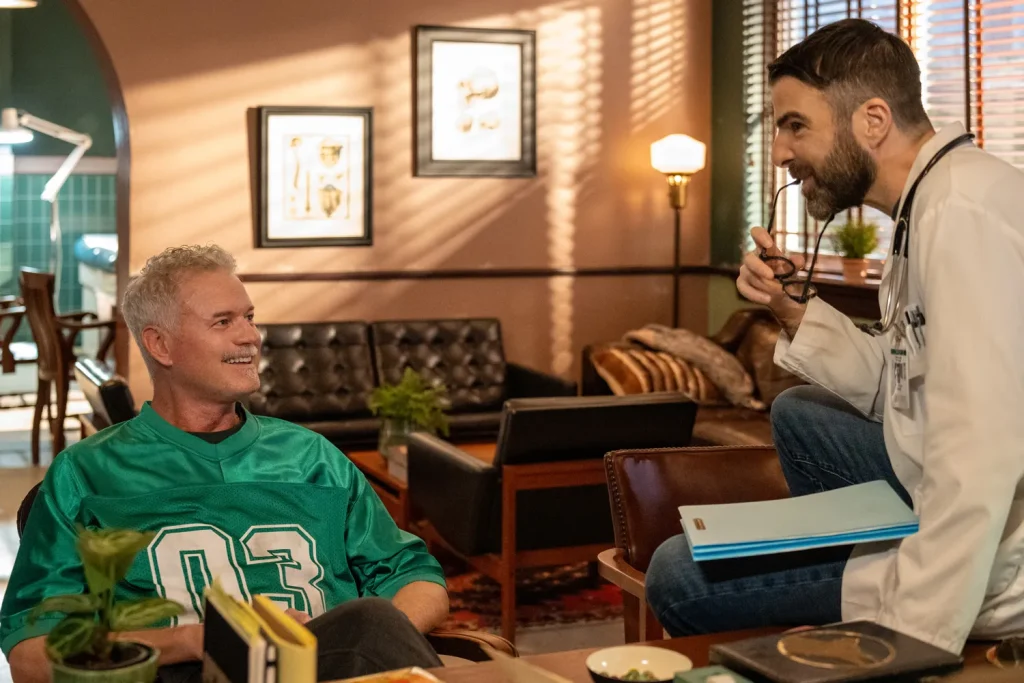
Dane’s latest remarks come just days after he guest-starred on Brilliant Minds, portraying a firefighter living with ALS. It was a role that resonated profoundly not just with viewers, but with the actor himself. Shortly afterward, he joined a Dec. 2 panel discussion with the show’s creator, a consulting doctor for the series, and I AM ALS founders Brian Wallach and Sandra Abrevaya. What happened during that conversation was nothing short of a raw, unfiltered look into his journey — one that he’s still trying to understand as he shares it with the world.
When Dane spoke, he didn’t hide behind carefully constructed statements or polished lines. Instead, he delivered a heartfelt confession that captured the attention of everyone watching. “It’s imperative that I share my journey with as many people as I can, because I don’t feel like my life is about me anymore,” he said. “It’s something I’ve had to wrestle with, because I’m a pretty selfish person, and I would love my life to be all about me, but I just can’t.” The words landed with a weight that made the room fall quiet — not out of pity, but out of respect for the bravery it takes to speak so plainly about a life-altering diagnosis.
ALS, or amyotrophic lateral sclerosis, is a progressive neurodegenerative disease that affects nerve cells in the brain and spinal cord. For many, the diagnosis arrives like an unexpected storm, reshaping the landscape of everyday life and forcing emotional reckonings that few could prepare for. Dane’s choice to speak publicly about his journey adds a significant voice to the growing call for awareness, support, and understanding around the disease. For fans, his openness feels like an invitation into a deeply personal chapter — and a reminder of the humanity behind the Hollywood image.
Throughout the panel, Dane reflected on the unusual collision between fiction and reality when he took on the Brilliant Minds role. Productions often bring actors into contact with stories that parallel real-life experiences, but for Dane, the overlap was uniquely profound. Playing a character navigating ALS while simultaneously living with it created a layered emotional terrain that he approached with humility and sincerity. His performance was quietly powerful, but the insight he gained from stepping into that role seemed to linger long after the cameras stopped rolling.
Those who have followed Dane’s career know that he has always possessed a natural ability to connect — whether through humor, through intensity, or through a quiet, grounded presence. That quality seemed to amplify during the discussion, as he spoke not only about the physical aspects of ALS but about the emotional shift it demanded. His internal struggle, the push-and-pull between wanting to hold on to his old life and learning to surrender parts of it, came through in every sentence he shared.
“I don’t feel like my life is about me anymore,” he repeated, echoing a transformation that many ALS patients describe. The journey becomes communal, extending far beyond the individual and forming connections rooted in empathy, support, and shared understanding. For Dane, acknowledging that shift wasn’t a moment of defeat — it was a moment of clarity. By opening up about the realization, he offered comfort to countless people who may be facing similar emotions but lack the platform or language to express them.
What resonated even more deeply was his acknowledgment of wrestling with self-identity. “I’m a pretty selfish person,” he said, not as a criticism but as an honest observation. It was the kind of admission that stripped away the glamour of fame and exposed the universal truth of how people grapple with losing control over their own lives. Dane’s willingness to confront these feelings publicly made his message feel not only brave, but profoundly human.
The panel discussion also emphasized the importance of community for ALS patients. With Brian Wallach and Sandra Abrevaya — both known for their tireless advocacy after Wallach’s own ALS diagnosis — present at the table, the conversation took on a tone of collective resilience. Dane appeared both reflective and attentive, listening carefully to their stories and insights. Their presence served as a reminder that while ALS is isolating in many ways, no one who faces it should ever have to walk through it alone.
For fans, watching Dane step into this vulnerable role — both onscreen and off — has been emotionally significant. Many who have followed his career from his early years in television to his more recent projects were stunned by his diagnosis, yet inspired by how he has handled it. His recent public appearances show a man who, despite the gravity of the diagnosis, has chosen to remain engaged, expressive, and passionately connected to his community.
The impact of his words extends beyond entertainment. When someone in the public eye speaks openly about a disease like ALS, it brings visibility to the millions affected worldwide. It sparks conversations in homes, on social media, and among medical professionals about the need for research, support systems, and continued advocacy. Dane didn’t label himself an activist during the discussion, but the power of his honesty undoubtedly contributes to the broader movement.
As he continues navigating his journey, Dane appears determined not to let ALS define him. The story he’s sharing is not one of surrender but of adaptation — a shift from asking “Why me?” to asking “What now?” The distinction matters. It signals an inner resilience that has always been a defining part of his screen presence, now emerging with striking clarity in real life.
The emotional response to his remarks, especially the confession about wanting life to still revolve around him, highlights a universal experience. Almost everyone can relate to wanting more control, wishing things could stay the same, or struggling with responsibilities they never asked for. Dane’s honesty transforms these private battles into shared humanity. And in doing so, he offers comfort even while he seeks it.
The industry has responded with messages of support from colleagues, fans, and friends who admire the dignity with which he is facing an incredibly difficult journey. Many have praised his willingness to use his platform to amplify the voices of others living with ALS, recognizing that awareness often grows only when someone with visibility is willing to speak up.
In interviews and appearances over the years, Dane has often expressed gratitude for his career, the roles that shaped him, and the audiences who have followed him across genres and generations. Now, as he speaks about a chapter filled with uncertainty, that gratitude seems to deepen. He talks about community in a way that suggests he is both leaning on it and contributing to it. He speaks about vulnerability not as a weakness but as a connection point. And he shares pieces of his journey not to seek sympathy, but to ensure that others feel less alone.
There is something undeniably powerful about watching someone who built an entire career on portraying confidence allow the world to see him without armor. In that openness, Dane continues to represent strength — a different kind of strength, quieter but deeply resonant. It’s a reminder that courage isn’t always loud, and that some of the bravest acts happen in the quiet honesty of telling the truth.
As he moves forward, Dane appears committed to continuing the conversation. His story is still unfolding, and he seems determined to share it not just for himself, but for the millions who fight ALS with limited visibility. Whether he is discussing his role on Brilliant Minds, participating in advocacy panels, or simply acknowledging the emotional weight of his diagnosis, he brings a clarity and sincerity that can change the way people understand the disease.
For now, his words linger, echoing far beyond the panel where he first shared them. “I would love my life to be all about me, but I just can’t,” he said, capturing a shift in purpose that many experience but few articulate so simply. It is a statement heavy with truth, but also full of hope — hope that by sharing his journey, he can offer something meaningful to others.
Eric Dane’s story continues, filled with challenges but also with extraordinary heart. And as long as he keeps speaking, the world will keep listening.