“Below Deck Star Reveals Terrifying Vaping-Related Health Scare That Nearly Killed Him — ‘I’ve Never Felt Fear Like This’”
When Fraser Olender opened his eyes in a hospital bed, surrounded by the rhythmic hum of machines and the unmistakable weight of medical urgency, he knew his life had changed. The 31-year-old Below Deck alum, known for his sharp wit, polished professionalism, and easy charm on-screen, had been rushed to the hospital after experiencing symptoms he could no longer ignore. What he did not expect was the diagnosis that would follow: a lung injury and a heart attack believed to be caused by vaping — the casual habit he once brushed off as harmless.
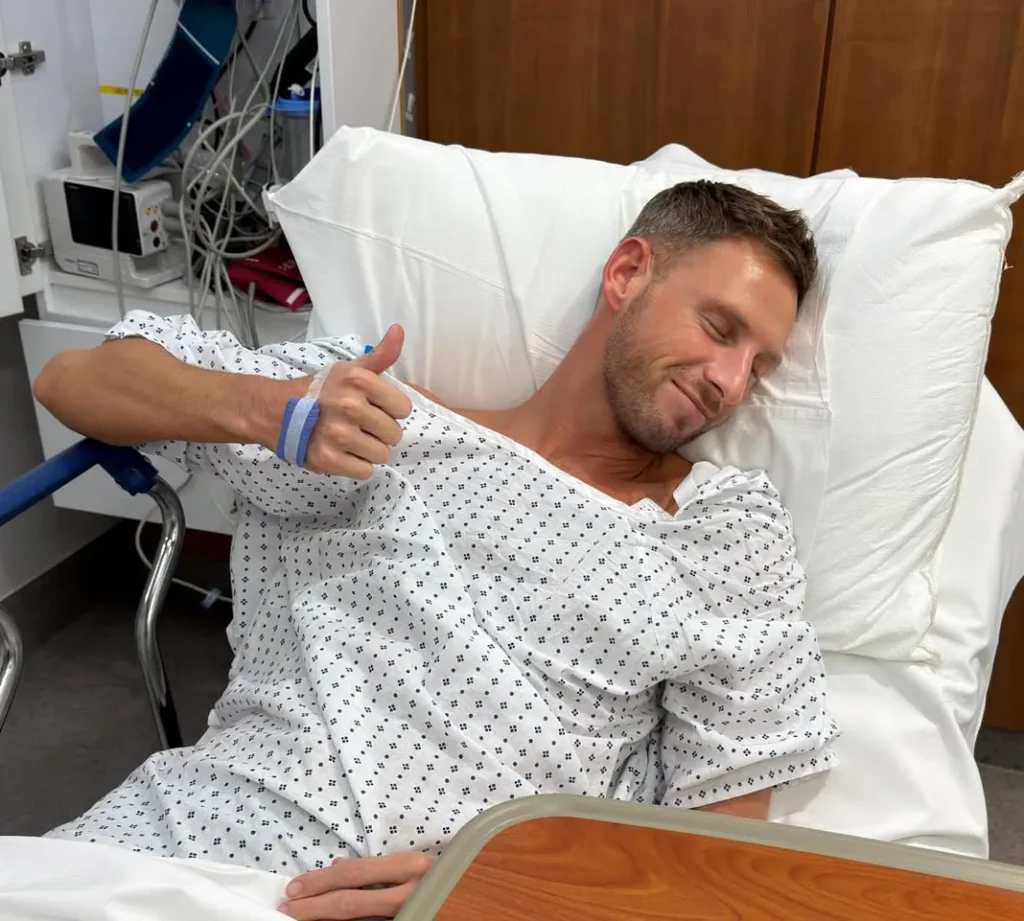
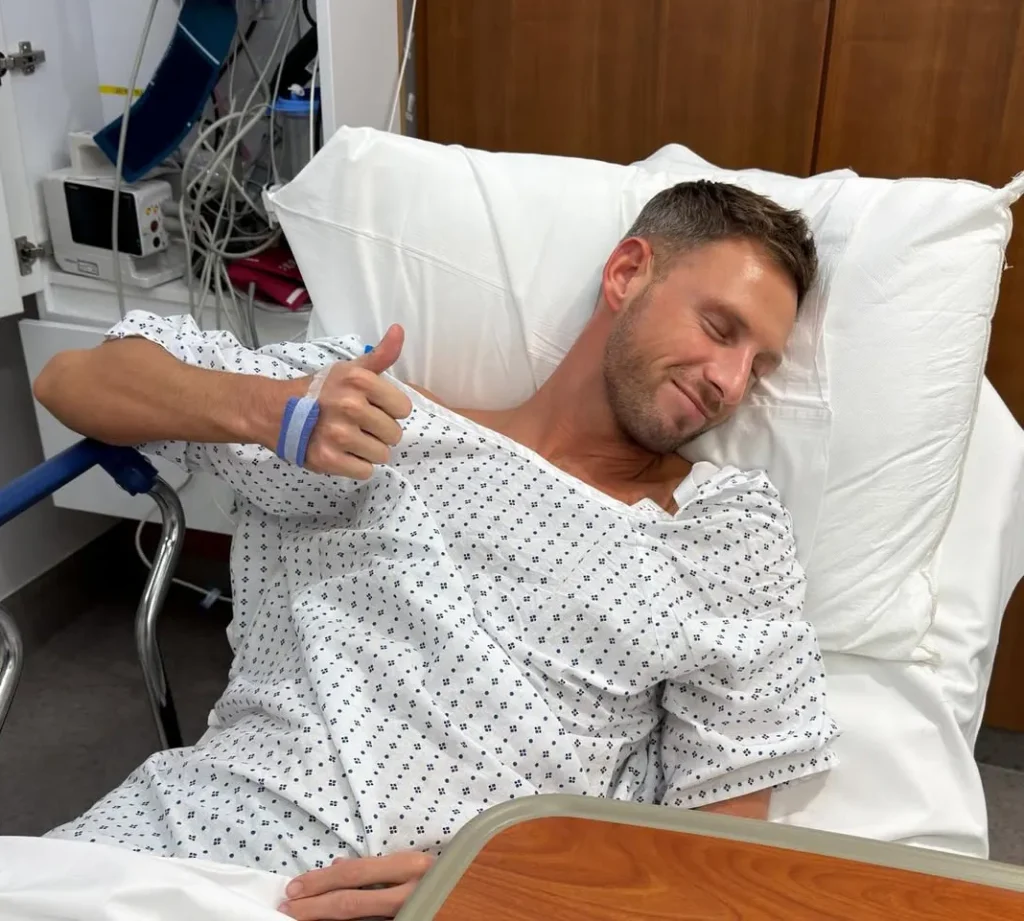
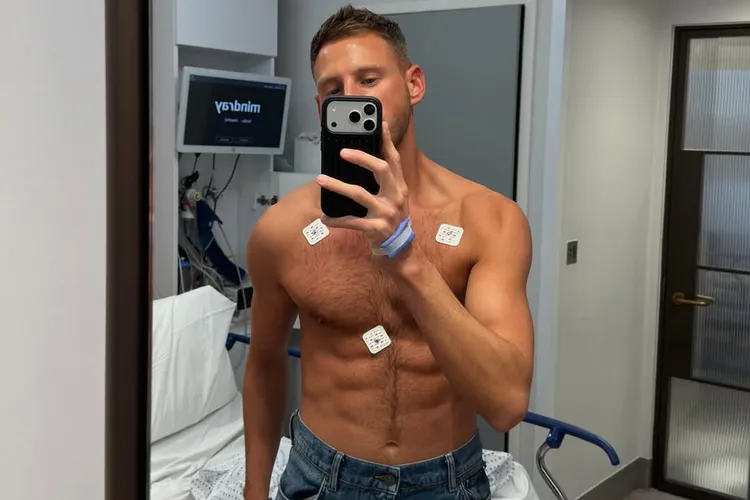
In a series of deeply personal posts shared on Instagram, Olender revealed the gravity of the ordeal. Wearing a hospital gown, IVs taped to his arms, and a look that hovered between exhaustion and relief, he explained that he had encountered a level of pain and fear he never imagined possible. It wasn’t only the physical trauma that shook him. It was the realization of how close he came to losing everything — his career, his future, and the life he had worked so hard to build.

For years, vaping has been marketed as the “safer” alternative to cigarettes, a colorful, flavored escape wrapped in sleek devices that fit easily into everyday routines. Fraser admitted he fell into that trap. Social settings, long work hours, and the stress of filming reality television made vaping feel like a harmless release. But behind the clouds of vapor lay risks he didn’t fully understand. Doctors, he shared, told him that the injuries he sustained were consistent with vaping-associated lung damage — trauma that triggered a cardiac event far more dangerous than he ever imagined.
He described the moment everything changed. Chest tightness that escalated into crushing pain. Shortness of breath that made every inhale feel like fire. A racing heart that left him dizzy and disoriented. When he arrived at the hospital, fear settled in quickly. He recalled thinking he might not walk out again. “I’ve never experienced fear or pain like it,” he wrote to his followers, attempting to make sense of what had happened.
The medical team moved quickly, stabilizing him, running tests, and treating the inflammation and cardiac distress that nearly cost him his life. Fraser said he felt a profound wave of regret — not only for ignoring warning signs, but for underestimating the hidden dangers of vaping. He expressed anger at himself for treating it as a lifestyle accessory rather than a health risk and admitted that he had no idea it could escalate this severely.
As he began recovering, Fraser’s candid reflection turned into a message he hopes will reach others before they face similar consequences. The reality star is known for bringing humor to difficult situations on Below Deck, but this time, he spoke without a trace of irony. “I could have died for the sake of something so ridiculously stupid,” he said. It was a moment of raw honesty from a public figure whose life often unfolds under the bright, glamorous veneer of TV production.
He didn’t hesitate to urge his followers to quit — immediately. Not gradually, not someday, but cold turkey. Whether someone vapes casually or constantly, he stressed that the risks aren’t abstract or exaggerated. They’re real, they’re dangerous, and he is living proof of how quickly things can go wrong. He explained that despite the years of warnings issued by researchers and doctors, many people still treat vaping as an aesthetic trend rather than a threat to their long-term health. His experience, he emphasized, was a wake-up call not just for himself, but for anyone who still believes they are invincible.
The emotional weight behind his message resonated widely. Fans who have followed him from season to season expressed shock and relief, flooding his posts with support and gratitude. Several admitted his story frightened them enough to reconsider their own vaping habits. Others shared their own health scares, revealing how deeply Fraser’s openness touched them.
But beyond the personal responses, Fraser’s experience reignited a broader conversation about vaping’s overlooked dangers. Public health officials have spent years trying to communicate that the substances used in e-cigarettes — including nicotine, chemical flavorings, and aerosolized particles — can cause inflammation, damage the lungs, and strain the cardiovascular system. Cases of vaping-related lung injuries have been documented worldwide, some of them fatal. Fraser’s ordeal puts a familiar face on an issue many still distance themselves from.
Fraser’s gratitude for the medical staff who treated him was evident in his words. He expressed disbelief that their swift action may have saved his life. He knows he was lucky — lucky to survive, lucky to receive immediate care, and lucky to walk away with a second chance. It’s not a privilege he intends to waste.
Lying in the hospital bed, still recovering, he snapped a photo that captured both the vulnerability and resilience of the moment: one eye closed, a soft smile, and a thumbs-up that signaled hope despite the circumstances. It was a gesture fans instantly recognized — Fraser trying to reassure everyone even when he himself was still processing the shock.
Yet even in that hopeful expression, his message remained firm. “We do not know enough about these horrific things,” he said, referring to vaping and the long-term harm many users underestimate. His tone shifted only slightly when he added a bit of characteristic humor: “That was NOT cute, not even for the plot.” It was a reminder that even in the darkest moments, he hasn’t lost the ability to fuse honesty with personality. But the seriousness behind the comment was unmistakable. He wants people to understand that nothing about this ordeal was glamorous or dramatic in a TV sense. It was simply terrifying.
As he continues to recover, Fraser is focusing on rebuilding his health and leaving vaping behind for good. He has vowed not to return to the habit that nearly ended his life, and he hopes others will make the same choice before they face consequences they cannot undo. His story serves as a powerful warning — not crafted by medical experts or researchers, but by someone who lived through the worst outcome imaginable and survived to talk about it.
In sharing his truth, Fraser Olender reminds his audience that life can change in a single breath. What begins as a routine habit can spiral into a moment that defines everything. His vulnerability, honesty, and willingness to confront the harsh reality of what happened may save lives far beyond his own circle of fans. And as he rests, heals, and moves forward with a renewed sense of purpose, his message lingers with the kind of weight that only lived experience can deliver.
Three words echo through his story: it can happen. To anyone. At any time. Fraser is choosing to use his second chance to ensure others never find themselves in the same hospital bed, facing the same fear, wondering if one more inhale was worth it.