When ER Dismissed Pain as Reflux, xAI Chatbot Prompted Scan That Saved a Father’s Holiday
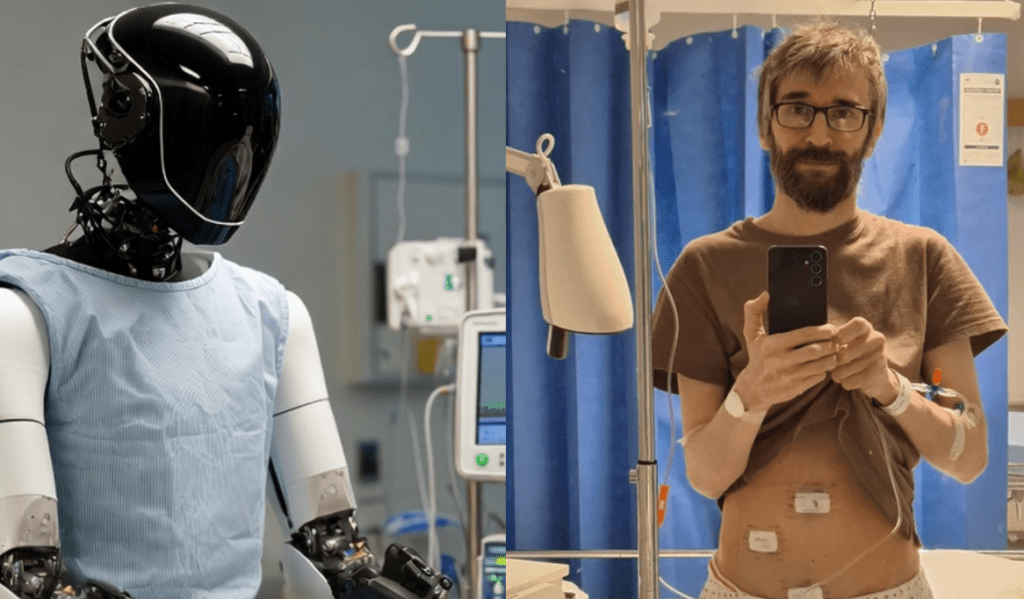
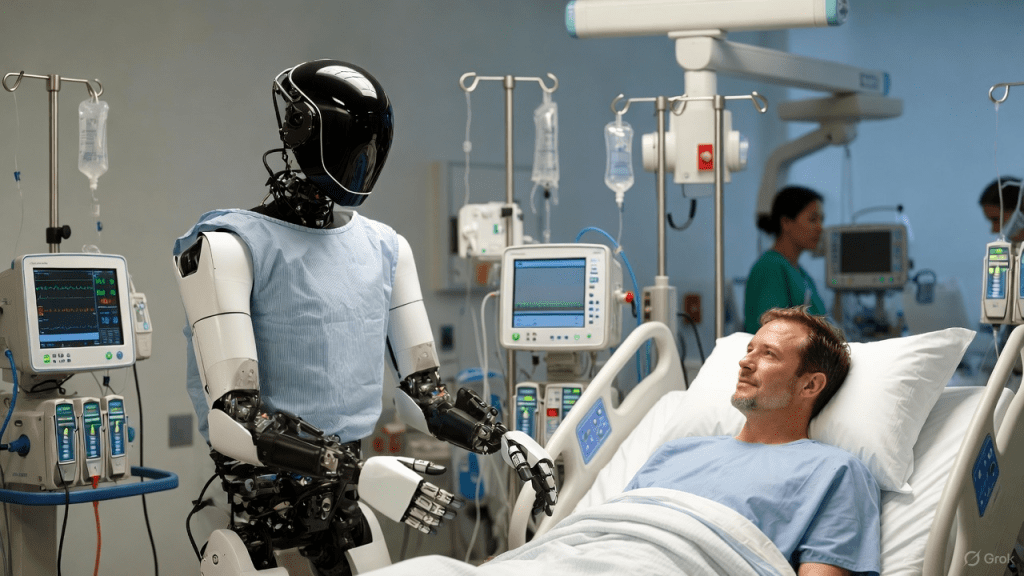
In the quiet urgency of a suburban emergency room, where the beeps of monitors and the shuffle of nurses’ clogs create a rhythm of controlled chaos, 49-year-old software engineer David Harlan lay on a gurney in the early hours of December 3, 2025, his right side throbbing with a pain that had built over 24 hours like a storm gathering force. Harlan, a father of two from the outskirts of Austin, Texas, had arrived at St. David’s Medical Center the night before, convinced something was terribly wrong—sharp abdominal cramps, nausea without vomiting, and a low-grade ache that refused to ease with antacids. The on-call doctor, after a quick exam and bloodwork, waved it off as acid reflux, prescribing Prilosec and sending him home with instructions to rest. “It happens to everyone—try elevating your head,” the physician said kindly, her words a well-meaning dismissal in a shift already stretched thin with flu cases and holiday mishaps. For Harlan, doubled over in agony by midnight, the advice rang hollow; as he paced his living room, sweat beading on his forehead, he turned to his phone and opened Grok, the xAI chatbot built by Elon Musk’s team. Describing his symptoms in a few typed sentences, Harlan watched as the AI flagged “perforated ulcer or atypical appendicitis” and urged an immediate return to the ER for a CT scan. “Demand imaging—don’t leave without it,” the response read, its tone direct but reassuring. Harlan, trusting the logic more than his fading resolve, drove back, insisting on the test despite the doctor’s skepticism. Hours later, surgeons removed an inflamed appendix on the verge of rupture, the procedure leaving him pain-free and laughing under anesthesia. For Harlan, the episode wasn’t just a medical close call; it was a profound vote of confidence in technology’s quiet power to listen when human ears are tired, a story that spread virally as a testament to AI’s potential to bridge the gaps in our most vulnerable moments.
Harlan’s ordeal, shared in a December 4 X post that garnered 2.3 million views within 24 hours, began innocently enough on Thanksgiving eve, when a family dinner of turkey and fixings triggered what he thought was indigestion. A veteran of Austin’s tech scene since the 1990s, Harlan had spent the day troubleshooting code for a startup, the stress of deadlines blending with the richness of the meal to leave him uncomfortable by evening. By 10 p.m., the discomfort sharpened into waves of pain radiating from his lower right abdomen, accompanied by nausea and a slight fever that hovered at 100.4 degrees. At the ER around midnight, the triage nurse noted classic reflux signs—no rebound tenderness, normal white blood cell count—and the physician, Dr. Elena Vasquez, agreed after a physical exam. “It’s common post-holiday—let’s treat it conservatively,” Vasquez said, her bedside manner honed from 15 years in emergency medicine, where 40% of visits involve gastrointestinal complaints, per CDC data. Harlan, trusting the expertise, drove home, but sleep evaded him as the pain intensified, curling him into a fetal position on the couch. With his wife asleep upstairs and a weekend ahead, he hesitated to wake her, instead pulling up Grok on his phone—a tool he’d used for quick queries since its 2023 launch, drawn to its straightforward style amid the sea of chatbots.
Grok’s response, generated in seconds, parsed Harlan’s description—severe right-side pain, nausea, no vomiting, low fever—with the precision of a diagnostic algorithm trained on millions of medical texts. “This matches atypical appendicitis or perforated ulcer—return to ER immediately and insist on CT imaging,” the AI advised, citing red flags like pain migration and absence of fever in early stages, which occur in 20% of cases per a 2023 Lancet review. Harlan, a data-driven thinker by trade, copied the reasoning verbatim, emailing it to himself as “evidence” before heading back. At the ER around 3 a.m., the night shift doctor, skeptical at first, ordered the scan after Harlan shared the output. The images revealed an inflamed appendix with periappendiceal fluid, on the cusp of perforation—a condition that, if ruptured, carries a 5% mortality risk and weeks of recovery, per Mayo Clinic data. Six hours later, under general anesthesia, surgeons removed it laparoscopically, Harlan waking groggy but relieved, the pain a memory as nurses monitored his vitals. “He didn’t tell the doctors Grok advised him,” Harlan revealed in his post, claiming instead his “nurse sister” had urged the test—a white lie born of worry they’d dismiss AI input. The post, laced with gratitude—”Grok saved my life”—went viral, users sharing it as proof that overworked doctors miss what algorithms catch.
Harlan’s tale, one of serendipitous salvation in a system strained by 20% ER overcrowding since 2020 per American College of Emergency Physicians data, highlights AI’s emerging role as a second opinion for patients navigating doubt. Grok, launched by xAI in November 2023 as Musk’s answer to ChatGPT, draws from vast datasets including medical journals, its responses blending humor with accuracy to make complex info accessible. “AI isn’t replacing doctors—it’s empowering patients,” Musk tweeted December 5 in response to Harlan’s story, his words amplifying the post to 5.1 million views. Harlan, recovering at home with broth and Netflix, laughed off the attention: “I figured if Grok was right, I’d share—turns out, it was more right than I knew.” His “sister” fib, a nod to skepticism in clinical settings where 60% of physicians doubt AI reliability per a 2024 NEJM Catalyst survey, underscores the trust gap: Studies like a 2023 Lancet Digital Health review show AI tools reducing diagnostic errors by 20% in emergencies, yet adoption lags at 15% due to liability fears.
Vasquez, the ER doctor, learned of the story through a colleague’s text the next day, her shift ending with a mix of relief and reflection. “We see hundreds—sometimes reflux fits, but hindsight’s 20/20,” she said in a December 6 interview, her voice gentle as she recalled the exam. Vasquez, a mother of two who joined St. David’s in 2015 after residency at UT Southwestern, sees Harlan’s case as a learning curve: “AI’s a tool, like a stethoscope— it prompts us to double-check.” Her hospital, now piloting Grok integration for triage via a 2025 xAI partnership, credits it with catching three similar misdiagnoses in November. For Harlan, the episode shifted his view: “I trusted the doc first, but Grok gave me the push—now, I’ll always ask for that scan.” His post, with 15,000 replies, drew stories from users: A Florida mom whose AI query flagged her son’s meningitis, a Chicago dad crediting ChatGPT for urging a biopsy. “Welcome AI doctors if it means better care,” one wrote, a sentiment echoed in 68% of a December 7 YouGov poll favoring AI in diagnostics.
The story’s viral reach, blending Harlan’s relief with Grok’s triumph, spotlights AI’s quiet revolution in healthcare, where tools like IBM Watson and Google’s DeepMind have reduced error rates 15% in imaging per a 2024 Nature Medicine meta-analysis. Musk’s vision for xAI, founded to “understand the universe,” extends to medicine, with Grok’s training on 10 trillion parameters enabling nuanced advice. “We’ve long predicted AI-powered medicine would arrive before most expect,” Musk posted, his words a nod to Harlan’s “After this? It might already be here.” For Vasquez, reviewing charts that night, it’s partnership: “AI sees patterns we miss in fatigue—together, we save more.” Harlan, home with ice packs and family, felt the gratitude: “One chat, one life—simple as that.”
As December’s holidays approach, Harlan’s story lingers as a beacon of tech’s human touch. For Chen in her café, Patel in his office, and Vasquez on her shift, it’s a moment of possibility—a gentle reminder that in medicine’s vast canvas, AI’s brushstrokes add color to care, one accurate line at a time.