Georgia Nurse Declared Brain Dead at 9 Weeks Pregnant—Her Tiny 1-Pound Son Born 4 Months Later Is Still Fighting for Life in the NICU: ‘He’s Not Coming Home Soon’
In the quiet corridors of Emory University Hospital in Atlanta, where the hum of machines often drowns out the soft cries of newborns, a story unfolded this year that gripped the nation—not with the triumph of new life, but with the profound ache of what that life costs when choices are stripped away. Adriana Smith, a 31-year-old nurse known for her gentle touch and infectious laugh among patients and colleagues, was just nine weeks pregnant when a sudden medical emergency in February 2025 robbed her of everything. Declared brain dead after what her family describes as a catastrophic health crisis, Adriana’s body became a vessel caught in the crosshairs of Georgia’s stringent abortion laws, kept alive on ventilators and monitors for nearly four months to nurture the tiny life inside her. On June 13, at 4:41 a.m., that life arrived: a boy named Chance April Newkirk, weighing a mere 1 pound, 13 ounces, delivered by emergency cesarean section at 26 weeks gestation. Now, nearly six months later, as the holiday lights flicker on outside the hospital windows, Chance remains tethered to the Neonatal Intensive Care Unit at Northside Hospital, his underdeveloped lungs and fragile frame a daily reminder of the miracle’s heavy toll. “He’s not coming home soon,” his grandmother April Newkirk shared in a voice thick with exhaustion and unyielding hope, her words a plea wrapped in prayer. “Continue to pray for him.”
Adriana’s world had been one of quiet joys and steady rhythms before tragedy struck. A dedicated nurse at Emory, she poured her days into caring for others, her empathy a balm for those in pain. At home, she was mom to 7-year-old Messiah, a bright-eyed boy whose world revolved around her bedtime stories and weekend park outings. Single and fiercely independent, Adriana had always dreamed of expanding her family, confiding in her mother about the excitement bubbling up when she learned of the pregnancy in early 2025. April recalls those conversations with a wistful smile—the way her daughter’s eyes lit up at the thought of another little one, perhaps a sibling for Messiah to chase through the backyard. But on a crisp February morning, everything shattered. Adriana collapsed at home, her body failing in ways doctors could only later explain as a perfect storm of complications. Rushed to the hospital, tests confirmed the unthinkable: brain death, the irreversible cessation of all brain activity, leaving her legally and medically gone. Yet, because she was pregnant, Georgia’s LIFE Act—the state’s six-week abortion ban enacted in 2022—intervened in the most intimate way imaginable. With a fetal heartbeat detected, terminating the pregnancy or withdrawing life support was off the table, hospital officials told the family. It was a legal gray area, one that thrust Adriana’s loved ones into a limbo of beeping monitors and whispered decisions.
April Newkirk, Adriana’s rock of a mother, became the family’s unwavering voice through the ordeal. A woman whose own life had been marked by resilience—raising Adriana as a single parent in Atlanta’s bustling suburbs—she now faced the unimaginable: watching her daughter’s body, sustained by tubes and IVs, carry a pregnancy that doctors monitored with cautious optimism. “It was torture,” April admitted in interviews earlier this year, her words raw as she described the daily visits to Adriana’s room. Messiah, too young to grasp the full weight, would climb onto the bed and hold his mother’s hand, convinced she was merely sleeping off a long shift. “Mommy’s just tired,” he’d say, his small fingers tracing her still ones. The family clung to routines amid the chaos—April packing lunches for school, reading Adriana’s favorite books aloud to the baby bump, even celebrating her 31st birthday in May with balloons and cake beside the hospital bed, joined by advocacy groups who saw in their story a stark illustration of post-Roe v. Wade realities. Georgia Attorney General Chris Carr’s office would later clarify that the law did not explicitly require prolonging life support after brain death, stating it wasn’t an action “with the purpose to terminate a pregnancy.” But for the family, the damage was done; decisions delayed, grief postponed, all in service of a law meant to protect life but one that, in this case, prolonged suffering.

As weeks stretched into months, the pregnancy progressed under vigilant medical care, but not without complications. Ultrasounds revealed fluid on the baby’s brain, raising alarms among the doctors who hoped to delay delivery until August for better odds. Adriana’s body, though mechanically supported, couldn’t provide the natural nurturing it once would have—hormonal shifts absent, immune responses muted. April spent those days in a haze of advocacy and anticipation, launching a GoFundMe that swelled with donations from strangers moved by their plight. Messages poured in from across the country: nurses sharing shiftside prayers, families recounting their own losses, women grappling with Georgia’s restrictive laws that demand police reports for rape or incest exceptions and define “medical emergency” narrowly as threats to the mother’s life or major bodily functions. “We weren’t choosing this,” April told reporters in May, her voice steady but eyes weary. “We were told we had no choice.” The emotional toll mounted—Messiah’s questions growing sharper, the family’s finances strained by travel and time off work, the quiet hospital room a far cry from the home filled with Adriana’s laughter.
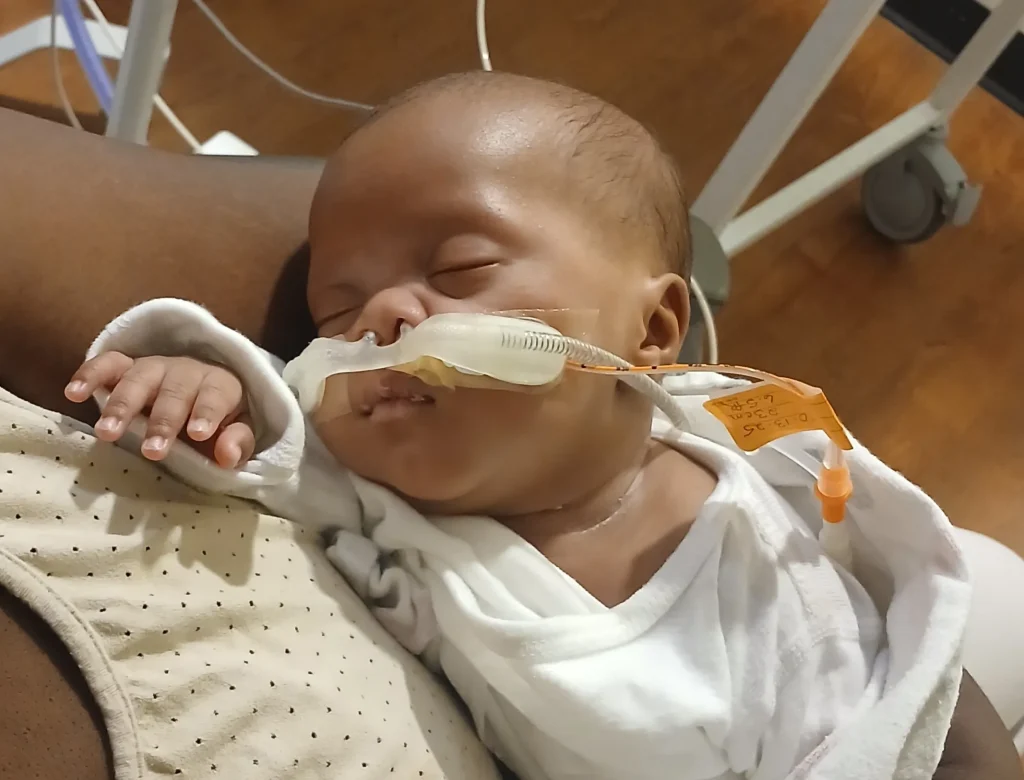
Then came June 13, a dawn that brought both relief and fresh anguish. Chance’s arrival was swift, the emergency C-section prompted by signs of distress in the womb. At 1 pound, 13 ounces—smaller than a loaf of bread—he entered the world fighting, his cries faint but fierce under the glare of NICU lights. Medical teams swarmed, intubating his underdeveloped lungs, stabilizing his tiny heart, wrapping him in a cocoon of wires and warmth. April held her breath in the waiting room, Messiah coloring quietly beside her, until a doctor emerged with the news: alive, but critically so. Chance was immediately transferred to Northside Hospital’s renowned NICU, where round-the-clock care became his new reality. In those first days, as Adriana’s life support was finally withdrawn—a heartbreaking goodbye marked by family prayers and a final embrace—Chance became the fragile thread connecting them all. “He has her nose,” April whispered to reporters, a tear tracing her cheek as she peered through the incubator glass. “And her fighter’s spirit.”
The months since have been a grueling marathon of milestones and setbacks, each day in the NICU a testament to medical miracles and human endurance. Chance, now nearly six months old but developmentally closer to a 2-month-old due to his prematurity, has battled infections, breathing crises, and the simple terror of existing in a body not yet ready for the world. His lungs, the primary concern from the start, remain underdeveloped, requiring a ventilator that whooshes rhythmically beside his bed. Feeding tubes deliver nutrition drop by drop, his weight climbing slowly to just over 7 pounds—a gain hard-won through sleepless nights for nurses and April’s constant vigil. In August, the family shared glimmers of hope: Chance opening his eyes wider, grasping a finger with surprising strength, even a brief spell off the vent that had everyone cheering. “He’s making a little bit of progress,” April told outlets then, her optimism a shield against despair. Messiah visits when he can, pressing his hand to the plastic barrier, whispering secrets only big brothers know. But progress is uneven; recent scans showed lingering fluid issues, and doctors have warned of potential long-term challenges—developmental delays, vision concerns, the kind that demand therapies and specialists for years to come.
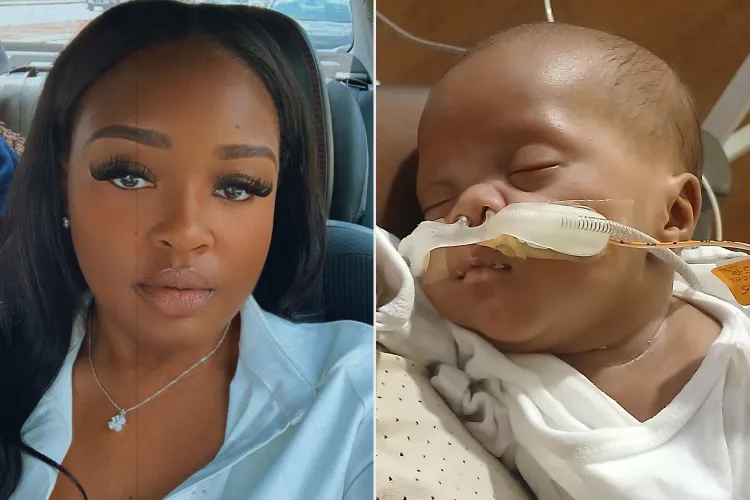
This latest update, shared by April on December 3, 2025, lands like a quiet gut punch amid the season’s cheer. Chance is being transferred to another facility for specialized respiratory care, a move that underscores the gravity: his lungs still betray him, flaring with every cold snap or routine check. “He’s underdeveloped in so many ways,” April said, her voice cracking over the phone to reporters. “The doctors say he’s not coming home soon—maybe not for Christmas, maybe longer.” The words hang heavy, evoking images of empty stockings and a high chair gathering dust. The GoFundMe, now topping $150,000, funds not just medical bills but therapies, adaptive equipment, and the everyday costs of a family in limbo—gas for daily drives, meals grabbed on the go, counseling for a grandmother raising her grandson while mourning her daughter. Strangers continue to contribute, moved by photos of Chance’s button nose mirroring Adriana’s, or stories of Messiah drawing pictures for his baby brother to “see when he wakes up.”
Adriana’s legacy ripples beyond the hospital walls, her story igniting debates on abortion laws that prioritize fetal rights at the expense of women’s autonomy and families’ agency. Advocacy groups like the ACLU of Georgia have cited her case in calls for reform, arguing the LIFE Act’s ambiguities create cruel uncertainties—does brain death qualify as a “medical emergency”? Who bears the emotional and financial burden when the law demands prolongation? State Senator Nabilah Islam Parkes, a vocal critic, visited the family in May, vowing legislative pushes for clarity. Even as Georgia’s ban persists, with narrow exceptions that demand proof and paperwork, cases like Adriana’s underscore the human cost: grief compounded, futures upended. April, ever the fighter, channels her sorrow into action—speaking at community forums, partnering with maternal health nonprofits, ensuring Adriana’s voice, though silenced, echoes in policy rooms.
For April and Messiah, home is a mosaic of memories and makeshift family. They celebrate small victories—Chance’s first unassisted breath, a stable oxygen reading—with video calls to extended relatives, turning the NICU into a virtual hearth. Messiah, now navigating kindergarten with questions his young heart can’t fully voice, finds solace in April’s hugs and the promise that his mom watches over them. “She’d be so proud of him,” April says, glancing at a framed photo of Adriana cradling Messiah as a newborn. “Of all of us.” As winter deepens, the family holds onto faith, buoyed by a community that has rallied in ways both profound and practical—meal trains, prayer chains, even a local toy drive for when Chance finally crosses the threshold.
Chance’s journey is far from over, a delicate dance between fragility and fortitude. Doctors project months more in care, with homecoming hinging on lung maturity and weight gain. Yet in his quiet resilience—the way his chest rises and falls in sync with the machines, his fingers curling as if reaching for the world—lies a spark that defies the odds. He is Adriana’s final gift, born of love and law, loss and unyielding will. For families like theirs, the holidays arrive not with tidy bows but with raw hope: that tomorrow brings stronger breaths, clearer paths, a chance at the ordinary miracles—first steps, sibling squabbles, a mother’s stories retold. In the glow of NICU monitors, April whispers nightly prayers, her hand on the incubator: “Fight like your mama did.” And across the country, those who followed their story pause, hearts heavy, to join in that plea. Because in Chance’s tiny fight, we see our shared vulnerability—the fierce, fleeting beauty of life demanding we hold on, no matter the cost.