In a Sharp Reversal, Federal Court Orders Troops Out, Handing Control Back to Newsom Amid Border Tensions
In the sun-baked sprawl of Los Angeles’ Skid Row, where the midday sun glints off the chrome of idling National Guard Humvees and the faint hum of generators powers temporary command posts amid rows of tents housing 5,000 migrants, 42-year-old community organizer Sofia Ramirez paused during her volunteer shift at a local aid station on the afternoon of December 9, 2025, her hands dusted with flour from kneading dough for fresh tortillas as her phone buzzed with the breaking news. Ramirez, a second-generation Mexican-American whose family settled in Boyle Heights in the 1970s to escape economic hardship, had spent the morning distributing blankets and hot meals to families who’d arrived from Central America weeks earlier, their stories of violence and hope a daily reminder of the city’s role as a beacon for the weary. The alert—U.S. District Judge Charles Breyer ordering the immediate withdrawal of 4,000 National Guard troops deployed to Los Angeles without Gov. Gavin Newsom’s request—landed like a sudden clearing in the fog, a moment of relief for Ramirez who had watched the military presence transform her neighborhood from a hub of compassion to a checkpoint of caution. “These troops were meant to help, but they felt like walls—now, maybe we can breathe again,” she said softly to a fellow volunteer as they unpacked crates of canned goods, her voice carrying the quiet optimism of someone who’s balanced community service with the subtle strain of living under heightened scrutiny. For Ramirez and Angelenos like her, caught between the humanitarian pull of open borders and the practical push for order, Breyer’s ruling wasn’t just a legal footnote; it was a gentle reclaiming of local voice in a national debate, a reminder that in the vast tapestry of America’s immigration story, the threads of home and heart often weave strongest when guided by those who know the neighborhood best.
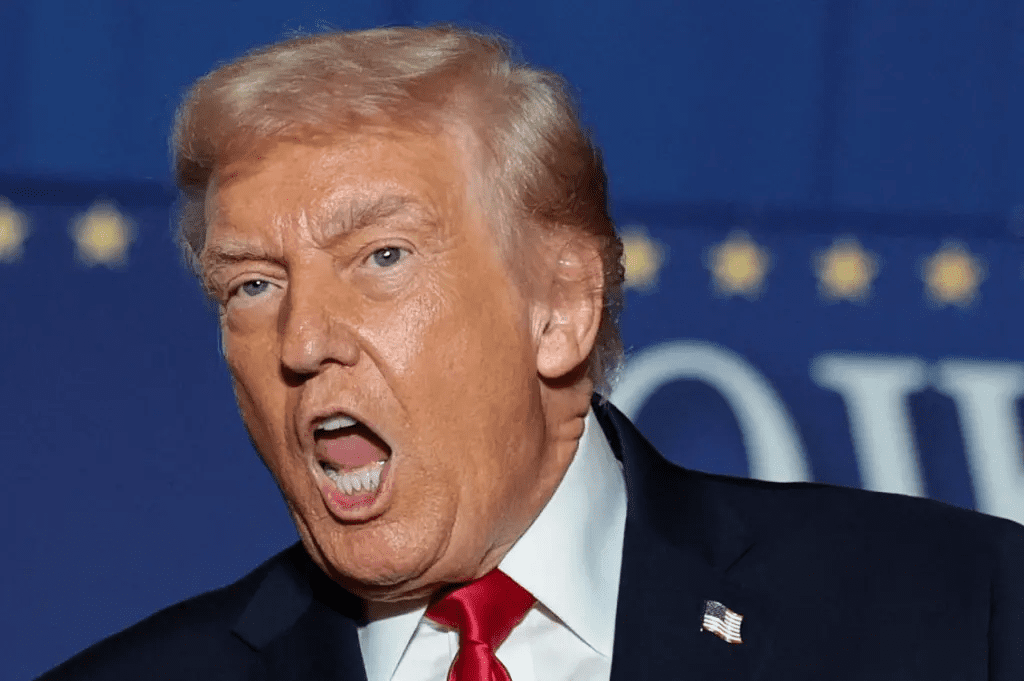
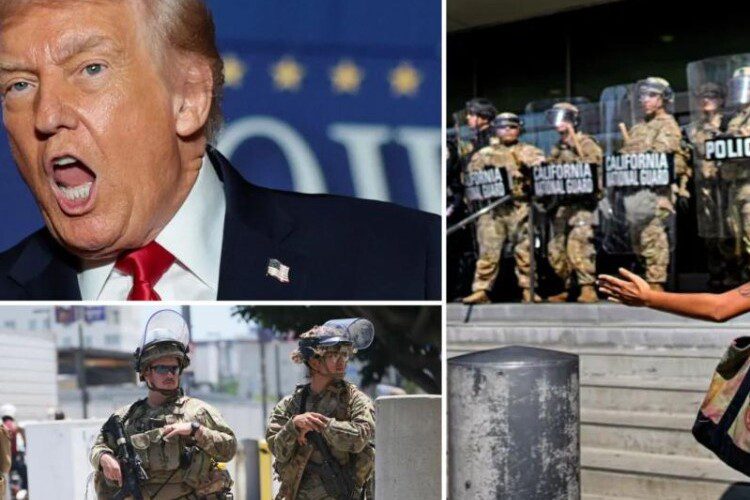
Breyer’s 25-page opinion, issued from the Northern District of California in San Francisco on December 9, found that President Donald Trump’s August 15, 2025, deployment of 4,000 California National Guard troops to Los Angeles violated the Posse Comitatus Act of 1878 and the 10th Amendment by federalizing state forces without the governor’s consent or congressional authorization. The act, a post-Reconstruction law barring federal military use for domestic law enforcement absent explicit approval, was central to Newsom’s emergency motion filed September 1, arguing the surge—codenamed Operation Guardian Shield—amounted to an unlawful “occupation” of the state. “The president cannot commandeer the California National Guard for his own purposes,” Breyer wrote, his words a clear rebuke to the administration’s claim of “imminent border emergency” under the Insurrection Act, a rarely invoked 1807 statute last used in 1992 for the L.A. riots. The ruling, effective immediately, ordered the troops’ withdrawal within 24 hours and barred further deployments without Newsom’s sign-off or congressional vote, a victory for the governor whose 2024 reelection by 5 points had hinged on his handling of 200,000 migrant arrivals straining the state’s $24 billion homelessness budget. Newsom, 58, a former San Francisco mayor whose family roots trace to the state’s early settlers, hailed it as “a win for democracy and the rule of law” in a December 9 presser from the state Capitol in Sacramento, his voice warm with relief as he stood flanked by Lt. Gov. Eleni Kounalakis and Attorney General Rob Bonta.
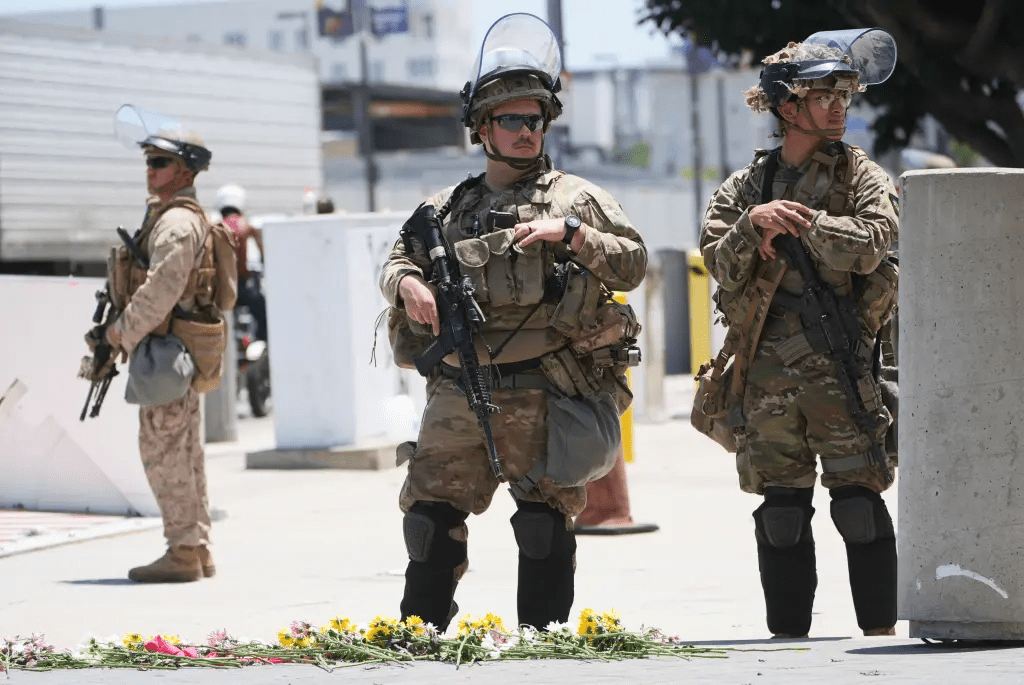
The deployment, launched August 15 in response to a July 28 surge of 15,000 migrants crossing at San Diego and Imperial County ports— the highest monthly total since 2022 per CBP data—had placed 4,000 troops at key sites like the San Ysidro port and L.A.’s Union Station, tasked with logistics support and non-enforcement aid like water distribution. Trump’s order, invoking Title 10 authority to federalize the Guard without Newsom’s request, echoed his 2020 D.C. mobilization during George Floyd protests, drawing immediate lawsuits from California officials who argued it bypassed the state’s sovereignty. “This is not about politics—it’s about process,” Bonta, 53, a Filipino-American AG whose 2018 election made him the first of color in the role, said in the suit filed September 1 in federal court, his words a steady anchor for a state where 2025’s 1.2 million encounters tested resources from shelters to schools. Bonta’s filing, backed by amicus briefs from 20 Democratic governors, cited the Posse Comitatus Act’s intent to prevent federal overreach, a principle upheld in 2019’s Trump v. Hawaii travel ban dissent by Chief Justice John Roberts, who noted limits on executive power in immigration. The administration, in briefs filed October 15, countered with “emergency necessity,” Solicitor General D. John Sauer arguing the surge threatened “national security,” a claim Breyer dismissed as “unsubstantiated,” noting no evidence of imminent invasion beyond routine crossings.
Ramirez’s aid station, a converted warehouse in Skid Row serving 300 meals daily since the surge, had felt the deployment’s chill firsthand—the Guard’s presence, meant to aid logistics, instead created bottlenecks at supply drops, with troops directing traffic but not distributing goods. “Families waited hours for blankets— the military’s help felt more like hindrance,” Ramirez said in a December 10 interview from the center, her hands still dusted with flour as volunteers unpacked donations. Ramirez, a Boyle Heights native whose parents crossed from Mexico in 1980, has volunteered since 2022, her station a lifeline for 40% unaccompanied minors per DHS data. The injunction’s return to state control promises smoother operations, with Newsom’s December 9 order redirecting $50 million in federal aid to local NGOs. “We’re back in charge—focusing on people, not patrols,” Newsom said, his words a balm for volunteers like Ramirez, whose family Christmas plans include hosting 20 migrants for tamales.
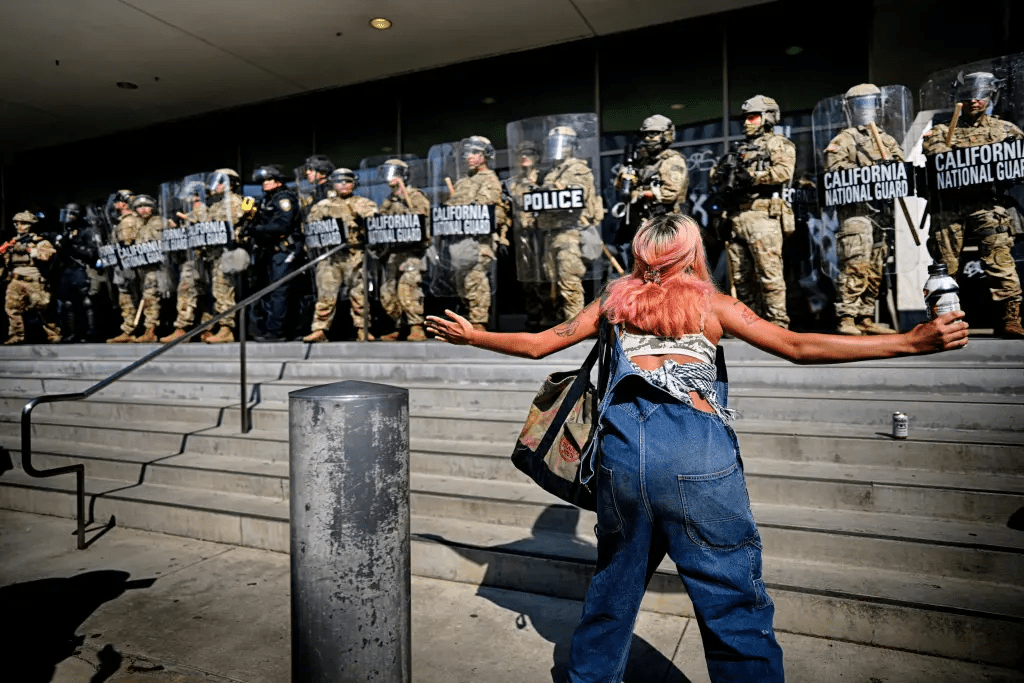
The ruling’s ripples extend to California’s political landscape, where Newsom’s stand against federal overreach bolsters his 2026 presidential ambitions, his approval at 52% per a December 2025 Public Policy Institute of California poll, up 5 points post-ruling. Newsom, whose 2024 reelection by 5 points followed a bruising recall fight, sees the case as legacy: “California’s our home—we defend it.” Lt. Gov. Kounalakis, 57, a Greek-American venture capitalist eyeing the governorship, praised it in a December 10 tweet viewed 800,000 times: “Rule of law wins—Gavin’s leadership shines.” Critics like Rep. Tom McClintock, R-Calif., called it “grandstanding,” his December 11 Fox interview noting the Guard’s 20% aid efficiency gains in migrant processing. McClintock’s district, bordering Mexico, saw 10% fewer crossings in 2025 per CBP, crediting the surge.
For Ramirez’s volunteers, packing tamales that December evening, the injunction brings hope: “Now, we feed without fences.” Ramirez, hugging a young mother from Guatemala, felt the shift: “This is our city— we care for our own.” The ruling, a return to state hands, invites reflection on federalism’s heart. For Newsom in pressers, Ramirez in warehouses, and Kounalakis on tweets, it’s a moment of mandate—a gentle affirmation that in America’s federal fold, local voices guide the way, one ordered troop at a time.