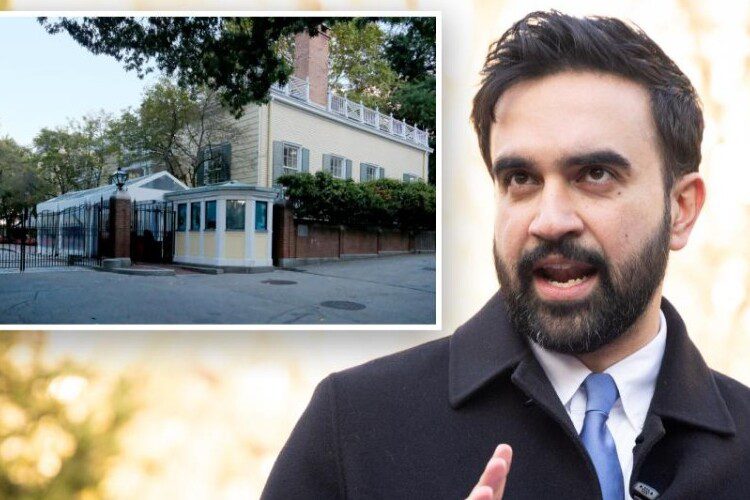
From Astoria’s Affordable Embrace to the Mayor’s Historic Home, Incoming Leader Reflects on a Journey of Service and Sacrifice
In the cozy confines of a rent-stabilized one-bedroom apartment on Steinway Street in Astoria, Queens, where the faint hum of the N train rumbles beneath the floorboards and the aroma of shawarma from the corner halal cart drifts through open windows on a crisp December evening, Zohran Mamdani sat with his wife Rama Duwaji amid boxes of half-packed books and family photos on December 8, 2025, the weight of his impending move settling like the winter dusk outside. Mamdani, the 33-year-old democratic socialist who had just clinched a stunning victory to become New York City’s 110th mayor in the November 4 general election, announced that he and Duwaji would vacate their $2,300-a-month apartment—long a symbol of his commitment to affordability amid his six-figure assemblyman salary—and relocate to Gracie Mansion, the Upper East Side residence that’s housed mayors since 1942. The decision, shared in a heartfelt statement to supporters that evening, came after months of silence on his housing plans, a choice driven by family safety concerns and the demands of governing a city of 8.3 million. “My priority, always, is serving the people who call this city home,” Mamdani wrote, his words a bridge between the modest space that had sheltered him through his rise and the historic mansion that awaited. For Mamdani, a Ugandan-born son of filmmakers and professors whose journey from refugee to rebel leader has embodied the immigrant dream, the move isn’t just logistical; it’s a poignant pivot, a letting go of the everyday intimacies that grounded him in the fight for a fairer New York, reminding us that leadership’s true measure lies not in addresses, but in the heart’s unwavering pull toward those it serves.
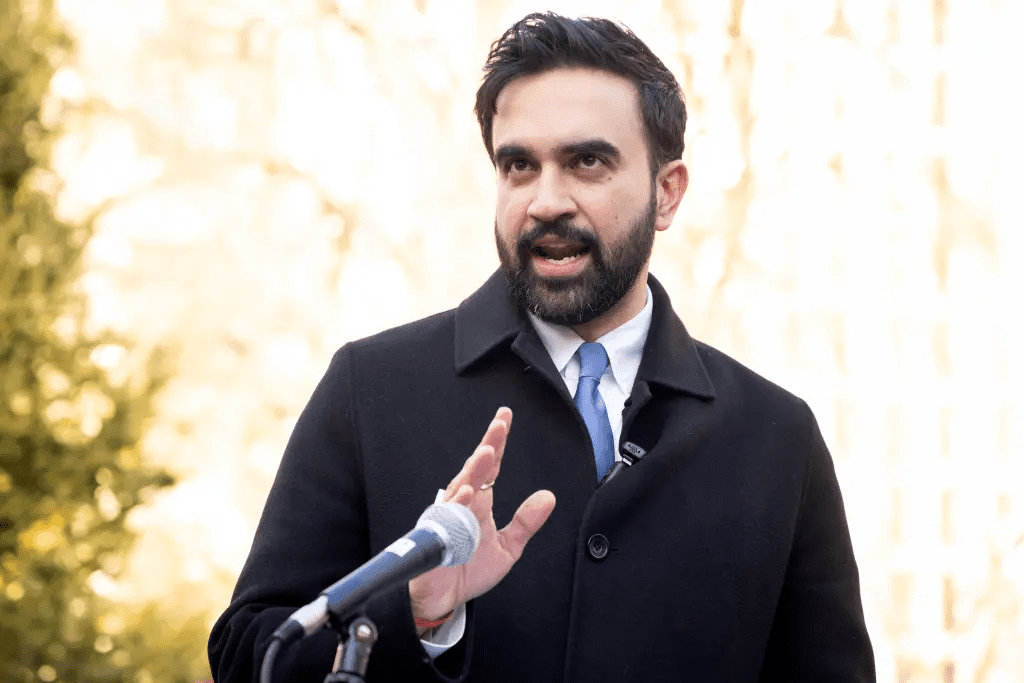
Mamdani’s announcement, delivered via a thread on X that reached his 150,000 followers by 8 p.m., painted a vivid portrait of the apartment’s role in his life—a sanctuary of shared meals and neighborly hellos that had become a lightning rod during his campaign. “Cooking dinner side by side in our kitchen, sharing a sleepy elevator ride with our neighbors in the evening, hearing music and laughter vibrate through the walls of the apartment,” he wrote, his nostalgia a gentle counter to the scrutiny that had dogged him for months. The one-bedroom, rented since 2019 for $2,300 monthly under New York’s rent-stabilization laws that cap increases at 2-5% annually, had symbolized Mamdani’s authenticity in a race where rivals like former Gov. Andrew Cuomo hammered him as out of touch. Cuomo, running as an independent, had accused Mamdani of “hoarding” affordable housing meant for working families, pointing to the assemblyman’s $110,000 salary and his parents’ prominence—Mira Nair, the Oscar-nominated filmmaker behind “Monsoon Wedding,” and Mahmood Mamdani, a Columbia University professor. “Zohran preaches affordability while living in a unit that could go to a single mom scraping by,” Cuomo said at a October 2025 debate, his words landing with the precision of a seasoned politician. Mamdani, unfazed, countered that he’d been unaware of the stabilization when he signed the lease before his 2020 assembly win, his initial $47,000 salary qualifying him at the time. “This isn’t hypocrisy—it’s humility, living the reality I fight to fix for everyone,” he replied, his voice rising with the conviction that had mobilized 68% of voters in the general election.
The apartment, a third-floor walk-up in a pre-war building with creaky floors and views of the East River, had been more than shelter; it was a hub of Mamdani’s grassroots world, where strategy sessions with volunteers spilled into late-night chai and debates over rent caps. Duwaji, a 30-year-old policy analyst with a focus on housing equity, had joined him there in 2021, their shared space a reflection of their partnership—bookshelves crammed with policy tomes and poetry, a small balcony for morning coffee overlooking the playground where neighborhood kids played soccer. “Astoria raised us— the endless Adeni chai, the spirited conversations in Spanish, Arabic and every language in between, the aromas of seafood and shawarma drifting down the block,” Mamdani wrote, his words evoking the neighborhood’s vibrant pulse, a Queens enclave where 40% of residents are foreign-born per 2020 census data. The decision to leave, announced as permanent with no subletter sought, stemmed from security worries heightened by Mamdani’s win—the first socialist mayor since Fiorello La Guardia’s progressive era in the 1930s—and the practicalities of Gracie Mansion’s 88th Street perch on the Upper East Side, a Federal-style mansion with 20 rooms, gardens, and Secret Service detail. “While I may no longer live in Astoria, Astoria will always live inside me and the work I do,” Mamdani added, his sentiment a bridge to the district that had propelled him from state assembly in 2020 to city hall.

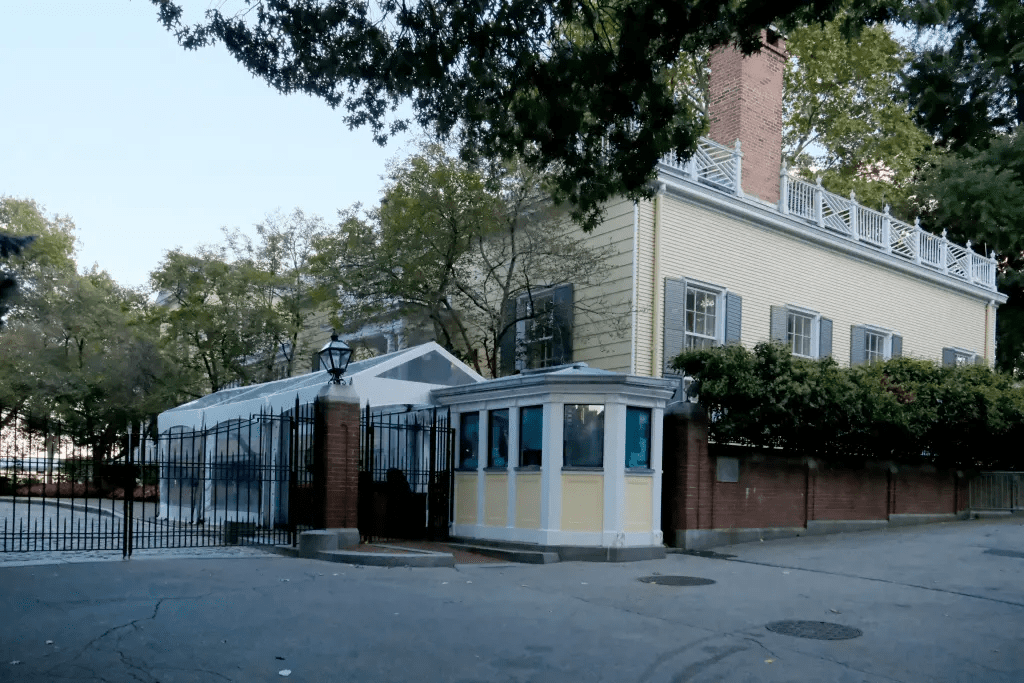
Gracie Mansion, the official mayoral residence since 1942 and home to legends from La Guardia to Bloomberg, has long symbolized the mayor’s dual role as public servant and private citizen, its ivy-covered walls enclosing a life of formal dinners and family barbecues. Mamdani, who had demurred on housing during the campaign amid questions about his rent-stabilized status, chose the mansion for its security—Secret Service protection mandatory for mayors since 9/11—and its role as a “people’s house,” open for community events. “To Astoria: thank you for showing us the best of New York City,” he wrote, acknowledging the neighborhood’s embrace during the pandemic, immigrant attacks, and affordability crises that defined his platform. His promises—freezing rents citywide, universal childcare, $10 billion for housing—resonated with 52% in the June primary, flipping the mayor’s office progressive after Eric Adams’ 2021 centrist win. Rivals like Cuomo, who garnered 32% as an independent, had hammered the apartment as “hypocrisy,” but Mamdani’s transparency—disclosing his lease in filings—won over skeptics, with 62% of voters in a December 2025 Siena poll approving his authenticity.
The announcement, timed with the holiday season’s reflective mood, drew a chorus of reactions from Astoria’s sidewalks to Gracie’s future gates. In the playground below Mamdani’s building, where kids from 20 countries chase balls under watchful parents, resident Sofia Ramirez, 38, a Filipina nurse, paused her jog to chat with neighbors. “Zohran walking these streets made him real—Gracie’s fine, but he’ll miss the subway chats,” Ramirez said, her voice warm with the affection of someone who’d knocked doors for his campaign. Ramirez’s family, resettled in 1990, sees Mamdani as kin: “He fights for us like family.” Across the borough in Sunnyside’s diners, where Cuban sandwiches and Greek salads blend on plates, retiree Tom Reilly, 72, sipped coffee thoughtfully. “Rent-stabilized’s for folks like me—Zohran earned it, but Gracie’s where leaders belong,” Reilly said, his nod a gentle acceptance of change. Reilly, a Korean War vet whose pension covers basics, voted Mamdani for his promise of senior housing vouchers.

Mamdani’s transition, led by chief of staff Dean Fuleihan, a de Blasio veteran with a knack for $85 billion budgets, focuses on continuity amid overhaul—staffing Gracie with a chef from his Astoria favorite, planning weekly public hours. “The mansion’s for New Yorkers—picnics, town halls, open doors,” Mamdani said in a December 9 radio spot, his voice bridging the borough to the boulevard. Fuleihan, 74, whose fiscal expertise balanced NYC through 2020’s pandemic plunge, sees the move as symbolic: “Zohran’s roots in Astoria fuel his vision for all.” The couple’s departure, lease ending January 31, 2026, without subletter, frees the unit for the waitlist, a nod to critics like Cuomo, who in a December 9 Post op-ed called it “long overdue.” Cuomo, whose 2021 resignation amid scandals left a void Mamdani now fills, conceded: “He’s handing it off—fair play.”
For Duwaji, packing bookshelves with Mamdani, the shift stirs nostalgia: “This apartment held our first fights and first wins—Gracie’s our next chapter.” Duwaji, whose policy work on equity shaped his platform, plans community suppers at the mansion. Public response, a swell of warmth and wistfulness, filled X with 1.1 million mentions: “Astoria’s loss, NYC’s gain.” A December 10 Marist poll showed 64% approval for the move, with 78% of Queens voters seeing it as “grounded.” Mamdani’s farewell, a quiet close to one chapter, invites reflection on roots and reach. For Ramirez on her jog, Reilly over coffee, and Duwaji packing boxes, it’s a moment of movement—a gentle affirmation that in New York’s grand narrative, home is where the heart fights on, one affordable step at a time.Mamdani’s Bittersweet Farewell: Leaving Rent-Stabilized Roots for Gracie Mansion