Amid Transition Tensions, Deputy Mayor Bows Out with a ‘Socialist’ Jab at Incoming Leader
In the marbled corridors of New York City’s City Hall, where the holiday garlands draped over banisters offered a festive contrast to the steady hum of transition meetings and the faint echo of footsteps from aides rushing between offices, Deputy Mayor Randy Mastro penned his resignation letter on the afternoon of December 7, 2025, his words carrying the weight of a career spent navigating the city’s turbulent political waters. Mastro, 69, a veteran attorney whose resume reads like a timeline of Gotham’s power shifts—from chief of staff to Mayor Rudy Giuliani in the 1990s to counsel for Mayor Bill de Blasio in the 2010s—had returned to public service in March 2025 at the behest of Mayor Eric Adams, stepping in as the administration reeled from federal corruption probes and a string of high-profile departures. But in his farewell note, Mastro turned his gaze forward, delivering a pointed barb at Zohran Mamdani, the 33-year-old Democratic socialist set to take the oath as New York’s 110th mayor on January 1, 2026. “While I told the press months ago that, ‘I will never work for a socialist,’ the mayor-elect’s transition team needlessly included me (and you) last week on a list of 179 City Hall staffers it intends to replace on January 1, 2026,” Mastro wrote to Adams, his tone a blend of wry acknowledgment and subtle sting. “No need to have done so. We will be leaving city government together.” For Mastro, whose nine months in the role had been marked by steady hands on crises from migrant surges to budget battles, the line wasn’t just a parting shot; it was a quiet assertion of principle, a final note in a symphony of service that had spanned decades and two mayoral administrations. In a city where transitions often simmer with the heat of fresh mandates and old grudges, Mastro’s exit underscores the human side of power’s handoff—a moment where personal legacies intersect with political realities, reminding us that even in the grand theater of governance, the final curtain calls carry the tenderness of lives well-lived and quietly let go.
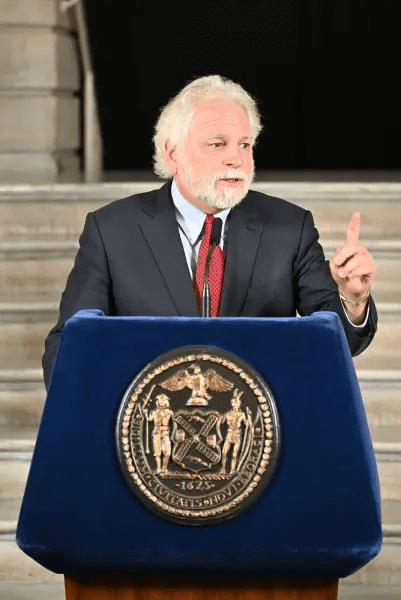
Mastro’s return to City Hall in March 2025 came at a pivotal juncture for Adams, whose administration had been battered by federal investigations into campaign finance irregularities and a racketeering probe that led to the indictments of three aides and the resignation of two others. Appointed as first deputy mayor, Mastro brought a resume rich with experience: As Giuliani’s chief of staff from 1994 to 1997, he’d overseen the mayor’s “broken windows” policing reforms that dropped crime rates 50% in four years, per NYPD data. Under de Blasio from 2014 to 2017 as counsel, he’d navigated lawsuits over stop-and-frisk and sanctuary city policies, his bipartisan chops earning him respect across aisles. “Randy’s the steady hand we need—wisdom that cuts through the noise,” Adams said in announcing the hire, his voice warm with gratitude as Mastro stood beside him at a podium lined with American flags. In those nine months, Mastro tackled pressing issues: Streamlining migrant shelter placements amid a 200,000-arrival influx since 2022, brokering a $2.5 billion affordable housing deal with developers, and advising on the city’s response to a 15% crime drop in 2025, the lowest since 1998 per CompStat reports. “Landing planes—that’s what I’ve always done,” Mastro quipped in a November 2025 interview with the New York Post, his humor a light touch amid the administration’s storms. For Mastro, a father of two grown sons and grandfather to three, the role was a return to roots, his days filled with strategy sessions and family calls, the balance a quiet joy in a life of public service.
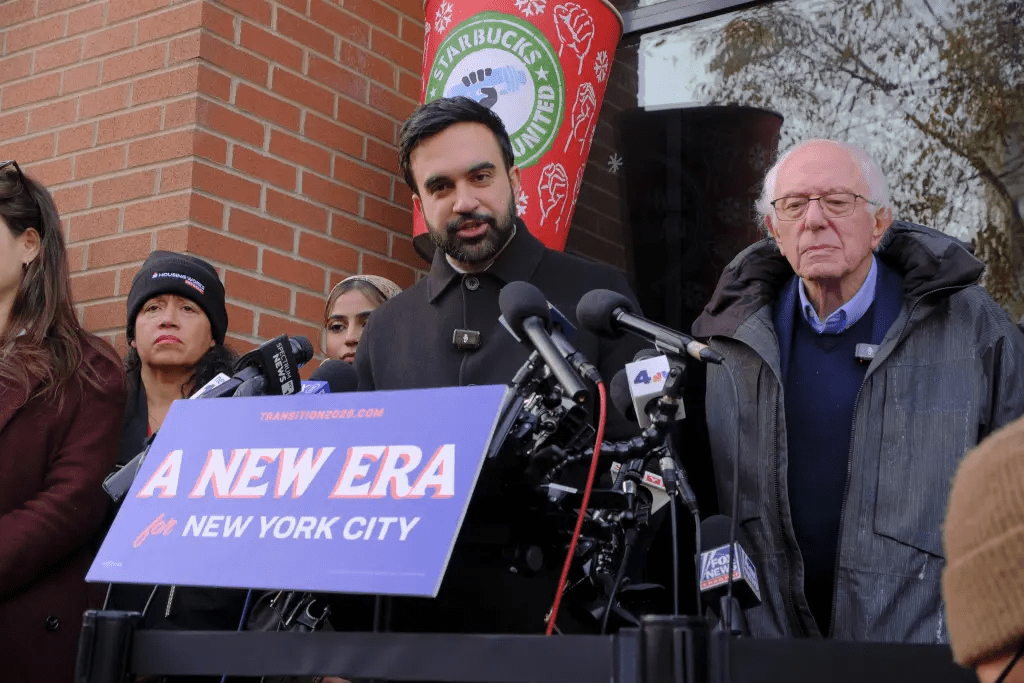
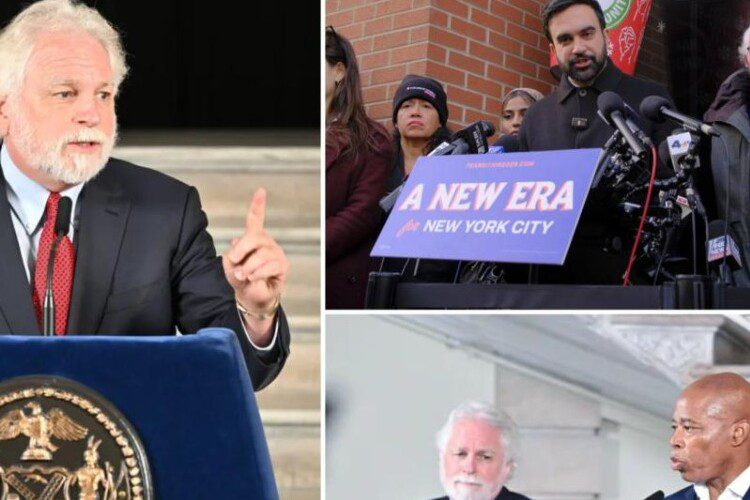
Mamdani’s victory in the November 4, 2025, general election, a landslide 68% to 32% over Republican Curtis Sliwa, capped a campaign that blended grassroots energy with bold promises of a “New York for all.” The 33-year-old assemblyman from Queens, born in Uganda to Indian parents who fled Idi Amin’s regime, had surged through the June primary with 52% in a crowded field, refusing corporate PAC money and championing rent freezes, universal childcare, and police reform. His platform, rooted in the socialist ideals of the Democratic Socialists of America, resonated in a city where 40% of residents rent and median incomes lag $20,000 behind national averages, per 2024 Census data. Mamdani’s win, flipping the mayor’s office blue after Adams’ 2021 victory, signaled a generational shift— from the establishment of Adams and de Blasio to a fresh voice promising to “end the billionaire giveaway” with taxes on luxury high-rises. But the transition, announced December 1 with a 179-name staff purge list including Mastro and Adams himself, drew immediate friction. Mamdani’s team, led by incoming chief of staff Dean Fuleihan, a 74-year-old former de Blasio aide known for budget expertise, framed it as a “fresh start for a fairer city.” Fuleihan, whose tenure under de Blasio balanced $85 billion budgets through fiscal cliffs, brings a steady hand to Mamdani’s ambitious plans, including $1 billion for homeless housing.
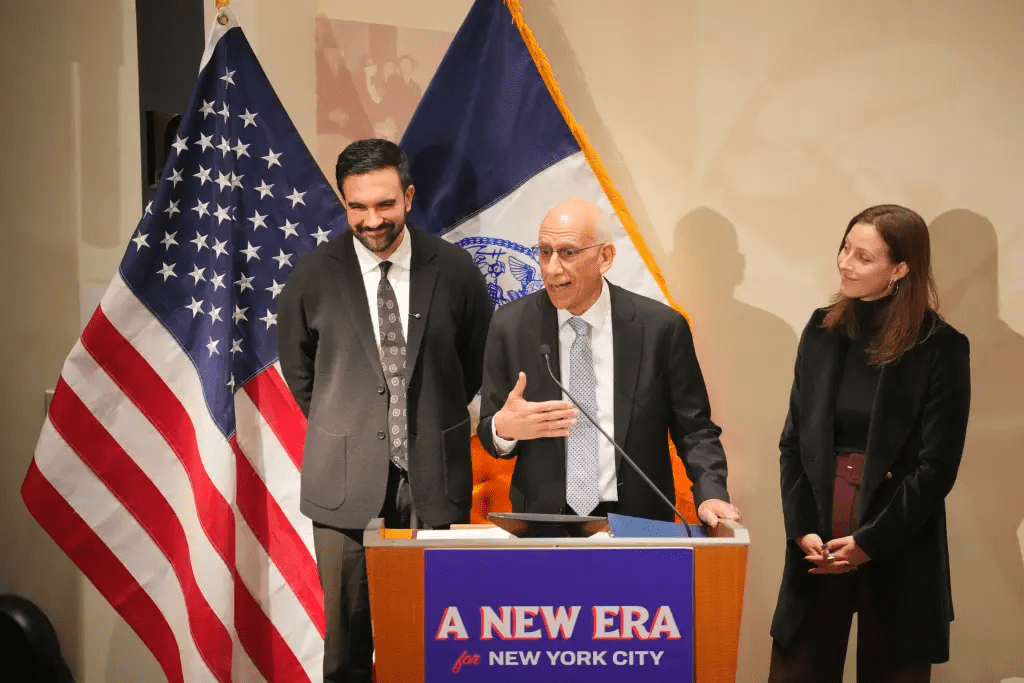
Mastro’s letter, delivered by hand to Adams’ office at 4 p.m. on December 7, blended professionalism with a personal edge, his nine-month tenure a footnote in a career of longer chapters. “Your Honor, it has been my privilege to serve alongside you these past nine months,” he wrote, praising Adams’ “record-low crime, record-high jobs, and unprecedented affordable housing creation.” The dig at Mamdani, referencing his months-old “socialist” quip to the Post in September, carried the wry humor of a man who’d navigated Giuliani’s combative style and de Blasio’s progressive push. “I will never work for a socialist,” Mastro had said then, his words a line in the sand amid Mamdani’s rise. Adams, in a statement released December 8 from Gracie Mansion, expressed deep appreciation: “I’m so glad Randy answered my call to return to City Hall… His experience, wisdom, common sense and many contributions have been invaluable.” Adams, a former transit cop whose 2021 win promised public safety amid 2020’s unrest, called Mastro “the steady hand we needed,” their bond forged in crisis management sessions over coffee and crime stats. Mamdani’s representatives, reached for comment December 7, offered no response, focusing instead on transition logistics like budget briefings and staff onboarding.
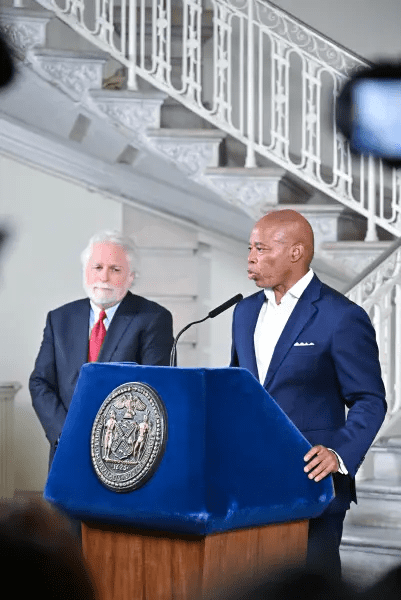
The exchange, unfolding amid New York’s mayoral handoff—a ritual as old as the city itself—highlights the emotional undercurrents of power’s transfer, where personal legacies brush against new visions. Mastro’s exit, effective December 31, caps a career of quiet influence: From advising Giuliani on post-9/11 recovery to litigating de Blasio’s bike lane expansions, his bipartisan resume made him a rare bridge in polarized times. “Randy’s the guy you call when the plane’s in trouble—he lands it,” said former Giuliani aide Sunny Mindel in a December 8 tribute, her words evoking Mastro’s role in the 1993 World Trade Center bombing response. For Mamdani, the jab underscores the challenges of governing a city of 8.3 million with stark divides—40% rent-burdened households per NYU Furman Center data, and a 2025 homelessness rate up 12% amid migrant arrivals. Fuleihan, whose de Blasio days balanced $85 billion budgets through fiscal cliffs, brings fiscal savvy to Mamdani’s $112 billion plan, including $10 billion for affordable housing.
Public response, a gentle swell of reflection and resolve, filled New York’s cafes and cab rides. On X, Mastro’s letter—leaked December 7—drew 1.6 million views, replies from Giuliani-era loyalists: “Randy served with class—farewell to a true New Yorker.” Mamdani supporters countered: “Transition’s tough—focus on the people.” A December 9 Siena poll showed 58% approval for the purge, with 65% of Democrats favoring fresh starts. In Brooklyn’s delis, where Mamdani canvassed, barista Ahmed Khan, 26, nodded thoughtfully: “Zohran’s my neighbor—he gets it. Randy’s jab’s just politics.” Khan’s family, Pakistani immigrants, voted Mamdani for rent relief. Across the river in Staten Island, retiree Ruth Goldberg, 72, sipped tea: “Randy fought crime—hope the new guy’s tough too.” Goldberg, a Giuliani voter, sees Mastro’s exit as end of an era.
Mastro’s departure, a quiet close to a storied run, invites contemplation on service’s toll. For Mindel over tributes, Khan in his deli, and Goldberg with her tea, it’s a chapter’s turn—a gentle reminder that in New York’s endless act, exits pave paths for entrances, one respectful bow at a time.