Amanda Seyfried Defends Post-Assassination Comment Amid Backlash, Sparking Debate on Grief, Rhetoric, and Free Speech in Polarized Times
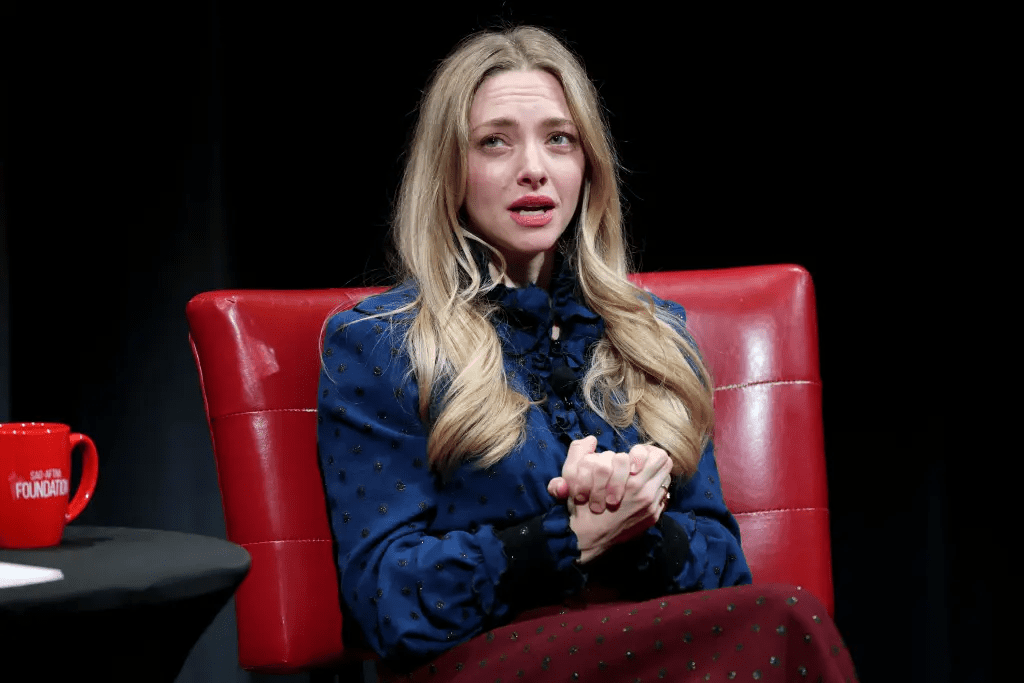
The soft hum of a Los Angeles soundstage on a crisp December morning in 2025 was broken only by the occasional clink of coffee mugs as Amanda Seyfried, 40, settled into a director’s chair for a Who What Wear interview, her blonde hair catching the light from the window overlooking the Hollywood Hills. Seyfried, the “Mean Girls” alum whose career has spanned from teen rom-coms to Emmy-winning roles in “The Dropout,” had arrived fresh from a press day for her new film “The Testament of Ann Lee,” but the conversation quickly turned to a moment that had haunted her since September: Her Instagram comment calling assassinated conservative activist Charlie Kirk “hateful,” posted in the raw hours after his death at a Turning Point USA event in Utah. “I’m not f—ing apologizing for that,” Seyfried said, her voice steady but laced with the quiet defiance of someone who had weathered a storm of backlash, her words landing like a gentle but unyielding wave. For Seyfried, a mother of two young children who has long navigated Hollywood’s glare with a preference for privacy, the comment was a spontaneous reaction to a reel compiling Kirk’s inflammatory quotes on immigrants, Black women, and birth control—a factual distillation of rhetoric she found deplorable. But in the polarized aftermath of Kirk’s killing, her words ignited a firestorm, drawing accusations of callousness from his supporters and praise from those who shared her dismay. Seyfried’s refusal to walk back, shared in the interview published December 11, evokes a poignant complexity—a star’s right to her voice amid grief’s messy edges, a reminder that in America’s fractured discourse, where tragedy becomes a battleground, the line between opinion and outrage blurs, leaving even the famous to crave a moment of unfiltered truth.
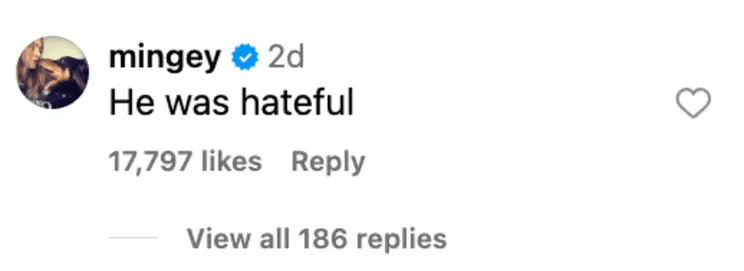
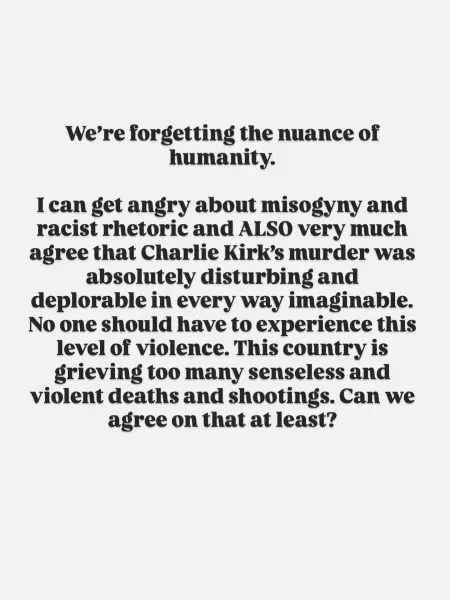
Amanda Seyfried’s comment, posted on September 10, 2025, at 4:17 p.m. PT to an Instagram reel from .Informed that listed Kirk’s quotes—”Black women are the most protected group in America,” “Birth control is the white supremacist’s dream”—read simply: “He was hateful.” The reel, viewed 2 million times in hours, had already sparked debate when Kirk, 31, was shot in the neck mid-speech at Utah Valley University by 22-year-old Tyler Robinson, a disaffected ex-volunteer whose manifesto railed against TPUSA’s “grift.” Kirk, co-founder of the youth conservative group with 2,500 chapters and $150 million budget, died at 3:52 p.m. local time, his assassination a shockwave that rippled through the right, with Turning Point CEO Erika Kirk—his widow—announcing his passing in a tearful video viewed 10 million times. Seyfried’s post, made 25 minutes later, drew immediate fire: Conservative influencers like Laura Loomer called it “vile,” her tweet garnering 500,000 likes, while others accused her of celebrating violence. “He was hateful,” Seyfried wrote, her words a distillation of dismay at Kirk’s rhetoric, but the timing—amid raw grief—ignited a backlash that flooded her mentions with 50,000 comments in 24 hours, per social analytics firm Brandwatch. “No one should have to experience this level of violence,” Seyfried clarified in a September 11 Instagram post, her voice a mother’s plea for nuance: “I can get angry about misogyny and racist rhetoric and ALSO very much agree that Charlie Kirk’s murder was absolutely disturbing and deplorable in every way imaginable.”
Seyfried’s refusal to retract, shared in the Who What Wear interview on December 11, came after months of reflection, her words a reclaiming of agency in a Hollywood where stars often bow to the mob. “What I said was pretty damn factual, and I’m free to have an opinion, of course,” she told interviewer Brooke Shunatona, her tone a blend of resolve and weariness, the magazine’s glossy pages a far cry from the raw feed of her phone during the backlash. Seyfried, who rose from “Mean Girls” in 2004 as the bubbly Karen Smith to Emmy-winning depth in “The Dropout” as Elizabeth Holmes, has long balanced public persona with private life, her 2012 marriage to actor Thomas Sadoski and their two children—ages 9 and 6—a sanctuary from the spotlight. “It’s always hard to see people who are tricky and harmful have success—like our gorgeous president, the best possible example of that,” she said, her reference to Trump a gentle nod to the cultural divides that fueled Kirk’s rise. The interview, conducted over lunch in a Los Angeles restaurant, captured Seyfried’s humanity: “It seems ridiculous at times because people are marching the streets, and I’m not one of them—at least not today. I have to remember that I have nothing to apologize for unless I’m harming someone emotionally, physically, mentally.” Her words, a mother’s measured wisdom, underscore the toll of public scrutiny—backlash that “nearly broke” Jamie Lee Curtis in a similar 2025 Kirk comment, as Curtis revealed on Marc Maron’s podcast, her tears a echo of Seyfried’s quiet strength.

The feud’s undercurrent, a clash within conservative circles where Kirk’s assassination has become a martyr’s mantle, adds layers to Seyfried’s stand. Kirk, whose TPUSA mobilized 100,000 students in 2024 voter drives flipping 20 college precincts red, was a lightning rod for his anti-woke crusades—campus stings exposing “liberal bias” and speeches decrying “DEI indoctrination.” His death, by Robinson—a 22-year-old ex-volunteer whose manifesto railed against TPUSA’s “grift”—sparked immediate conspiracies, from “inside jobs” to faked texts, amplified by Owens, who left TPUSA in 2024 over clashes with Kirk. Owens’s December 5 podcast, viewed 5 million times, alleged $8.5 million in misused funds and a “cover-up,” her words a spark that ignited 500,000 replies tagging Erika Kirk with demands for truth. Erika’s December 10 Fox plea—”Can I have one thing sacred?”—drew Loomer’s defense: “Erika’s suffered enough—Owens is ghoulish.” Loomer’s tweet, 1 million likes, fractured the right, Pool raging against Owens as “degenerate” in a December 8 tirade. For Seyfried, the infighting feels distant yet validating: “It’s so weird to sit in a civilized restaurant… You can’t unpack it too much, or else you’ll go f—ing insane,” she said, her restaurant chat a metaphor for the discourse’s toxicity.

Seyfried’s comment, made in the raw hours after Kirk’s death, was a spontaneous reaction to the reel, its quotes a distillation of rhetoric she found deplorable. “He was hateful,” she wrote, her words factual against footage of Kirk’s speeches, but the timing—amid Erika’s vigil and TPUSA’s $150 million machinery—ignited accusations of callousness. “No one should have to experience this level of violence,” Seyfried clarified September 11, her post a mother’s plea for nuance: “I can get angry about misogyny and racist rhetoric and ALSO very much agree that Charlie Kirk’s murder was absolutely disturbing and deplorable.” The backlash, 50,000 comments in 24 hours per Brandwatch, flooded her with threats, her team hiring extra security for her children’s school. “It was tough—nearly broke me,” Jamie Lee Curtis echoed in a November podcast, her Kirk comments drawing similar fire, her tears a sister’s solidarity with Seyfried.
Public response, from Hollywood sets to Twitter threads, forms a mosaic of support and scrutiny, a nation pausing holidays to ponder speech’s sharp edges. In a L.A. café, Seyfried’s co-star from “The Testament of Ann Lee,” Kristen Stewart, defended her: “Amanda’s heart is huge—she calls out hate because she’s lived kindness.” Stewart’s words, in a December 12 Variety interview, highlighted stakes—celebrity voices in polarized times, where 65% of Americans per a 2025 Pew poll say social media amplifies division. Social media, under #StandWithAmanda, trended with 2.5 million posts—from fans sharing Kirk quotes to allies posting BLM parallels Owens ignored. A viral TikTok from 28-year-old activist Sofia Ramirez garnered 3 million views: “Amanda’s not celebrating death—she’s calling out hate. Nuance matters.” Ramirez’s clip, from a rally, balanced outrage with empathy.
As December’s holidays unfold, Seyfried’s stand invites reflection—a star’s voice amid grief’s roar, her children’s laughter the true script. In L.A. soundstages and Twitter feeds, thanks endures—in opinions held, family the sacred scene.