Pamela Anderson Reveals the Deep Family Roots Behind Her Wish to Change Her Name to Pamela Hyytiäinen
Pamela Anderson has always been one of Hollywood’s most recognizable names, but the actress and activist is now revealing that the identity the world has attached to her for decades isn’t the one that defines her deepest sense of self. In a new interview, the Baywatch icon opened up about her little-known Finnish heritage and the profound influence her grandfather Herman had on her life — a connection so meaningful that she says she would “like” to change her name entirely. The revelation is tender, surprising, and rooted in an emotional history that has shaped her more than many fans ever realized.

Anderson, who grew up in Canada, has often described her childhood as modest and deeply tied to nature. But within those memories, one figure stands out as the anchor of her early years: her grandfather Herman, a proud Finnish immigrant who spoke the language, carried the traditions, and gave young Pamela her first understanding of where she came from. She recalls him as a gentle, grounding presence — someone who made her feel seen, safe, and understood long before Hollywood ever knew her name. “He was the closest person to me in my life,” Anderson said, reflecting on how much his influence lingers, decades later.
In her interview, she explained that Herman was the person who taught her Finnish words, stories, and pieces of a culture that felt like a secret window into another world. Even as a child, she recognized that this heritage meant something special, something she carried with her quietly. She remembers proudly telling people that she was Finnish, long before she truly understood what that connection represented. It was a piece of her identity that felt both distant and intimate, like a thread waiting to be pulled.
Now, as a mother, a public figure, and someone who has become increasingly reflective in recent years, Anderson says she feels that pull more strongly than ever. She expressed a desire to revisit Finland one day, ideally with her sons Dylan and Brandon by her side, so they can understand where their family’s story began. To her, Finland is not merely a birthplace of ancestors but a source of grounding — a reminder of a life quieter and more rooted than the whirlwind she entered as fame followed her from the beaches of Baywatch to the red carpets of global stardom.
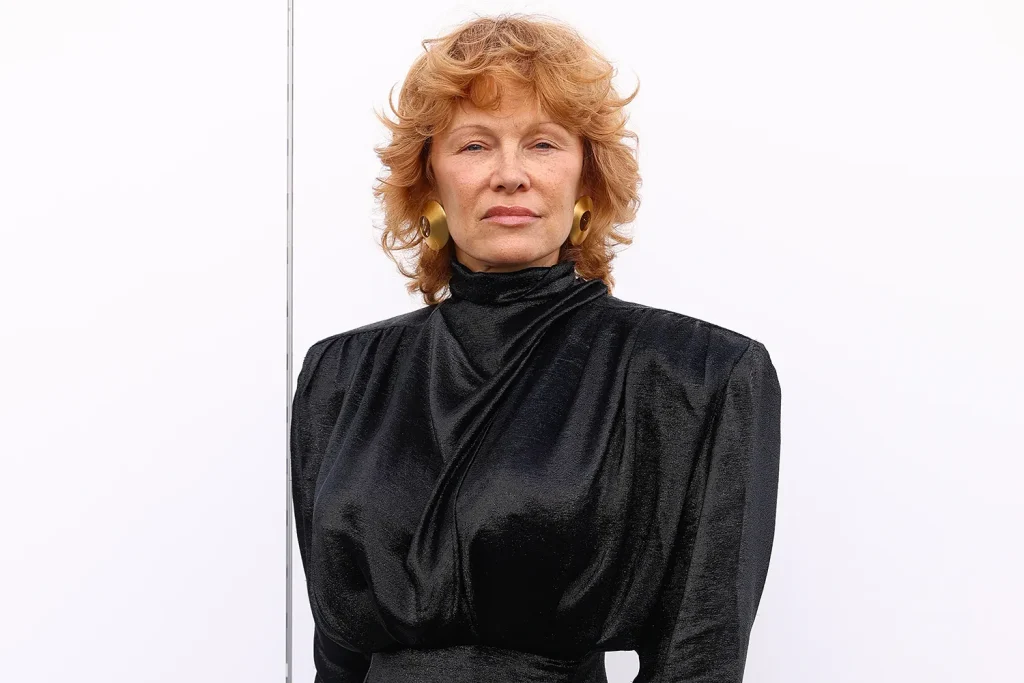
What sparked the most attention, however, was Anderson’s candid confession about her name. “Sometimes I don’t want to be Pamela Anderson. I want to be Pamela Hyytiäinen,” she revealed, referring to her family’s original Finnish surname. The statement was soft but striking, hinting at a longing for simplicity and authenticity in a life that has been anything but simple. Anderson has reinvented herself many times — from model to global TV star, from animal rights activist to best-selling memoirist — but the name she wants most is the one that brings her back to her roots.
She added with a hint of regret, “I would like to change my name, but they won’t let me.” The brief comment raises questions about the administrative and legal complexities that come with changing a name so deeply tied to decades of public recognition. For Anderson, whose career has been shaped by her identity, her image, and the permanence of her celebrity name, the process may not be as straightforward as it is for the average person. Still, her sentiment was unmistakable — this is not a publicity gesture, but a genuine desire for alignment between who she is and who she feels she has always been.
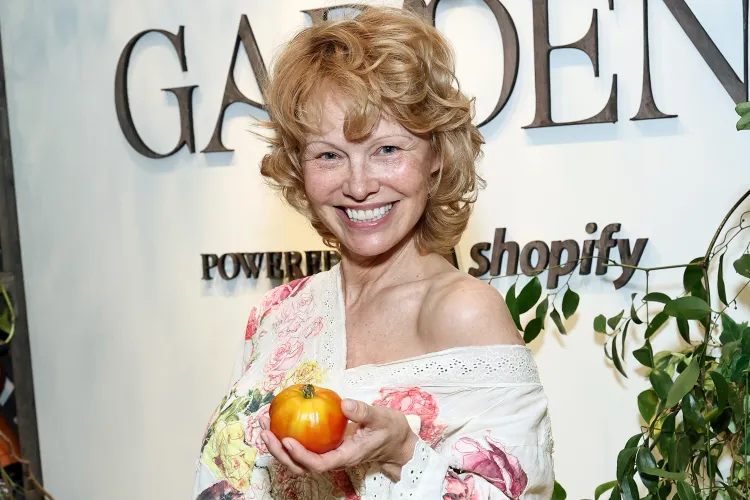
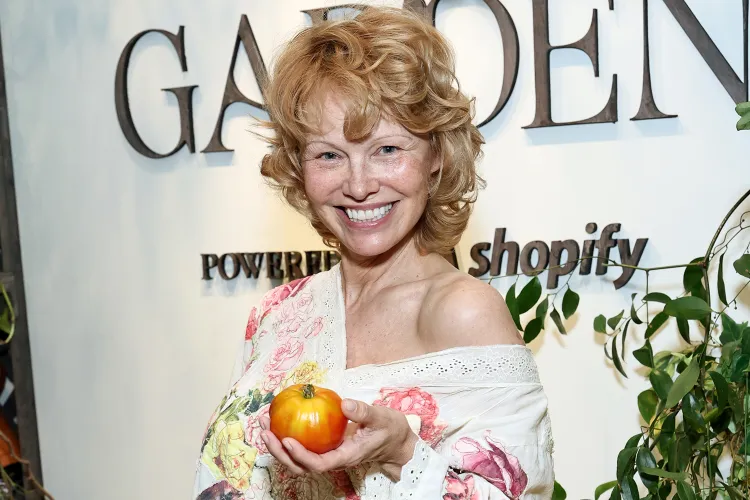
Her recent public appearances also reflect this softer, more grounded chapter of her life. Anderson, now in her late 50s, has been widely praised for abandoning heavy makeup, embracing her natural look, and presenting herself with an authenticity fans have found refreshing and deeply inspiring. In photos from recent events, she wears a gentle smile, a bare face, and an aura of someone who has finally exhaled after years of being shaped by the expectations of an industry that rarely allows women to age on their own terms. Holding fresh tomatoes from a garden event in New York — her hair loose, her expression bright — Anderson looked nothing like the carefully crafted bombshell persona that once defined her. Instead, she looked like herself.
That sense of reconnecting with her roots, her family, and her identity has been a theme in Anderson’s life lately. Her memoir and documentary opened a window into the hardships and triumphs she endured, offering a version of Pamela many had never seen before. They revealed a woman shaped by resilience, tenderness, nostalgia, and a desire to reclaim her narrative. Against that backdrop, her wish to honor her Finnish heritage and use the name Hyytiäinen feels like the natural continuation of a journey toward self-understanding.
Her sons have often expressed admiration for her strength, her reinvention, and her loyalty to the people she loves. Bringing them to Finland, she says, would be her way of sharing the part of herself that existed long before fame entered her life — before Malibu, before red swimsuits, before tabloids. It would be a return to childhood memories of learning Finnish phrases at her grandfather’s knee and absorbing stories of a homeland she had never seen but somehow always felt connected to.
The emotional weight of that connection becomes even clearer when she talks about Herman. She describes him as protective, humorous, and full of cultural pride. He loved Finland, but he loved his granddaughter even more, teaching her not just words and customs, but a sense of belonging that stayed with her even after he passed. Anderson admits that as she gets older, that heritage feels more precious. It’s a link to the part of her life unaffected by fame — the part that shaped her values, her sense of humor, and her desire to simplify her world.
In today’s age of celebrity reinvention, changing a name can be seen as a branding choice. But for Anderson, the appeal of “Pamela Hyytiäinen” carries emotional significance rather than professional strategy. It is the name that connects her to her ancestors, to her grandfather’s voice, to a history that predates Hollywood and remains untouched by it. It represents not a new identity, but an old one rediscovered.
Though she jokes that “they won’t let” her change her name, the sentiment behind it reveals something real: a longing for ownership over her story. For someone whose image has been shaped, distorted, and claimed by the public for decades, reclaiming her roots — even symbolically — can feel revolutionary. Anderson’s journey in recent years has been marked by a deliberate stripping away of everything that wasn’t truly hers. The Finnish name she admires is one of the few pieces she knows would always belong to her.
Her openness about this chapter of her life adds yet another layer to her ongoing evolution. Pamela Anderson has been many things to many people, but the version of her now emerging is softer, wiser, and more in tune with her past. Her desire to reconnect with Finland, to share that experience with her sons, and to honor her grandfather through the name Hyytiäinen is a reminder that even the biggest stars are shaped by the quietest influences.
For fans, this revelation isn’t just surprising — it’s deeply human. It shows that behind every iconic name is a story, a family, a lineage, and a longing to stay connected to where it all began. Pamela Anderson may always be a household name, but the heart of Pamela Hyytiäinen is something she carries with her, no matter what the world calls her.