Hedge Fund Veteran Biff Poggi Takes Michigan Helm as Interim Coach Amid Sherrone Moore Turmoil
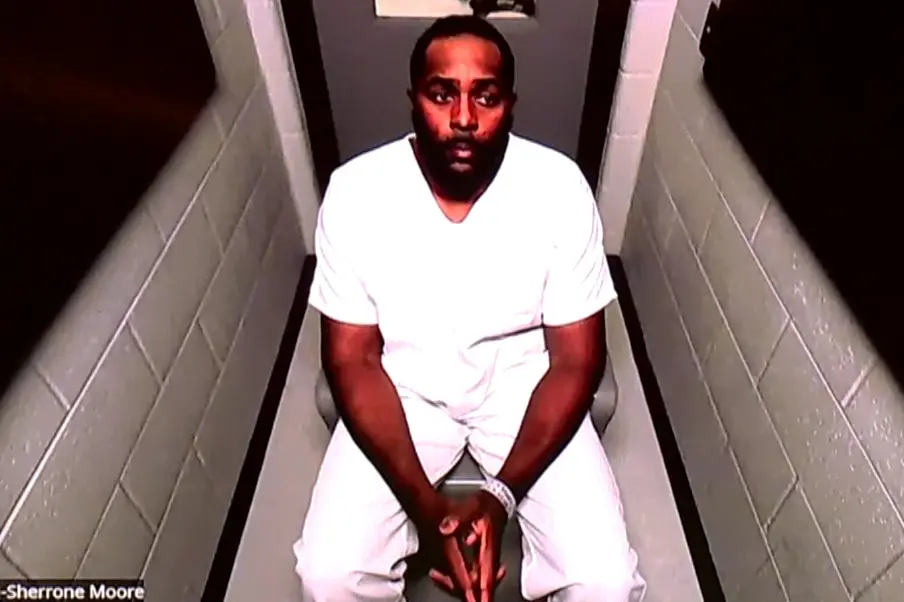
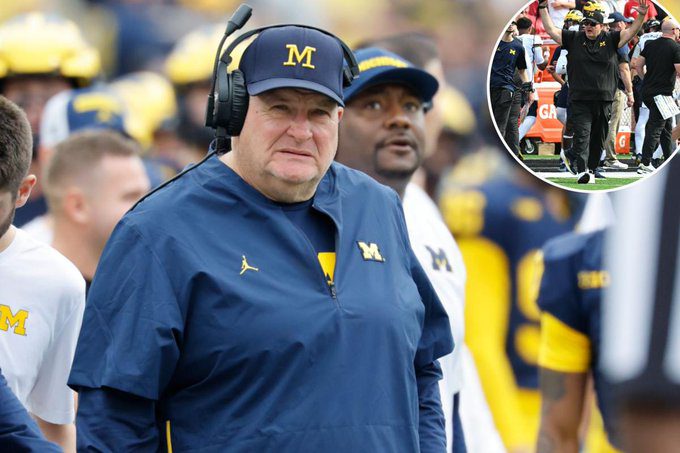
The roar of the crowd at Michigan Stadium still echoes in the minds of Wolverines fans, a symphony of triumphs and heartaches that has defined the program for generations. But on a crisp December afternoon in 2025, the familiar chant of “Hail to the Victors” gave way to a stunned hush. University of Michigan athletic director Warde Manuel stood before a podium in Ann Arbor, his expression a mask of resolve, announcing the immediate termination of head coach Sherrone Moore. The reason: credible evidence from a university investigation revealing an inappropriate relationship with a staff member, a violation that shattered the trust placed in the man who had steered the team through scandal and success. As the news rippled across campuses and living rooms, one figure emerged from the shadows of the sideline to steady the ship—Biff Poggi, the 65-year-old associate head coach whose life story reads like a roadmap of reinvention. Named interim head coach effective immediately, Poggi now faces the daunting task of leading Michigan into the Cheez-It Citrus Bowl against Texas on December 31, a role that tests not just his tactical acumen but the depth of his quiet, unwavering commitment to the young men who call him coach.
Moore’s fall had been swift and unforeseen, capping a tenure marked by both brilliance and burdens. Hired in 2024 after Jim Harbaugh’s departure to the NFL, Moore inherited a program riding high on a national championship but battered by the Connor Stalions sign-stealing investigation. The 37-year-old Detroit native, a former Wolverines offensive lineman who rose through the ranks as tight ends coach and co-offensive coordinator, symbolized continuity. His energy on the field was infectious; players spoke of his booming voice rallying them through grueling practices, his post-win hugs a ritual of shared joy. Under Moore, Michigan posted a 17-8 record over two seasons, including a gritty 9-3 campaign in 2025 that clinched a bowl berth despite early stumbles against Oklahoma and USC. Yet shadows lingered. In May 2025, Moore self-imposed a two-game suspension for deleting 52 text messages with Stalions, a Level II NCAA violation tied to the 2023 scandal. The NCAA later tacked on a third game for 2026, a penalty that would have sidelined him for the opener against Western Michigan. Poggi stepped in for those early contests, guiding blowout wins over Central Michigan (63-3) and a nail-biting victory against Nebraska (30-27), his steady hand allowing the team to focus amid the noise.
The final blow came not from the field but from within the program’s walls. On December 10, as players wrapped holiday preparations and fans buzzed about the Texas matchup, Manuel’s statement landed like a thunderclap. “This conduct constitutes a clear violation of University policy, and U-M maintains zero tolerance for such behavior,” he wrote, emphasizing the investigation’s findings without delving into details that respected the privacy of those involved. Hours later, reports surfaced of Moore’s detention by Pittsfield Township police in Saline, Michigan, for an ongoing probe into potential charges related to an alleged assault. Court records confirmed his booking at Washtenaw County Jail that evening, with an arraignment set for December 12. For Moore’s family—wife Kelli and their three young daughters—the day unfolded in layers of heartbreak. Kelli, a constant presence in the stands with her sideline cheers and post-game family photos, now faced a spotlight turned inward. Friends described her as the quiet force behind Moore’s drive, organizing team barbecues and supporting his ascent from assistant to head man. The couple’s social media, once filled with glimpses of lake outings and birthday celebrations, fell silent, a poignant pause amid the storm.
In the locker room, the news hit like a missed block. Senior quarterback Bryce Underwood, the nation’s top recruit from the Class of 2025, issued a public show of support for Poggi via social media, posting a photo from practice with the caption: “All in with Coach Poggi. Let’s finish strong.” Underwood, who threw for over 3,000 yards this season, credited Poggi with unlocking his potential during the suspension games, where his poise under pressure shone brightest. Teammates echoed the sentiment in group chats and hallway whispers, their bond forged in the fire of a program that demands resilience. “Coach Poggi doesn’t just teach plays; he teaches life,” one anonymous lineman told reporters outside Schembechler Hall, his voice thick with the weight of transition. The university, too, moved to reassure. President Domenico Grasso emailed students and faculty the next day, praising the swift action while vowing a continued probe: “All of the facts here must be known.” The message underscored Michigan’s commitment to accountability, a thread woven through its response to past controversies, from the 2023 sign-stealing fallout to earlier recruiting missteps.
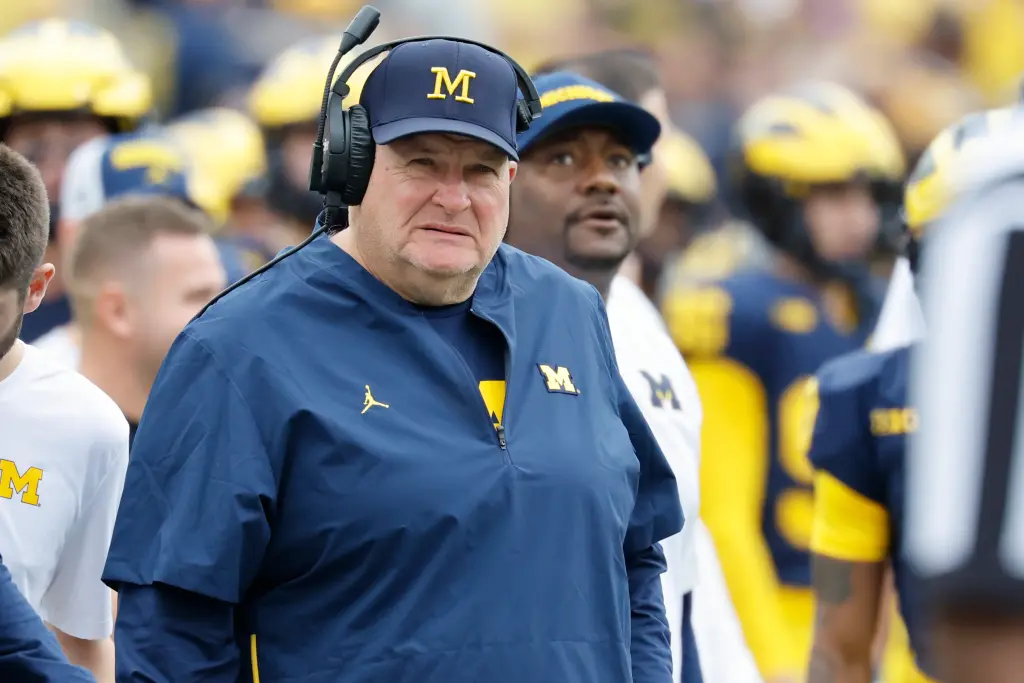
Enter Biff Poggi, a name that evokes both curiosity and comfort in equal measure. Born Francis Xavier Poggi on June 6, 1959, in Baltimore’s vibrant Little Italy, he grew up amid the scents of simmering sauces and the crack of neighborhood stickball games. A hulking offensive lineman at Gilman School—where he later coached—he transferred from the University of Pittsburgh, playing alongside future Hall of Famer Dan Marino, to Duke, graduating in 1983 with a degree in history. But football’s pull competed with pragmatism. Fresh out of college, Poggi landed a teaching gig at Baltimore’s McDonogh School, earning $8,000 a year while coaching American government and U.S. history. It was there, in the unlikelihood of a classroom desk, that opportunity knocked. His future father-in-law, a seasoned investor, spotted Poggi’s sharp mind and invited him to learn the ropes of finance. With a modest $25,000 seed, Poggi co-founded Samuel James Limited in 1986, a hedge fund that capitalized on the post-1987 stock market crash, ballooning into a multimillion-dollar enterprise valued in the hundreds of millions by the 2010s. Sleeveless tees became his signature on Wall Street, a nod to his gridiron roots, as he balanced boardrooms with volunteer coaching stints.
Wealth afforded Poggi freedom, but passion drew him back to the turf. In 1988, he returned to Gilman as a volunteer assistant, forgoing salary even as he ascended to head coach in 1996. Over 19 seasons, he transformed the Greyhounds into a dynasty, securing 13 Maryland state titles and sending dozens of players to Division I programs. His methods were as unorthodox as they were effective: eight-week summer breaks for rest, corporate internships for perspective, and a relentless emphasis on character over touchdowns. “Football is a vehicle for life lessons,” Poggi often said, his gravelly voice carrying the cadence of a storyteller. One alumnus, now a Fortune 500 executive, recalled Poggi’s pre-game rituals—sharing stories of resilience from history books, reminding boys that losses on the field paled against real-world grit. Yet success came with sacrifice; Poggi poured personal funds into scholarships, covering costs for underprivileged athletes without fanfare.
His high school odyssey peaked at St. Frances Academy, a predominantly Black private school in Baltimore’s toughest neighborhood, where he served on the board for years. In 2017, Poggi founded its football program from scratch, investing $2.5 million of his own money to fund 65 scholarships. Under his watch, the Panthers became a national powerhouse, landing recruits at Alabama, LSU, Notre Dame, and yes, Michigan. The HBO documentary “The Cost of Winning” captured this era, highlighting Poggi’s bridge-building across divides—coaching in a community worlds from his privileged upbringing, fostering bonds that transcended race and class. “Biff sees the kid, not the jersey,” a former player shared in the film, his eyes welling at the memory of Poggi attending his mother’s funeral, suit traded for a team hoodie.
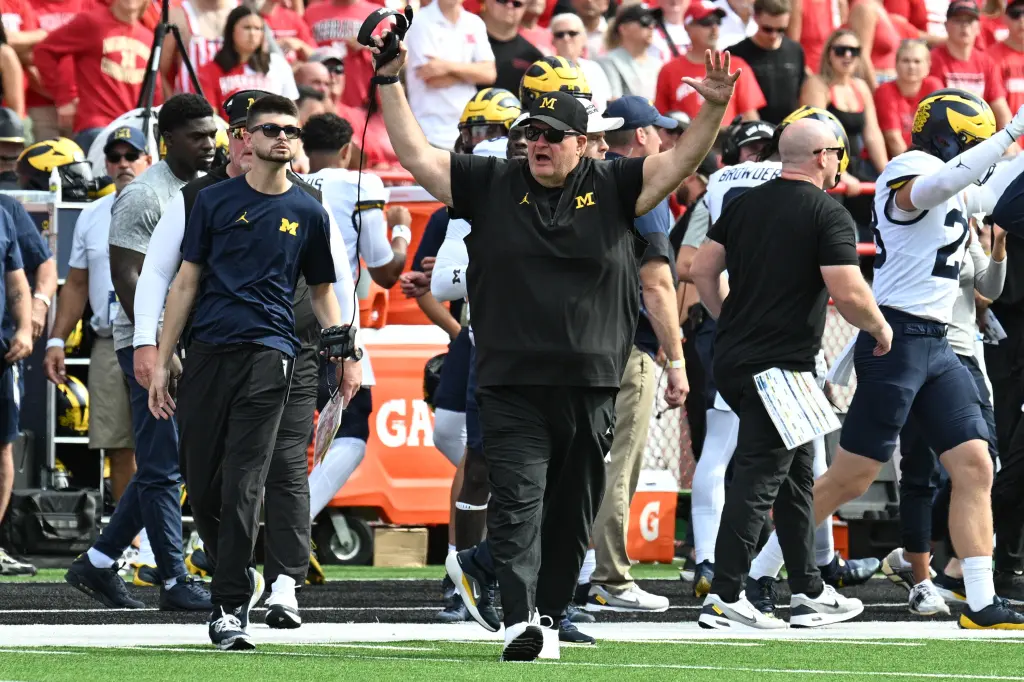
College football beckoned in 2016 when Jim Harbaugh, fresh from Stanford and the 49ers, recruited Poggi as an analyst at Michigan. Their bond, forged through mutual friends in Baltimore, was instant—Harbaugh dubbing him “consigliere,” the trusted advisor who spoke truth without fear. Poggi returned full-time in 2021 as associate head coach, unafraid to challenge Harbaugh’s late-night practice whims or push for player wellness amid the grind. “You need a guy who wants nothing in return,” Harbaugh’s father, Jack, once said of such relationships. Poggi fit the bill, his heart in mentorship over headlines. When Harbaugh left for the Chargers in 2024, Poggi followed a detour to Charlotte as head coach of the 49ers, compiling an 8-16 record over two seasons before his mid-2024 dismissal. Undeterred, he rejoined Michigan in November 2024 under Moore, drawn by the program’s unfinished promise and the chance to guide talents like Underwood.
Public reaction to Poggi’s appointment has been a balm for frayed nerves. On X, formerly Twitter, fans traded memes of his sleeveless coaching look with earnest endorsements: “Biff’s the steady hand we need—heart over headlines,” one viral post read, amassing thousands of likes. Alumni groups rallied with donation drives for player support funds, while national pundits like ESPN’s Kirk Herbstreit praised his “outsider’s wisdom in an insider’s game.” Nick Saban, no stranger to program turnarounds, once called Poggi “an absolute great choice” for leadership, a sentiment echoed in Baltimore barbershops where old players toast their mentor’s ascent. For the Wolverines, ranked 18th entering the bowl, Poggi’s priority is clear: unity. In his first team meeting post-announcement, he gathered players in a circle, sharing a Gilman story of a comeback forged not in schemes but in shared resolve. “We’re family,” he told them, voice steady. “We play for each other, not the noise.”
As the Citrus Bowl looms under Florida’s palm-fringed skies, Poggi’s interim role carries whispers of permanence. At 65, with financial independence and a lifetime of lessons, he insists his focus is the now—the bowl prep, the healing of young hearts navigating loss. Yet in quiet moments, perhaps during film sessions or dawn runs along the Huron River, he ponders the what-ifs. Michigan’s search for a permanent coach will draw marquee names—Kalen DeBoer, Jesse Minter, even whispers of John Harbaugh—but Poggi’s path reminds us that true leadership often arrives unannounced, sleeves rolled up, ready to build rather than burnish. For a program etched in maize and blue, his steady gaze offers a horizon of hope, where scandals fade and stories of grit endure. In the end, as the final whistle approaches, it’s not the millionaire’s ledger or the prep school’s trophies that matter—it’s the lives touched, the lessons imparted, and the quiet conviction that football, at its best, mends what it breaks.