After Victim’s Racial Slur Echoed Post-Attack, Jury Clears Homeless Man in Tense Old Town Confrontation
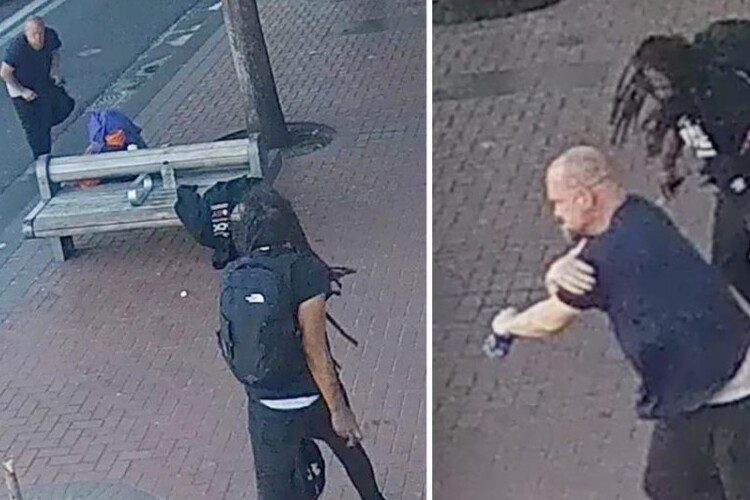
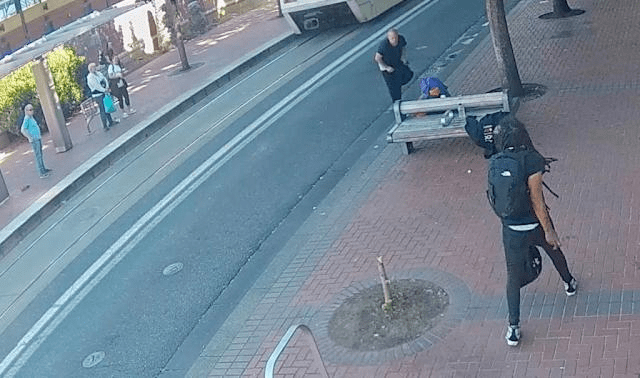
In the rain-slicked streets of Portland’s Old Town neighborhood, where the neon glow of dive bars casts long shadows over rain puddles and the distant hum of TriMet light rail cuts through the evening drizzle, 43-year-old Gary Edwards approached a bench on Southwest 3rd Avenue around 8:45 p.m. on July 7, 2025, his fixed-blade knife tucked in his pocket as he scanned for a trade. Edwards, a homeless man with a weathered backpack slung over one shoulder and a history of run-ins with the law, spotted Gregory Howard Jr., 43, another unhoused resident nursing a cigarette in the dim light of a streetlamp. What began as an exchange for cigarettes escalated in seconds—Howard jumping up, pushing Edwards against a wall in a brief scuffle, words flying like sparks in the wet air. Edwards pulled his knife, stabbing Howard once in the shoulder before stepping back, the blade glinting briefly in the sodium glow. Howard, clutching his arm as blood soaked his jacket, shouted the N-word in pain and anger, the slur captured on nearby transit cameras but lost to the night’s audio. For Edwards, who later told detectives he felt threatened in the moment, the act was survival in a city where homelessness claims 4,000 lives nightly and tensions simmer like the ever-present fog. For Howard, hospitalized with a 4-inch wound requiring stitches, it was an assault from a stranger, the slur a reflexive outburst amid shock. The incident, unfolding in seconds on a corner known for its struggles with addiction and isolation, ended with Edwards’ arrest blocks away and Howard’s testimony that would divide a courtroom five months later. In a verdict handed down October 31, 2025, a Multnomah County jury acquitted Edwards of second-degree assault, citing self-defense and weighing Howard’s use of the slur as a pivotal factor. The decision, while legally sound, left ripples of reflection in a community grappling with the raw edges of language and legacy, a reminder that in moments of crisis, words can wound as deeply as any blade, shaping not just trials but the tender trust we place in one another.

The confrontation, pieced together from transit video, body camera footage, and witness statements reviewed in court, played out like a tragic snapshot of Portland’s underbelly—a city where homelessness rose 15% to 6,000 in 2025 per annual counts, and Old Town’s shelters strain under the weight of 500 nightly beds. Edwards, a Portland native with a backpacker’s gait and a record that included a 2020 stabbing conviction at a light rail station—for which he served three years—and a 2021 attempted second-degree assault charge, had been released from parole in June 2025 after a dismissed fourth-degree assault case in a store altercation due to lack of public defenders. On that July evening, he approached Howard, who sat on the bench with his own history shadowing him—a 1997 felony rape conviction in Kitsap County, Washington, for which he’d served time and registered as a sex offender. Edwards testified October 29, 2025, in Judge Michael Greenlick’s courtroom, his voice calm as he described offering his knife for cigarettes, a common barter among unhoused folks. “He jumped up, pushed me hard against the wall—I thought he was going to hit me,” Edwards said, his hands gesturing the scuffle as jurors leaned forward. The push lasted seconds, but Edwards pulled the 6-inch fixed-blade knife from his pocket, stabbing Howard in the upper left shoulder before backing away. Transit cameras captured the motion but no sound, leaving the courtroom to rely on body cam audio from arriving officers, where Howard, bleeding and in pain, used the N-word three times as paramedics tended him.

Howard’s testimony, delivered October 28 with a bandage visible under his shirt, painted a different picture—a stranger sauntering up from behind, the scuffle a defensive response to Edwards’ approach. “I saw him coming, knife in hand—I pushed to get away,” Howard said, his voice steady but eyes distant as he recalled the blade sinking in, the blood warm on his jacket. Howard, who lived in Old Town’s shelters and panhandled for cigarettes, admitted the slur post-attack: “I said it in shock—words I regret, but he started it.” Prosecutor Katherine Williams, in closing arguments October 30, argued the slur was irrelevant, occurring after the stab: “Mr. Edwards was in control—he walked up, stabbed, and sauntered off without fear.” Williams, a deputy district attorney with 12 years prosecuting assaults, emphasized Edwards’ lack of retreat, calling it “aggressor behavior” under Oregon’s self-defense statute, ORS 161.209, which requires reasonable belief of imminent harm. Defense attorney Daniel Small, a public defender since 2015, countered that Howard’s perception of threat was laced with racism—the slur a window into bias that justified Edwards’ fear. “What else could make a stranger push like that but hate?” Small asked the jury, his words landing with the gravity of a community where Black Portlanders face 4.5 times the homicide rate of whites, per 2024 Portland Police Bureau data.
The jury, seven women and five men including three people of color, deliberated 4 hours before acquitting Edwards on October 31, their verdict citing self-defense under Oregon law. “We found the push created reasonable fear, and the slur showed the context,” foreman Mark Rivera said post-trial to reporters outside the courthouse, his voice measured as rain pattered on umbrellas. Rivera, a 45-year-old construction manager from Beaverton, noted the video’s silence left room for Edwards’ testimony. Judge Greenlick, in dismissing the case, praised the jury’s diligence: “Justice requires weighing all evidence with care.” The outcome, while legal, stirred reflection in a city where racial tensions simmer—Portland’s Black population at 6%, but hate crimes up 20% in 2025 per PPB stats. Edwards, released immediately, expressed relief to supporters: “I defended myself—now I want peace.” Howard, recovering at home, told KPTV November 1: “I regret the word—it doesn’t excuse the stab, but it happened.”
The case’s echoes reach Portland’s unhoused, a community of 6,000 where survival often means navigating distrust. Edwards, staying at a Old Town shelter, joined a December 2 support group, sharing his story amid nods from peers. “Homelessness hardens you— one wrong look turns to a fight,” he said, his hands folded as facilitator Sofia Ramirez listened. Ramirez, 40, a caseworker with Transition Projects, sees the verdict as complex: “Self-defense is real, but the slur wounds too—both men deserve healing.” Ramirez’s group, serving 200 monthly, blends counseling with job training, a response to 2025’s 15% rise in street violence. On X, the Post’s story drew 1.2 million views, replies from advocates: “Words escalate—address the root, not just the knife.” A December 3 Willamette Week poll showed 55% supporting the acquittal, with 68% calling for anti-bias training.
The trial’s aftermath invites introspection on language’s power. For Rivera in deliberation, Ramirez in her group, and Howard at home, it’s a moment of mending—a gentle call to recognize the harm in words, fostering communities where fear gives way to understanding, one careful conversation at a time.