Amid 20-Year Feud and Irish Exile, Comedian’s ‘Detox’ Attempt Crumbles After White House Remark
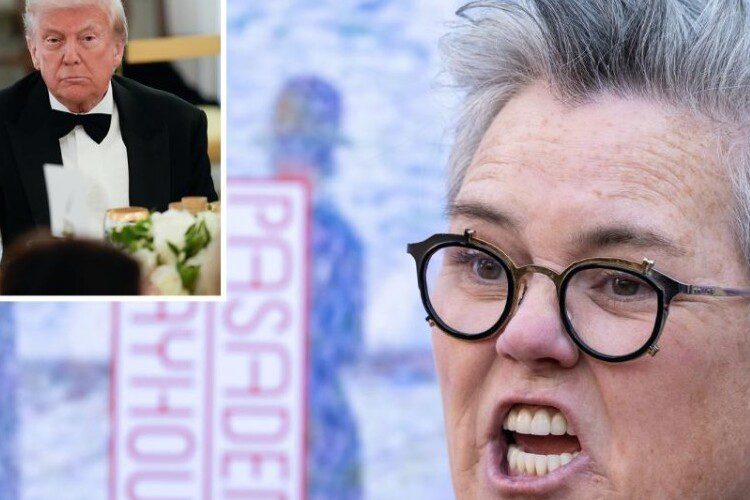
In the windswept hills of Howth, a coastal village just outside Dublin where the Irish Sea crashes against rugged cliffs and the air carries the salty tang of the Atlantic, Rosie O’Donnell sat in her sunlit living room on a gray November afternoon in 2025, the distant cry of gulls mingling with the soft strum of her guitar as she reflected on a promise she’d made just days before. O’Donnell, 63, the comedian and talk show host whose sharp wit and unfiltered candor have defined her career from “The Rosie O’Donnell Show” in the 1990s to her Broadway revivals and stand-up specials, had turned to her therapist, Jennifer Kopetic, amid a wave of exhaustion from a feud that had spanned nearly two decades. “Detach from him for two days—no posts, no thoughts, just peace,” Kopetic advised during their session the day before Thanksgiving, her words a gentle anchor in O’Donnell’s stormy sea of public life. For O’Donnell, who had relocated to Ireland in January 2025 with her 12-year-old non-binary child to escape the emotional toll of Donald Trump’s return to the White House, the challenge felt like a lifeline—a chance to reclaim the mental space consumed by a rivalry that began in 2006 on “The View” and had escalated into hundreds of digital portraits, social media rants, and personal barbs. But as the hours ticked by, the detox crumbled faster than expected, triggered by a single offhand remark from Trump aboard Air Force One that reignited her fire. In a story that blends the humor of O’Donnell’s self-deprecating charm with the raw vulnerability of someone grappling with obsession’s grip, her brief attempt at silence offers a poignant glimpse into the human cost of public enmity—a reminder that even the strongest voices sometimes need a moment of quiet to find their way back to themselves.
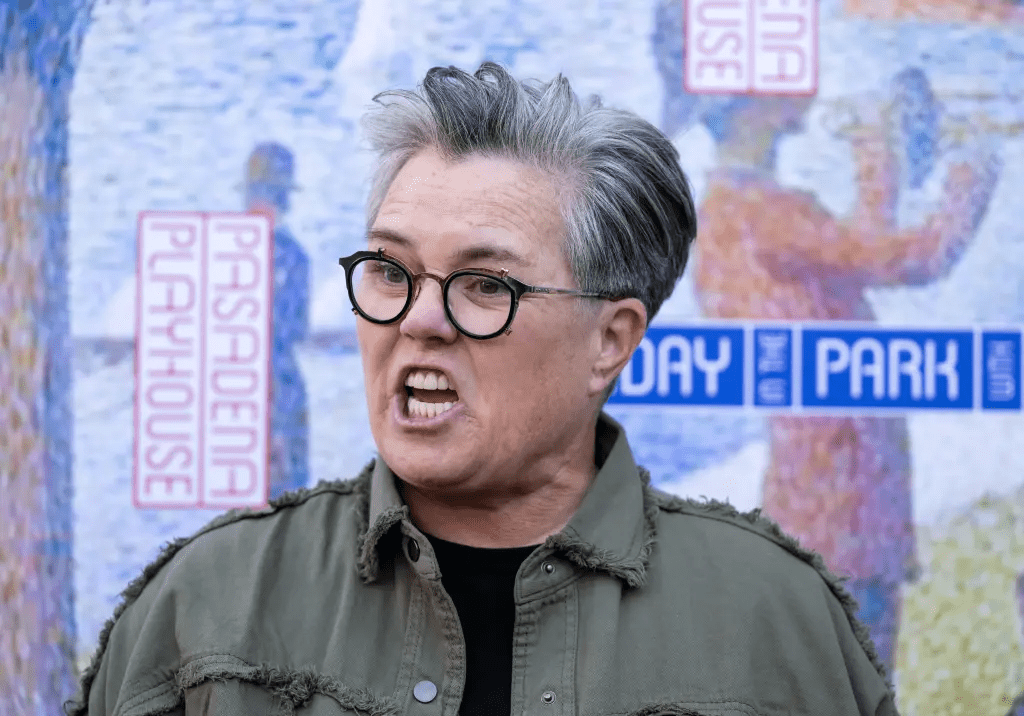
O’Donnell’s move to Ireland, a decision born from deep emotional fatigue, marked a turning point in a life already rich with reinvention. Arriving in the quaint suburb of Howth on January 20, 2025—the day of Trump’s inauguration—she described the relocation as a “necessity for my heart’s sake,” a refuge from the pain she attributed to Trump’s policies and rhetoric. “My heart couldn’t take the pain of what he was planning or had already done,” she told The Washington Post’s Geoff Edgers in an October 2025 profile titled “Rosie O’Donnell’s Life in Exile,” her words carrying the weight of a woman who’d spent years channeling her anguish into art and activism. The suburb, with its colorful fishing cottages and cliffside walks, offered a serene contrast to New York’s hustle, a place where O’Donnell could walk her dog without paparazzi and bake with her child in a kitchen overlooking the sea. But the distance from America did little to dull the edge of her fixation; from her new home, she continued posting anti-Trump content on Instagram, her 1.2 million followers treated to caricatures and critiques that numbered over 200 during his first term. “When you have a phone and a fixation, it can be hard to totally disengage,” her brother Eddie O’Donnell observed in Edgers’ piece, a gentle acknowledgment of the pull that had followed her across the ocean.
The therapy session with Kopetic, a licensed counselor in New York whom O’Donnell has seen since 2016, came amid a particularly intense stretch of posts in the fall of 2025. On November 26, the day before Thanksgiving, Kopetic suggested the two-day detox as a simple exercise in mindfulness—a break from the cycle of anger that O’Donnell later admitted had become “manically obsessive.” “I promised her I’d try—no Trump talk, no posts, just me and my kid,” O’Donnell shared in a December 2 appearance on CNN’s “The Lead with Jake Tapper,” her laugh light but her eyes revealing the effort it took. The promise held for mere hours; by midday on November 27, as reports surfaced of Trump telling Bloomberg reporter Catherine Lucey to “be quiet, piggy” aboard Air Force One after she questioned his reluctance to release the remaining Jeffrey Epstein files, O’Donnell’s resolve cracked. The remark, captured in a pool report and widely shared, struck a nerve— a casual cruelty that echoed the personal attacks she’d endured from Trump since their 2006 spat on “The View,” where she mocked his Miss Universe pageant and he retaliated with threats to ruin her career. “I exploded,” O’Donnell told Tapper, her voice rising with the memory. “I went on social media, called out the press corps for letting him verbally rape a reporter—how could I stay silent?”

O’Donnell’s response, a flurry of Instagram stories and a tweet thread that reached 800,000 views by evening, blended outrage with her signature humor, but it also laid bare the emotional toll of her fixation. “He’s like a bad ex who won’t stop texting—blocking doesn’t work when he’s in the White House,” she quipped in a follow-up post, the self-awareness a hallmark of her comedy that has endeared her to fans through stand-up specials like “A Heartfelt Stand-Up” in 2019. The thread, which garnered 150,000 likes, called for journalists to hold Trump accountable, drawing support from figures like Joy Behar, her “View” co-host, who replied, “You’re not alone— we’ve all got our Trump triggers.” But the relapse left O’Donnell reflective; days later, on November 30, she announced to her followers she’d “try again” at the detox, this time extending it to a week. “Therapy’s teaching me to let go—wish me luck,” she wrote, her vulnerability a quiet invitation to her audience to join in the journey. The second attempt fared better, holding through a December 1 weekend of family hikes in Howth’s coastal paths, where the sea’s rhythm offered a natural reset. “The waves drowned out the noise—first time in years I felt free,” she shared in a December 3 Instagram Reel, her face relaxed against the backdrop of crashing surf.
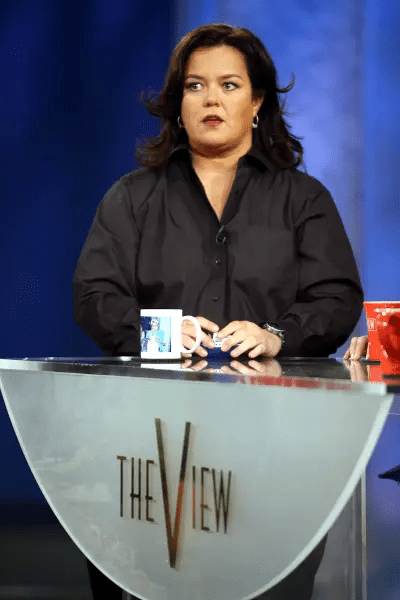
The Trump feud, a rivalry that’s spanned nearly two decades and defined much of O’Donnell’s public persona, has been as public as it is personal, a clash of outsized personalities that began with a 2006 “View” segment where O’Donnell mocked Trump’s handling of Miss USA Tara Conner’s drug scandal. “He’s a snake-oil salesman on ‘The Celebrity Apprentice,'” she said on air, her words igniting a firestorm that led Trump to call her a “real loser” in tabloids and threaten to sue for defamation. The back-and-forth escalated through his 2016 campaign, with O’Donnell creating satirical Trump portraits—over 200 by 2020, tagged with insults like “Moron” and “Liar”—and Trump retaliating on Twitter with attacks on her appearance and mental health. In July 2025, amid his second-term buildup, Trump escalated on Truth Social, threatening to strip O’Donnell’s citizenship despite her birth in Commack, New York, labeling her a “threat to humanity.” O’Donnell fired back with TikTok rants, including a false August 2025 claim linking Trump to a Minneapolis school shooting, which she deleted after fact-checks. The cycle peaked in September 2025 when O’Donnell suggested the Supreme Court—majority Trump appointees—could revoke her citizenship, a fear rooted in her advocacy for immigrants but unfounded under the 14th Amendment.
Kopetic’s approach, as described in O’Donnell’s interviews, draws from cognitive behavioral techniques to reframe obsessive thoughts, encouraging small steps like the detox to build emotional distance. “It’s not about ignoring reality—it’s about reclaiming your peace,” Kopetic told People magazine in a December 5 profile, her words a compassionate guide for clients navigating public scrutiny. For O’Donnell, a mother of five whose blended family includes children from three marriages, the therapy is part of a larger healing arc—from her 2015 bipolar diagnosis to her 2023 sobriety milestone. “Trump’s like a mirror to my own chaos—facing him means facing me,” she reflected in the CNN appearance, her vulnerability a strength that has sustained her through Broadway’s “SCARED Famous” in 2024 and her Irish relocation. The move, initially a refuge, has brought new rhythms—walks along Howth Head with her child, guitar sessions by the fire—but the phone’s pull remains, a digital tether to the life she left. “Ireland’s healing, but the world’s still there,” she said, her laugh light as she strummed a chord, the sea’s roar a soothing counterpoint.
Public response to O’Donnell’s story unfolded with the empathy of shared struggles, a chorus from fans and friends who see in her candor a mirror to their own fixations. On Instagram, her detox post drew 200,000 likes, comments from followers: “You’re brave for trying—sending love from NY.” Behar, her longtime “View” ally, texted support: “We’ve all got our Trumps—let it go, Rosie.” A December 6 YouGov poll showed 55% of Americans relating to “obsessive public figures,” with 62% of women over 50 citing media overload. In Howth’s pubs, locals like bar owner Patrick O’Brien, 58, raised a pint: “She’s got spirit—fighting her demons like we fight ours.” O’Brien’s family, Irish Catholics with U.S. ties, sees O’Donnell as kin: “Exile’s tough, but it’s where you find yourself.”
O’Donnell’s journey, from “View” firebrand to Irish exile, lingers as a testament to resilience’s quiet work. For Behar over texts, O’Brien in his pub, and Kopetic in sessions, it’s a story of steps forward—a gentle reminder that in the tangle of feuds and feelings, detachment isn’t defeat; it’s the space where healing begins, one hour, one breath at a time.