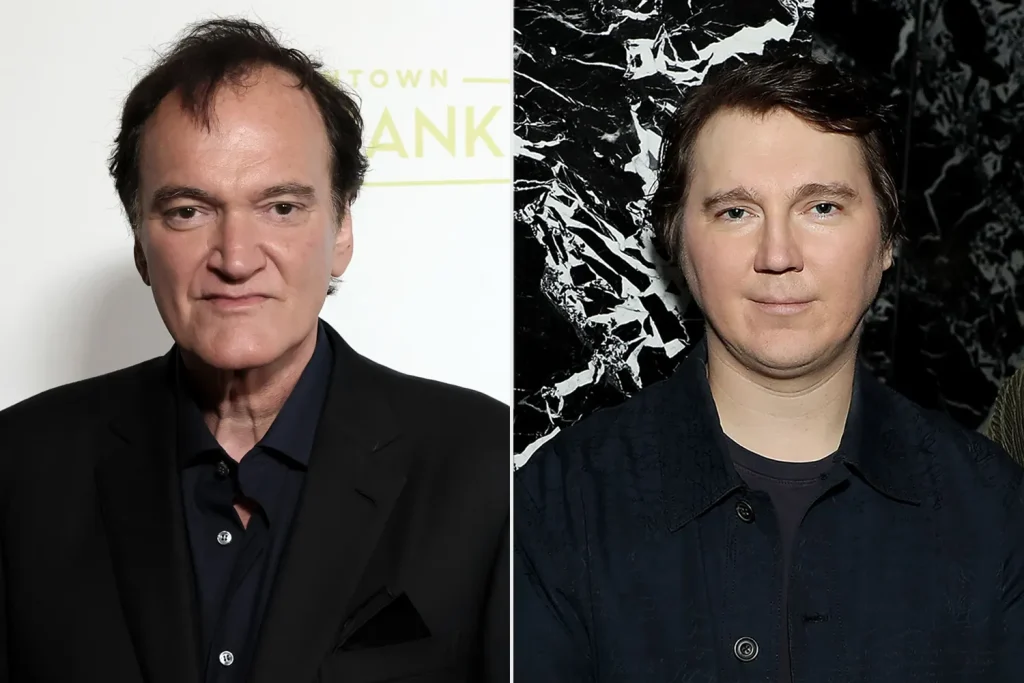
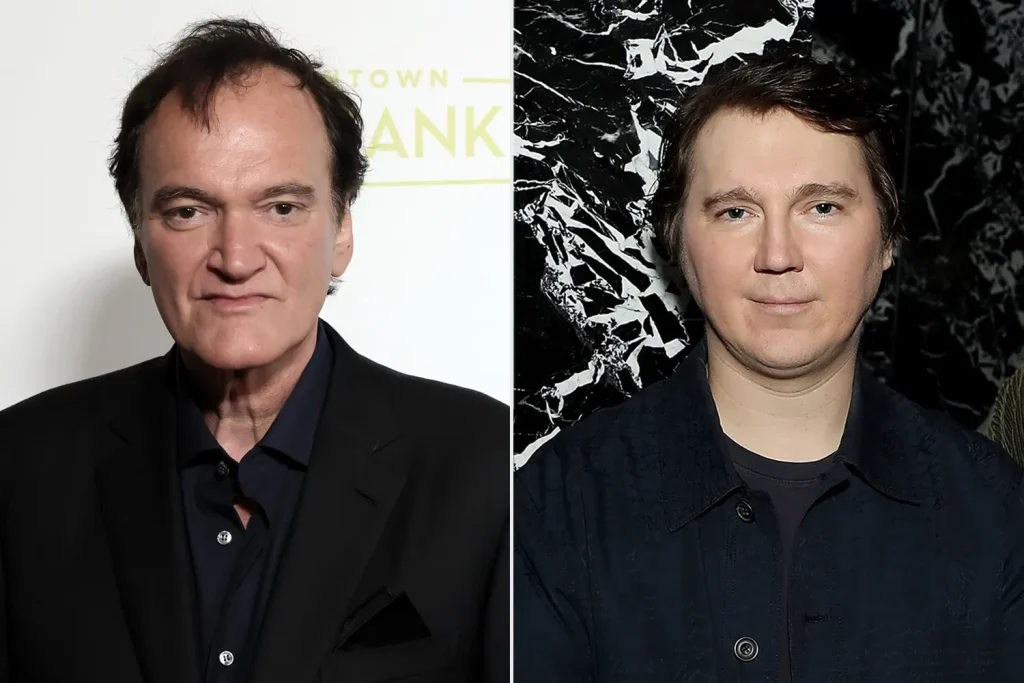
Ben Stiller, Simu Liu, and Alec Baldwin Step In After Quentin Tarantino Calls Paul Dano the “Weakest Male Actor” in ‘There Will Be Blood’
Paul Dano is no stranger to playing characters who linger in the audience’s mind long after the credits roll, but this week, it wasn’t one of his haunting performances that stirred conversation across Hollywood. It was the unexpected, sharply critical remarks from Quentin Tarantino that sent a ripple through the entertainment world and, in turn, prompted an outpouring of support from some of the industry’s most respected voices. The moment began quietly, almost casually, on a recent podcast appearance where Tarantino revisited the landscape of cinema in the 2000s. Without warning, he singled out There Will Be Blood, one of the most universally acclaimed films of that era. As he praised parts of Paul Thomas Anderson’s masterpiece, Tarantino abruptly shifted direction, pointing to Paul Dano’s performance as what he called the film’s “big giant flaw.” He went further, describing Dano as “a non-entity” in the movie and claiming the film “would stand a better chance to be in number one or number two if it didn’t have” Dano in it.
The comments landed with a thud across the industry. Even in a town known for blunt opinions, Tarantino’s choice of words felt unusually pointed. Before long, other actors and creatives began stepping in—not to ignite a feud, but to defend a performer widely admired for his quiet intensity, versatility, and unwavering commitment to craft. Ben Stiller was among the first to publicly push back. Known for both his comedic brilliance and his thoughtful approach to dramatic roles, Stiller chose brevity but made his message unmistakably clear. Responding online, he highlighted Dano’s remarkable talent, subtly reminding audiences that the actor has earned consistent praise from directors, critics, and co-stars throughout his career. Stiller’s support came with a note of warmth familiar to anyone who has worked with Dano: an acknowledgment that some actors rely less on volume and more on nuance, and that such work should never be mistaken for weakness.
Not long after, Simu Liu added his voice. With his own meteoric rise following Shang-Chi and the Legend of the Ten Rings, Liu has become known for speaking openly—and often humorously—about the pressures of the industry. His defense of Dano carried a tone of sincerity, emphasizing how extraordinary Dano’s performances have been over the years. Liu highlighted what many fans of Dano have long believed: that his strength lies in his ability to disappear completely into characters, delivering performances that stay grounded even when the worlds around them become larger than life. Alec Baldwin joined the conversation as well, offering measured but firm words. Baldwin’s statement reframed the debate by focusing on the challenge of being cast opposite Daniel Day-Lewis in a film where every frame is scrutinized by audiences and critics alike. Baldwin underscored that Dano held his own in a way few actors could, particularly given the intensity Day-Lewis brings to each role. For Baldwin, Tarantino’s criticism seemed less a fair appraisal and more an instance of overlooking the subtleties that have long defined Dano’s work.
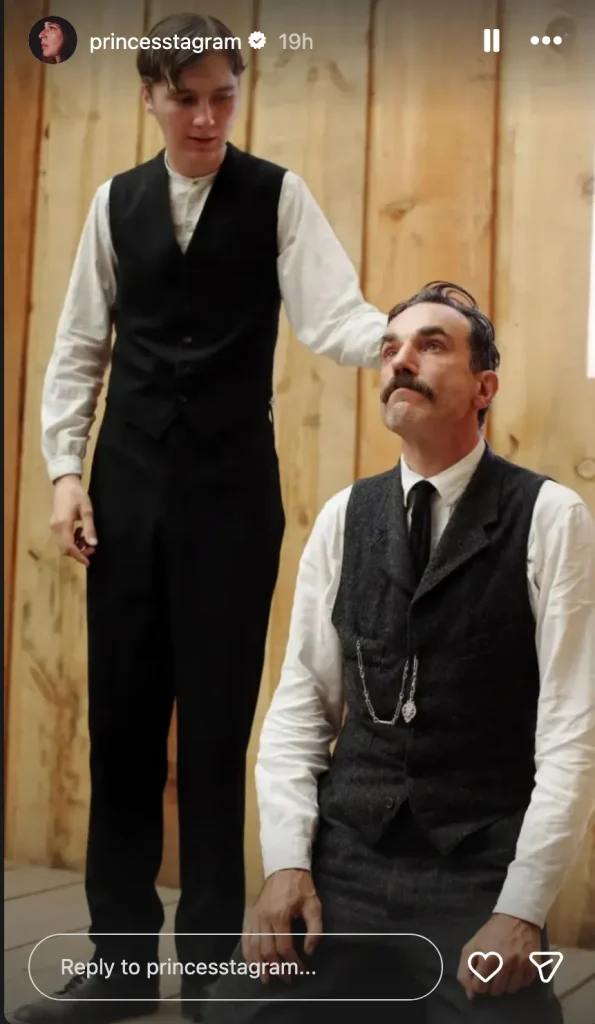
With the conversation expanding rapidly, fans of There Will Be Blood began revisiting the film with renewed attention. Many pointed out that Dano was not the original actor cast for the role of Eli Sunday; he stepped in only after the production had already begun, leaving him just a matter of days to prepare. Rather than faltering, Dano delivered a performance that earned critical praise across major publications when the film premiered in 2007. His exchanges with Day-Lewis became some of the film’s most iconic moments. The baptism scene, the heated confrontations inside the church, and the tightly coiled tension between preacher and prospector remain embedded in cinematic memory. For many viewers and critics, those scenes work precisely because Dano matches Day-Lewis not by trying to overpower him, but by grounding Eli in a quiet, unsettling conviction.
That perspective has surfaced repeatedly in the aftermath of Tarantino’s remarks. Critics from the time of the film’s release largely praised Dano’s layered approach, noting that his restrained energy gave Day-Lewis the perfect counterbalance. Without that emotional contrast, several analysts have argued, the film’s central conflict would not burn with the same ferocity. The renewed debate has also sparked a deeper reflection on Dano’s career as a whole. Over the past two decades, he has built a body of work defined by emotional depth, psychological nuance, and an uncanny ability to inhabit deeply complex characters. From Little Miss Sunshine to Prisoners, from Love & Mercy to The Batman, Dano has consistently chosen roles that challenge him creatively rather than roles designed solely for mass visibility. Directors who have worked with him, including Paul Thomas Anderson, Denis Villeneuve, and Matt Reeves, have praised his focus, preparation, and intelligence. Even audiences unfamiliar with his full filmography tend to remember him vividly whenever he appears on screen.
It’s this broader view of Dano’s contributions to cinema that has shaped the pushback to Tarantino’s critique. The conversation has grown into more than a disagreement over a single performance; it has evolved into a debate about how Hollywood measures talent, how it values quiet intensity versus explosive presence, and how one influential filmmaker’s personal taste can shape public perception. Yet, despite the strong reactions, what stands out most in this moment is the overwhelming sense of solidarity among Dano’s peers. The actors who spoke out did so not with hostility toward Tarantino, but with admiration for a colleague they deeply respect. Their responses reminded audiences that the industry, while competitive and often unforgiving, can also be a place of genuine loyalty. It is rare to see actors of such varied backgrounds—comedians, dramatic veterans, rising stars—come together so swiftly and organically.
Part of the emotional resonance of this moment comes from the contrast between Dano’s demeanor and the intensity of the reactions surrounding him. Known for his gentle presence and his thoughtful approach to interviews, Dano has long avoided the spotlight outside of his work. Despite being one of the most acclaimed actors of his generation, he rarely inserts himself into controversies or public debates. In a culture where attention is currency, Dano’s quietness has become part of his identity. This silence, however, has also made the support around him feel particularly meaningful. The response suggests that respect for Dano runs deeper than social media trends or momentary buzz. It indicates the lasting impression he has made on his peers, the trust he has earned on set, and the admiration many feel for the emotional intelligence he brings to every role.
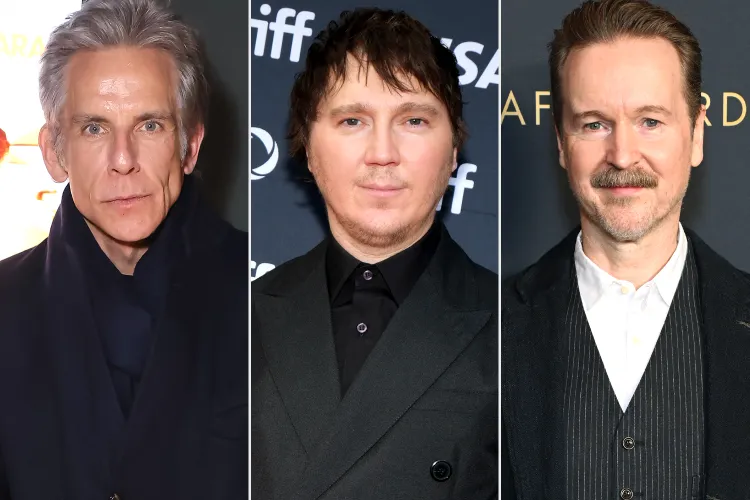
The situation has also sparked a broader conversation about the way criticism is delivered in today’s film landscape. Tarantino, known for his blunt assessments and encyclopedic knowledge of cinema, often speaks freely and passionately. His comments, while surprising, reflect his personal taste rather than a universal metric. For many, this moment highlights the importance of separating subjective opinion from definitive judgment. Filmmaking is an art form defined by interpretation, and performances resonate differently with each viewer. What some may see as understated, others may view as lacking; what one critic perceives as timid, another may recognize as a deliberate, well-crafted choice. The reactions from Stiller, Liu, Baldwin, and countless fans make clear that Dano’s work in There Will Be Blood continues to be valued deeply, and that his performance remains a cornerstone in a film often hailed as one of the greatest of the century.
As the conversation continues to unfold, one thing has become clear: Paul Dano does not need to defend himself. His career, his performances, and the respect he has earned speak louder than any single critique. The wave of support from his peers reflects not only admiration for his talent, but also a broader understanding of how vital diverse styles of acting are to the richness of storytelling. Whether in a leading role or a supporting one, Dano brings emotional truth to every moment on screen, and that sincerity is something Hollywood continues to cherish. In a landscape where bold personalities often dominate the stage, the industry’s defense of Dano serves as a powerful reminder that quiet strength is still strength—and that the artists who choose subtlety over spectacle can leave an impact just as lasting, and sometimes even deeper.
For fans revisiting There Will Be Blood, the renewed attention offers a chance to rewatch Dano’s performance with fresh eyes. For others, it’s an invitation to explore a career marked by dedication, restraint, and a fearless willingness to dive into the shadows of the human experience. And for Hollywood, this moment stands as a testament to the value of standing by the artists who pour themselves into their work, even when one of the industry’s most prominent voices disagrees. In the end, the conversation has become less about criticism and more about appreciation—an unexpected but heartfelt celebration of an actor whose impact continues to resonate far beyond the screen.