Trump Escalates Tensions with Press as He Clashes with ABC’s Rachel Scott Over Pentagon Scandal Question
President Donald Trump’s long-running tensions with the White House press corps resurfaced sharply this week as he lashed out at ABC News correspondent Rachel Scott, calling her “the most obnoxious reporter” for pressing him on a developing Pentagon scandal. The exchange unfolded on Monday, Dec. 8, during what had begun as a routine roundtable in the Cabinet Room. The president appeared before reporters to update the nation on a long-awaited farm aid package, but as questions opened, the conversation quickly shifted into far more uncomfortable territory.
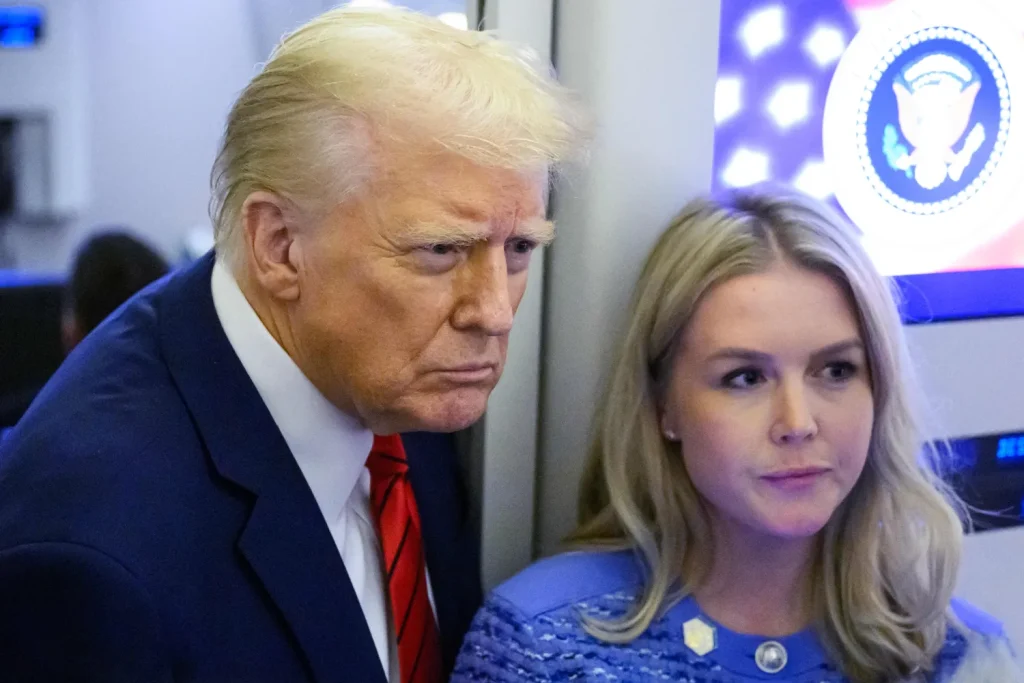
What followed was a moment that seemed to crystallize the strained relationship between Trump and several prominent female journalists who have challenged him throughout his presidency. Scott, known in Washington for her steady, composed on-camera presence and her direct questioning style, raised concerns that have swirled for days around allegations of mismanagement and accountability failures tied to senior Pentagon officials. Her question was measured and rooted in ongoing reporting, but Trump bristled immediately, redirecting the moment away from policy and toward personal criticism.
Those in the room described a sudden shift in tone. The president, who had appeared eager to tout the administration’s progress on aiding American farmers, stiffened at Scott’s inquiry, leaning into the microphones as he interrupted her. Calling her “the most obnoxious reporter in the White House,” he dismissed the premise of her question altogether. Reporters noted the familiar tension that often emerged during Trump’s contentious press briefings, particularly when questions came from women or journalists of color who refused to back down. Scott remained calm, attempting to restate her question, but the president cut her off again and moved on.
The exchange quickly circulated online, becoming another flashpoint in a presidency marked by frequent clashes with the media. Viewers who watched the footage saw a journalist attempting to raise a question rooted in public accountability and a president who chose confrontation over engagement. Yet beyond the headlines and the political noise, the moment reflected something larger — the ongoing test of resilience facing journalists whose jobs require them to stand firm, even when powerful figures attempt to undermine them.
Rachel Scott has built a reputation in Washington as a reporter who does not shy away from hard questions. Colleagues often describe her as poised, unshakeable, and deeply committed to factual reporting. Her role as a seasoned White House correspondent places her in the direct line of rapid-fire political developments, shifting narratives, and public scrutiny. Monday’s encounter may have been jarring, but it was hardly the first time Scott has pressed high-ranking officials with the type of clarity that asks for direct answers rather than political maneuvering. Still, any time a sitting president publicly singles out a journalist in such blunt and personal terms, the moment reverberates far beyond the briefing room.
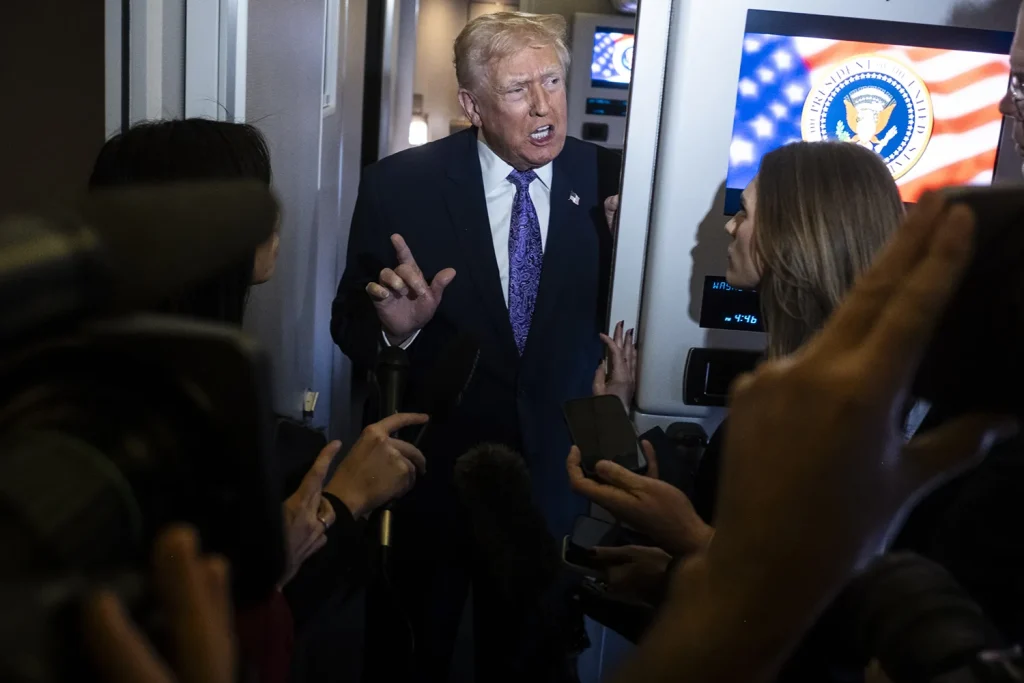
For Trump, the clash fit into a broader pattern. Throughout his time in office, he frequently attacked the media, calling stories he disliked “fake news” and using public briefings to challenge, interrupt, or belittle reporters. While his supporters often praised him for rejecting what they perceived as biased or adversarial coverage, critics argued that these tactics undermined the essential role of a free press. Female journalists, in particular, often found themselves on the receiving end of sharpened remarks, abrupt cut-offs, or accusations of unfairness simply for asking standard accountability questions. The president’s treatment of reporters such as Yamiche Alcindor, Kaitlan Collins, Cecilia Vega, and now Scott, has repeatedly reignited conversations about gender, power, and respect inside the briefing room.
What makes Monday’s moment stand out is the topic itself. Questions surrounding Pentagon oversight are not trivial or speculative — they reach into the core of national security, taxpayer accountability, and the ethical standards expected of the country’s highest defense officials. Scott’s question reflected public interest, not personal agenda. By dismissing it through a personal attack rather than addressing the underlying issue, Trump shifted the focus away from substantive policy discussion and toward political theater. And yet, this has long been part of the rhythm of his interactions with reporters: challenging the messenger rather than the message.
Behind the scenes, Scott’s colleagues say she left the room as composed as she entered, a testament to her professionalism. Journalists learn early in their careers that interviews can turn combative, that not every powerful figure welcomes scrutiny, and that public criticism is sometimes the price of doing the job well. Still, such moments leave emotional marks, especially when the criticism is not rooted in disagreement over facts or reporting but in personal attacks meant to discredit or intimidate.
For observers watching from across the country, the moment was another reminder of the delicate balancing act journalists face. They must ask difficult questions without becoming the story. They must push for clarity, even when clarity is not offered. They must represent the public interest inside rooms where access is limited, power dynamics are real, and every word can become a national headline. Scott’s calm persistence in the face of such hostility reflects the professionalism that anchors the work of so many reporters who operate in environments where tension can spike within seconds.
The public response was predictably divided. Supporters of the president praised him for standing up to a question they viewed as unfair or poorly timed, while others saw the exchange as another example of Trump’s discomfort with scrutiny. But outside the realm of political allegiance, questions about how leaders handle simple requests for accountability are becoming increasingly important. The press is not meant to function as an extension of any administration, nor as a tool for political messaging. Its role — especially in moments of national uncertainty — is to ask what the public deserves to know.
Media advocacy groups responded swiftly, noting that such attacks on journalists create a chilling effect. When public officials use their platform to demean reporters, it signals to viewers that legitimate inquiries should be dismissed rather than answered. It contributes to a climate where journalists face heightened online harassment, personal threats, and relentless public criticism simply for doing their jobs. These concerns are not theoretical. They are lived realities for many reporters who must navigate the emotional toll of witnessing their work politicized, weaponized, or misrepresented.
Yet for Rachel Scott, the moment also served as a powerful illustration of why journalism matters. Her decision to push forward with the question — despite the interruption — reflects the core principle that government officials must be accountable for the actions carried out under their leadership. The question she asked remains unanswered, but the public witnessed the interaction, and the footage now stands as a testament to the importance of transparency.
As the political landscape continues to evolve, moments like these are shaping the future relationship between the federal government and the press. The way leaders respond to scrutiny sends a message to the nation about the value of truth and the role of accountability. When questions are met with hostility, the public loses access to essential information. When journalists remain committed to asking them anyway, democracy becomes stronger.
In the days since the exchange, Scott has continued her reporting without comment on the president’s insult. It is a quiet choice, but a meaningful one. Journalists often find that their work speaks louder than any public defense they might offer. Her presence at future briefings will serve as a reminder that the press cannot be intimidated into silence and that public accountability remains a cornerstone of American democracy. Whether or not the White House chooses to answer her questions, she will continue to ask them.
What unfolded on Monday was more than a tense exchange between a president and a reporter. It was a snapshot of a political era defined by its volatility, its charged public rhetoric, and its pressure on institutions designed to uphold democratic values. It was also a human moment — one reporter standing firm, one president pushing back, and millions watching to see what it all means for the future of communication between power and the people.
The clash may fade from the headlines, but its implications will linger. It highlights the courage required to challenge authority, the responsibility leaders have to address the concerns of the public, and the delicate but essential relationship that binds journalists and government together in the ongoing pursuit of truth. Rachel Scott asked a question the public deserved to hear answered. What remains now is whether the administration will ever choose to respond with substance rather than criticism.