As Maduro Mobilizes Millions in Response, Families Brace for Shadows of Intervention in a Region Hungry for Stability
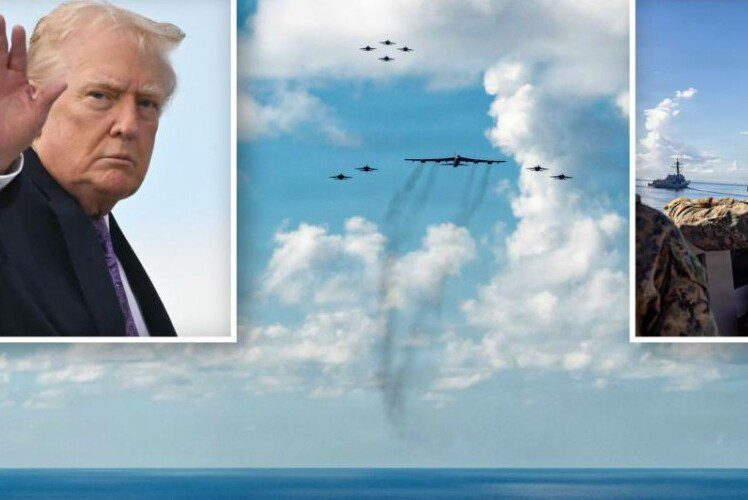
The turquoise waters of the southern Caribbean shimmered under a relentless November sun on December 1, 2025, as the USS Gerald R. Ford sliced through the waves like a steel behemoth, its flight deck alive with the roar of F-35 jets practicing touch-and-goes while 4,500 sailors below deck monitored radars for the slightest blip. The carrier, America’s largest and most advanced, had arrived in the theater just weeks earlier, joining a flotilla of 10 other U.S. warships—including destroyers, frigates, and a nuclear-powered submarine—that now patrolled the waters off Venezuela’s coast, a deployment of 15,000 troops marking the largest American naval presence in the region since the 1962 Cuban Missile Crisis. For 38-year-old Venezuelan fisherman Carlos Mendoza in Puerto La Cruz, scanning the horizon from his small skiff as he cast nets for the day’s catch, the distant silhouettes evoked a quiet dread mingled with faint hope—these vessels, part of Operation Southern Spear, had sunk 22 suspected narco-boats since September, killing over 80 and disrupting cartels that choked his hometown’s docks with fentanyl and fear. “The ships bring change—less guns on the water, maybe jobs again,” Mendoza said, his hands rough from lines as he hauled a net, the sea’s rhythm a counterpoint to the geopolitical storm brewing. But for his wife Rosa, 35, waiting on shore with their two young sons, the buildup stirred memories of 2019’s blackouts and protests: “Warships mean power, but power breaks families first.” As Maduro mobilizes 4 million militia in response, the U.S. presence—framed by the Trump administration as a counter-drug bulwark—hangs like a gathering cloud over a region where economic desperation and political intrigue have long tested the bonds of neighbors.
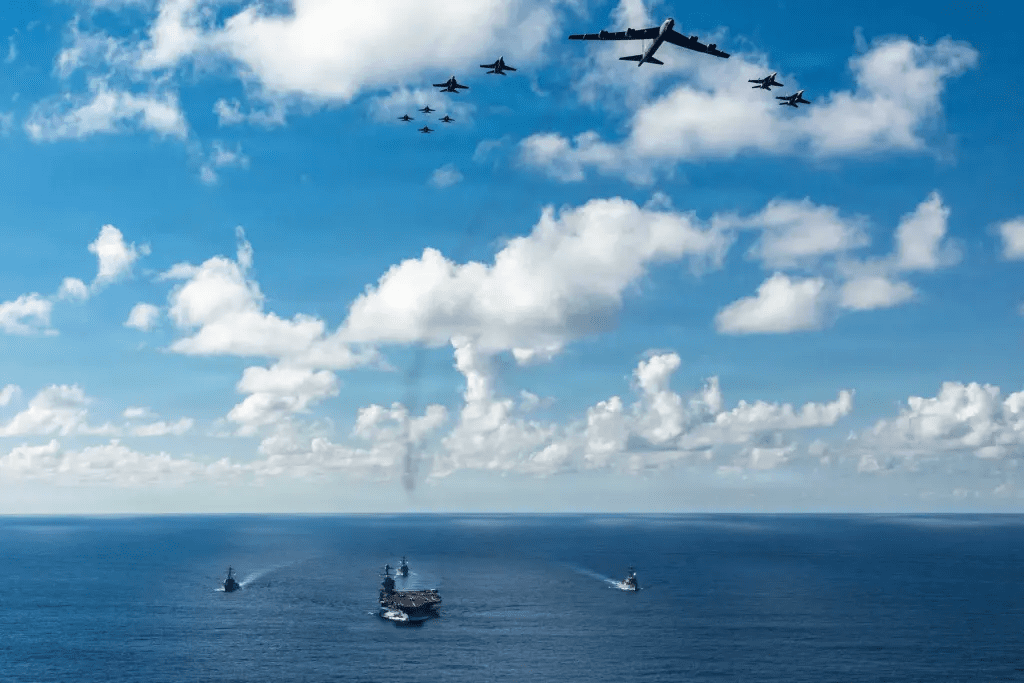
The deployment’s scale, announced incrementally since August 2025, has transformed the Caribbean theater into a floating fortress, with the Ford’s arrival on November 16 capping a buildup that includes seven destroyers, three frigates, and the USS Makin Island amphibious assault ship carrying 2,000 Marines. Defense Secretary Pete Hegseth, speaking from the Pentagon on November 28, described it as “enhanced counter-narcotics operations,” crediting the flotilla with 50 tons of fentanyl seized and 80 “narco-terrorists” neutralized in 22 strikes. “This is about saving American lives—every pound off the streets means fewer families shattered by opioids,” Hegseth said, his voice steady as he touted a 25% drop in U.S. overdose deaths since January per CDC preliminary data. The operation, dubbed Southern Spear, echoes Trump’s first-term drone campaigns but escalates with carrier strike groups and B-52 patrols from Puerto Rico, where 5,000 troops now stage alongside 10 F-35s and MQ-9 Reapers. For Mendoza, whose coastal village has seen cartel speedboats vanish under U.S. fire, the change is tangible: “Fewer ghosts on the water—my boys fish without fear now.” Mendoza’s relief, shared over a dockside lunch of fresh ceviche, reflects the human side—families reclaiming seas once ruled by traffickers, their nets fuller and nights quieter.
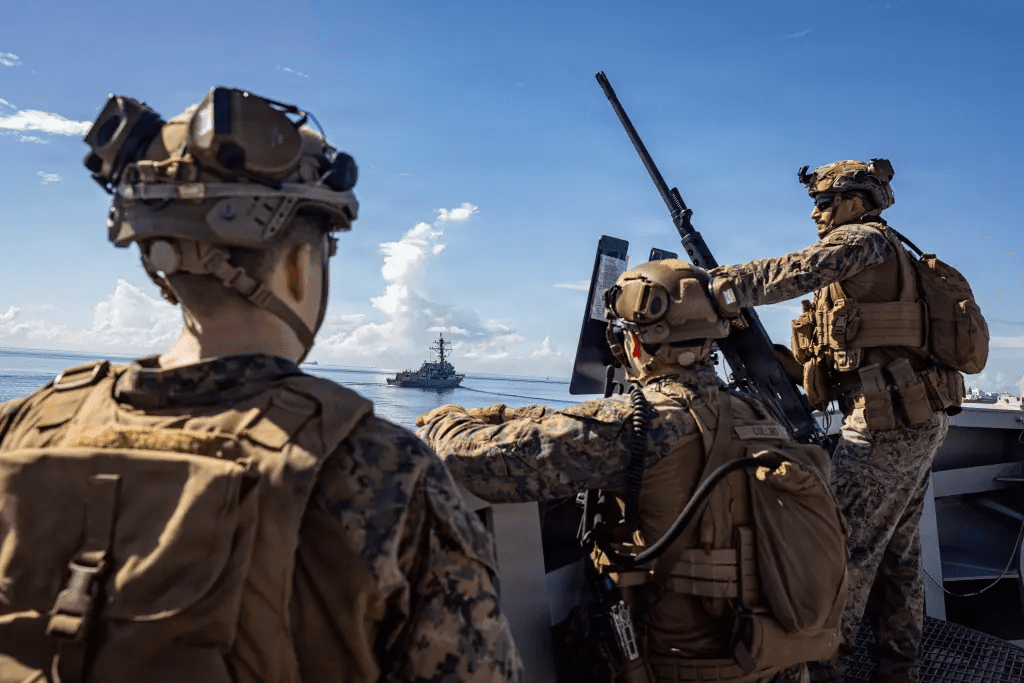
Yet the buildup’s shadow lengthens over Caracas, where President Nicolás Maduro’s regime has responded with a “massive mobilization” of 200,000 troops and 4 million militia under the “Independence Plan 200,” a defensive drill launched August 28 amid U.S. warship sightings. Defense Minister Vladimir Padrino López, announcing the activation of bases and air assets on November 11, called it a “new phase” against “imperialist threats,” with Venezuelan F-16s buzzing the USS Jason Dunham on September 4 in a provocative flyover that drew U.S. F-35 deployments to Puerto Rico. Maduro, 62, whose disputed July 2024 election sparked protests killing 50 and displacing 500,000, framed the U.S. presence as “fabricated war,” expelling two diplomats in October and touting Russian S-400 systems as deterrents. “We are ready—a republic in arms if attacked,” Maduro said in a November 27 speech to 10,000 in Miraflores Palace, his mustache twitching with defiance as flags waved under chandeliers. For Rosa Mendoza, listening on a battery radio amid blackouts, the rhetoric stirs old fears: “Maduro talks tough, but it’s our homes that pay—sons drafted, markets empty.” Rosa’s family, like 7 million Venezuelan refugees since 2014 per UNHCR, embodies the toll—80% poverty, GDP shrunk 75%, a nation where $300 monthly wages buy little more than rice.
The U.S. rationale, rooted in countering the Cartel of the Soles—Maduro-linked traffickers designated FTOs in September 2025—has drawn mixed regional responses. Guyana’s Vice President Bharrat Jagdeo welcomed the presence on October 31, citing Venezuela’s territorial claims on two-thirds of its land, while Cuba and Nicaragua decried it as “imperialism” in a joint statement November 12. Colombian President Gustavo Petro deployed 25,000 troops to the border in August, balancing U.S. ties with Maduro diplomacy. “The warships deter cartels, but risk a quagmire—15,000 troops aren’t enough for invasion,” said former U.S. ambassador Carlos Pascual, his analysis a caution from Bogotá where 2025 saw 1,200 border crossings. Pascual’s words reflect the buildup’s duality: 50 tons of fentanyl seized, but 80 lives lost in strikes, Venezuelan officials denouncing “extrajudicial killings” at the UN on November 29. For Mendoza, the balance tips toward hope: “Less drugs mean schools stay open—my boys learn without fear.”
Public sentiment, from Capitol Hill to Caribbean docks, weaves resolve with wariness, a region pausing amid holidays to ponder power’s price. In Washington, Sen. Lindsey Graham praised the flotilla on November 27: “Southern Spear saves lives—Maduro’s cornered.” Social media, under #CaribbeanShield, trended with 2.5 million posts—veterans sharing strike footage, Venezuelan exiles toasting “libertad.” A viral TikTok from 28-year-old Caracas student Sofia Ramirez, filmed amid protests, garnered 3 million views: “Ships mean change—end Maduro’s nightmare for my family.” Ramirez’s clip, from a barricade with tear gas canisters, highlighted the stakes—80% disapproval for Maduro per Edison Research, 500,000 displaced since July.Trump’s strategy, a blend of pressure and pragmatism, navigates the crisis’s moral maze. For Kovalenko in Kharkiv and Petrov in Donetsk, it’s a distant echo; for Mendoza in Puerto La Cruz, a lifeline amid nets. As December dawns, with F-16s buzzing and militia drilling, the flotilla invites reflection—force as shield for stability, in a region weary but watching.