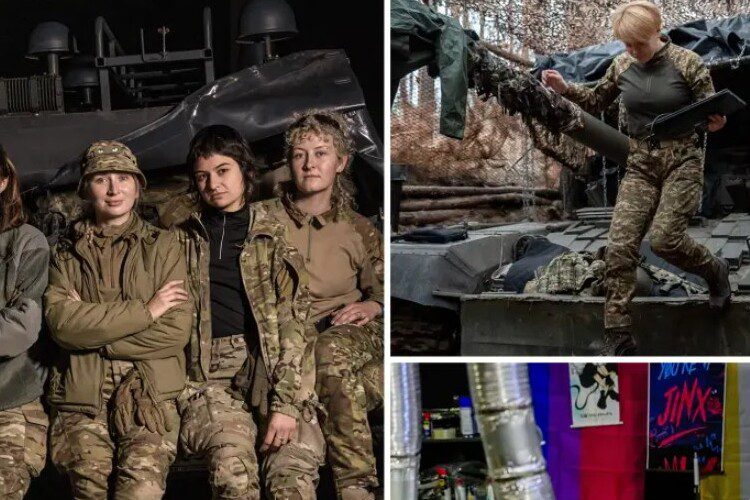
As Russia’s Invasion Grinds On, Mothers and Daughters Trade Homefronts for Frontlines, Finding Strength in Service and Sisterhood
In the frost-covered fields outside Kharkiv, where the first light of dawn casts long shadows over mud-churned trenches and the distant rumble of artillery serves as an unwelcome alarm clock, 28-year-old Oksana Kovalenko slung her rifle over her shoulder and kissed her 4-year-old daughter goodbye on a gray morning in late November 2025, her heart heavy with the weight of choices no mother should face. Kovalenko, a former schoolteacher from a quiet village in eastern Ukraine whose days once revolved around lesson plans and lullabies, had signed up for basic training in the Territorial Defense Forces six months earlier, drawn by a mix of duty and desperation as the war with Russia entered its fourth year. “I can’t send my husband alone—my girl needs a future, not just memories of him,” she said quietly to a fellow recruit, her voice steady despite the tremor in her hands as she adjusted her helmet. The kiss, brief and tear-streaked, lingered in the air as Kovalenko boarded a bus bound for the front, leaving behind a toddler who clutched a stuffed bear and waved until the vehicle disappeared around a bend. For Kovalenko and the over 70,000 Ukrainian women now serving in the armed forces—a 70% increase from 2022, per the Defense Ministry’s latest figures—the war’s relentless grind has transformed homefront hearths into battleground resolve, a quiet revolution where skirts give way to fatigues and cradles to cartridges. In a conflict that has claimed over 100,000 Ukrainian lives since February 2022, according to UN estimates, these women aren’t just filling gaps; they’re rewriting the narrative of resilience, their stories a testament to the fierce love that propels ordinary lives into extraordinary acts of courage.
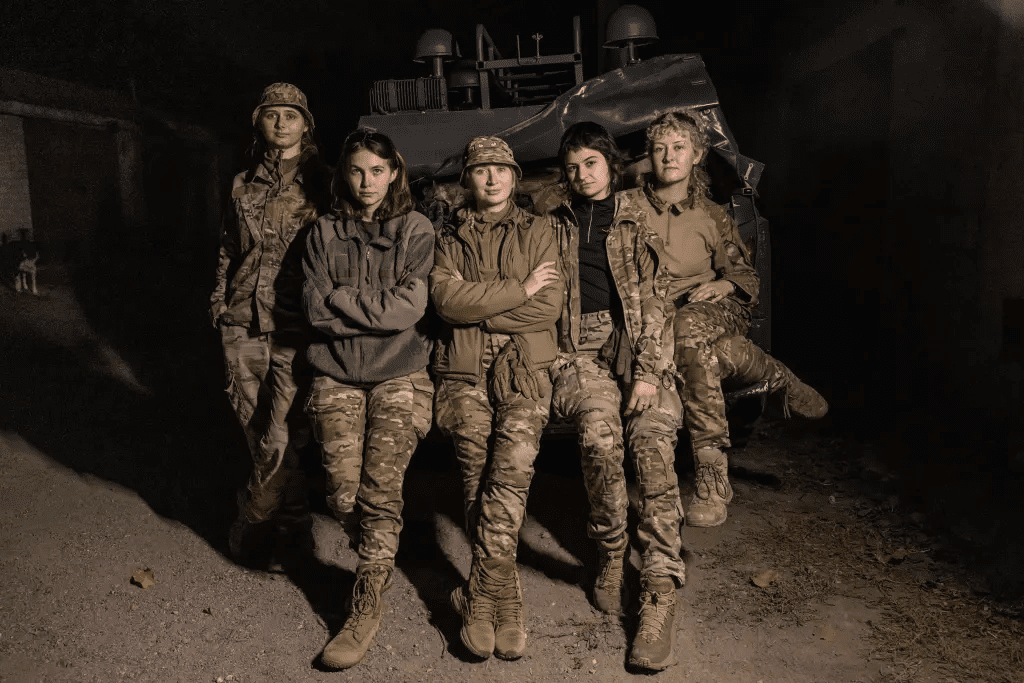
Kovalenko’s path to the front lines mirrors the experiences of thousands, a journey from civilian safety to soldier’s solidarity shaped by a war that has upended every aspect of Ukrainian life. Born in 1997 in a small town near Kharkiv, she grew up in the shadow of the 2014 annexation of Crimea, her childhood filled with schoolyard games and family gatherings around babushka’s borscht, but always with the undercurrent of unease from the Donbas conflict. By 2022, as Russian forces closed in on her city, Kovalenko balanced teaching first-graders phonics with volunteering at a refugee center, packing sandwiches for neighbors fleeing south. The decision to enlist came in May 2025, after her husband Ivan joined the 92nd Mechanized Brigade, leaving her to manage their daughter Sofia alone amid blackouts and air raid sirens. “I saw the ads for women in logistics and medical roles—thought I could support without the rifle,” she recalled in a December 2 interview from a training camp near Poltava, her voice crackling over a spotty line as artillery boomed in the distance. But basic training, a grueling 45 days of marksmanship, first aid, and field exercises, awakened something deeper—a sense of agency in a world that had taken so much. “Now, I load drones and drive ambulances—Sofia asks when Mommy’s coming home, and I tell her soon, with stories of brave women like us.”
The surge in female enlistment, documented in the Defense Ministry’s November 2025 report, reflects a profound shift in Ukraine’s military culture, where women now comprise 22% of the armed forces, up from 12% in 2022 and a mere 4% pre-invasion. The numbers tell a story of necessity and empowerment: Over 70,000 women serve in roles from combat medics to artillery spotters, a 70% rise driven by voluntary recruitment and legislative changes like the 2023 law allowing women under 60 to volunteer without mandatory conscription. “These aren’t just statistics—they’re sisters, mothers, daughters stepping into the light of history,” Defense Minister Rustem Umerov said at a Kyiv press conference on November 28, his words a tribute to the women who’ve filled 15,000 vacancies left by male casualties. Umerov, appointed in September 2023 amid the war’s third year, highlighted training adaptations: All-female units like the “Amazon” battalion in the 127th Mountain Brigade, where Kovalenko now serves, focus on drone operations and cyber defense, roles where women’s attention to detail has proven invaluable. “We’ve lost so much, but their courage multiplies our strength,” Umerov added, his voice softening as he shared a photo of a female sniper team, their camouflage blending with the autumn leaves.
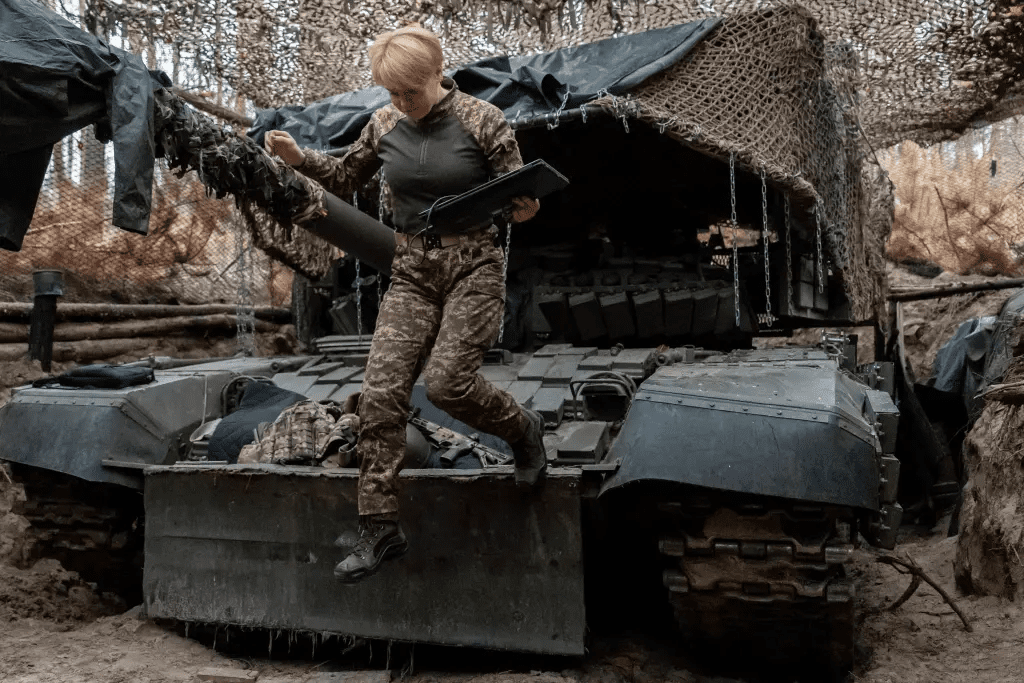
Kovalenko’s days in the brigade, a unit patrolling the Kharkiv salient where Russian advances have stalled since September 2024, blend the mundane with the menacing—mornings checking drone feeds for enemy movements, afternoons delivering supplies under cover of fog, evenings writing letters to Sofia with crayons sent from home. “She’s my why—every patrol, I think of her drawing unicorns,” Kovalenko said, her call interrupted by a siren drill, the line going silent for 10 minutes as she sheltered. The war’s toll on women extends beyond the front: 5 million Ukrainian children displaced since 2022, per UNICEF data, with mothers like Kovalenko balancing deployments with remote parenting via apps like Zoom. Support networks have sprung up— the Wives of Azov app for spouses, with 20,000 users sharing childcare tips and emotional check-ins. “We’re not just surviving; we’re sustaining each other,” said Natalia Melnyk, 35, a Kyiv-based coordinator for the group, her voice warm as she described virtual playdates that keep kids connected to absent moms.
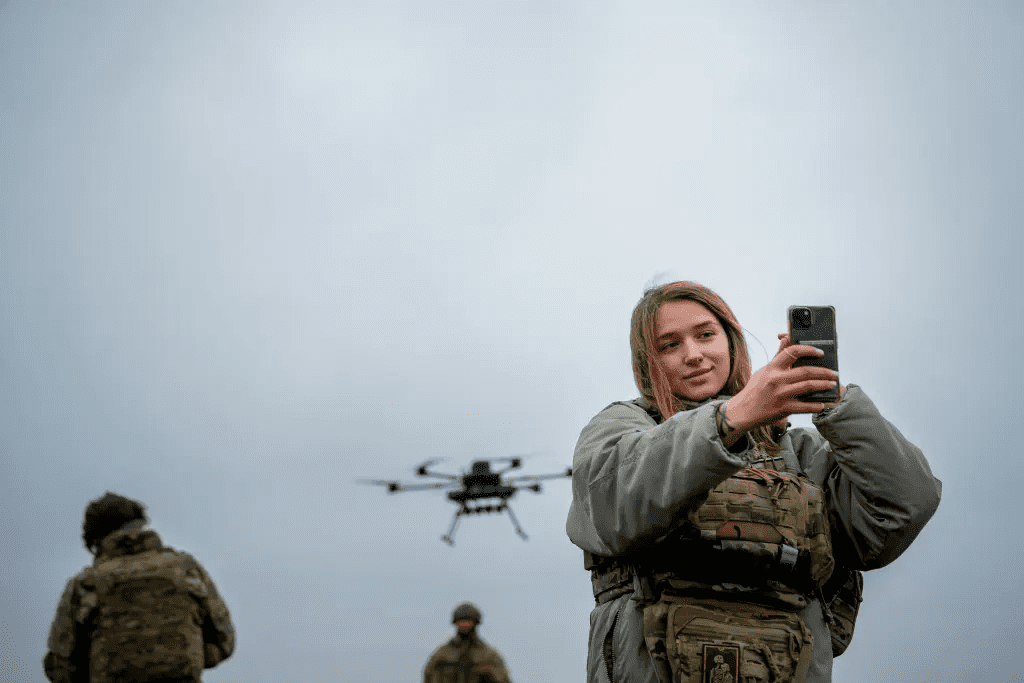
The human heartbeat of this surge beats in stories like Kovalenko’s, where personal loss fuels collective resolve. Raised by a single mother who worked two jobs after her father’s death in the 2014 Donbas fighting, Kovalenko saw enlistment as inheritance—her grandmother a WWII partisan who smuggled food to resistance fighters. “They fought with what they had; I fight with what I have now,” she said, her rifle slung beside a photo of Sofia taped to her helmet. Fellow recruits echo her: 26-year-old sniper Yulia Petrenko, a former barista from Lviv, joined after her brother’s death in Bakhmut, her steady aim a tribute to the sibling she lost. “Every shot is for him—for all of us who stay behind,” Petrenko shared in a December 1 BBC profile, her eyes fierce under camouflage paint. The ministry’s data shows women excelling in tech roles—40% of drone operators female, up from 10% in 2022—leveraging skills from civilian jobs in IT and engineering, where Ukraine ranks 25th globally per World Bank metrics.
Reactions from families and the homefront weave a tapestry of pride tinged with pain, a chorus from Kyiv kitchens to Kharkiv bunkers. In Lviv’s cafes, where Petrenko’s mother brews coffee for volunteers, conversations turn tender: “My girl’s a hero, but I miss her hugs,” said Olena Petrenko, 58, her hands kneading dough for pierogies sent to the front. Olena’s support group, 50 women strong, meets weekly to pack care packages—chocolate, socks, letters from children— a ritual that sustains the 1 million Ukrainian women who’ve volunteered since 2022, per ministry figures. On X, #UkrainianWomenWarriors trended with 1.5 million posts, blending photos of female medics evacuating wounded under fire with messages from global allies: “Your bravery inspires the world.” A December 5 Razumkov Centre poll showed 78% of Ukrainians supporting women’s roles, up from 65% in 2023, but 55% of mothers expressing worry over family strains.
The war’s grind, with 500,000 Ukrainian casualties per U.S. intelligence estimates, has reshaped gender norms, with women filling 35% of civilian jobs vacated by men, per ILO data. Kovalenko’s letters home, read aloud in her mother’s kitchen, bridge the gap: “Tell Sofia Mommy’s drawing maps to keep her safe.” For Olena over pierogies, it’s endurance: “We hold the home so they hold the line.”
As Ukraine’s winter deepens, with holidays shadowed by sirens, Kovalenko’s story lingers as a flame of fortitude. For Petrenko under camouflage, Olena kneading dough, and ministry officials charting gains, it’s a moment of might—a gentle affirmation that in war’s harsh chorus, women’s voices rise not in volume, but in the unyielding harmony of hope.